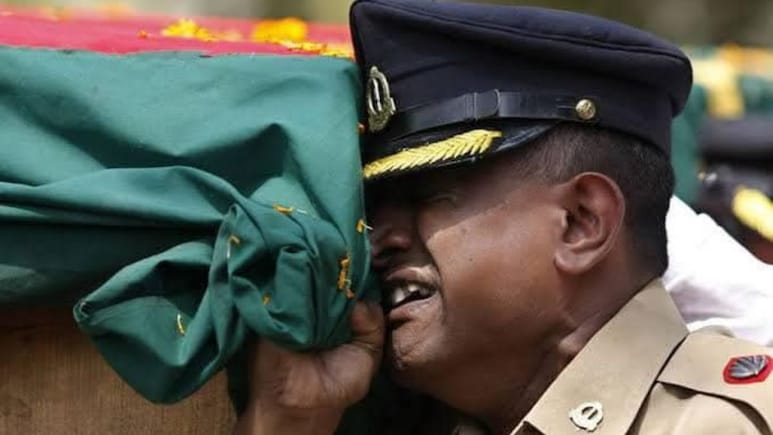
It's one of the darkest chapters in Bangladesh's history. A group of troops from the Bangladesh Rifles (BDR), renamed Border Guard Bangladesh (BGB) in 2010, led a violent mutiny, leaving 74 people, including 57 senior army officers, dead in what's now known as the Pilkhana massacre.
In 2025, a commission set up to investigate the matter claimed that former Prime Minister Sheikh Hasina had ordered the killings. As Bangladesh prepares for next week's general election on February 12, here's everything you need to know about the 2009 paramilitary mutiny.
Bangladesh Rifles revolt
On February 25-26, 2009, as many as 57 army officers, including the then-director general of the BDR, Major General Shakil Ahmed and his wife, were killed in a mutiny at the headquarters of Bangladesh Rifles in Dhaka's Pilkhana, according to Dhaka Tribune.
The mutineers had stolen thousands of weapons from the headquarters of the BDR before embarking on the killing spree in the barracks, Al Jazeera reported. The bodies were dumped in sewers or buried in shallow graves.
Initially, it appeared that a few disgruntled soldiers had taken up arms against the senior officers of BDR for better financial and working conditions. Later, it was found to be a calculated massacre.
Several theories have been doing the rounds on the internet about the real motive, with some suggesting the involvement of “outside forces”.
"There was a plot both from internal and external sides behind the BDR carnage, to uproot (Prime Minister) Sheikh Hasina-led government, which came into power in 2008," read an observation from the High Court.
However, Lt General (retired) Mainul Islam told Al Jazeera that he “had not found any evidence” of any outside involvement in the matter. He took over as the first BGB Director General after the mutiny.
He said the reason behind it was the “prevailing discrimination" between army officials deputed in the BDR and the BDR soldiers.
As per the Global Policy Institute, among the 74 people killed were 57 army officers, two wives of army officials, a retired army officer, nine BDR soldiers, three pedestrians, a police constable and an army soldier.
Last year, the government declared February 25 as National Martyred Army Day to mark 16 years since the massacre in Pilkhana.
Aftermath
Bangladesh's largest ever criminal trial, involving nearly 850 individuals, concluded on November 5, 2013. A trial court handed death penalty to 161 former BDR officials and civilian Zakir Hossain.
The court further sentenced 160 to life imprisonment, 256 to varying terms of imprisonment and acquitted 278 others. The trial was conducted at a temporary court in Old Dhaka.
In November 2017, a larger bench of three High Court judges upheld the death sentence to 139 people, handed life imprisonment to 185 others and varying punishments to another 228. This time, 283 people were acquitted.
After Hasina was ousted in 2024 following a student-led uprising, the Muhammad Yunus-led interim government formed a commission to investigate the incident.
In its report, the commission concluded that the then-Awami League government was directly involved in the mutiny. The government's press office, citing the commission chief ALM Fazlur Rahman, said that former member of parliament Fazle Noor Taposh served as the "principal coordinator". Taposh was working at the behest of Hasina, who gave the "green signal" to carry out the killings, it added.
Track Latest News Live on NDTV.com and get news updates from India and around the world


