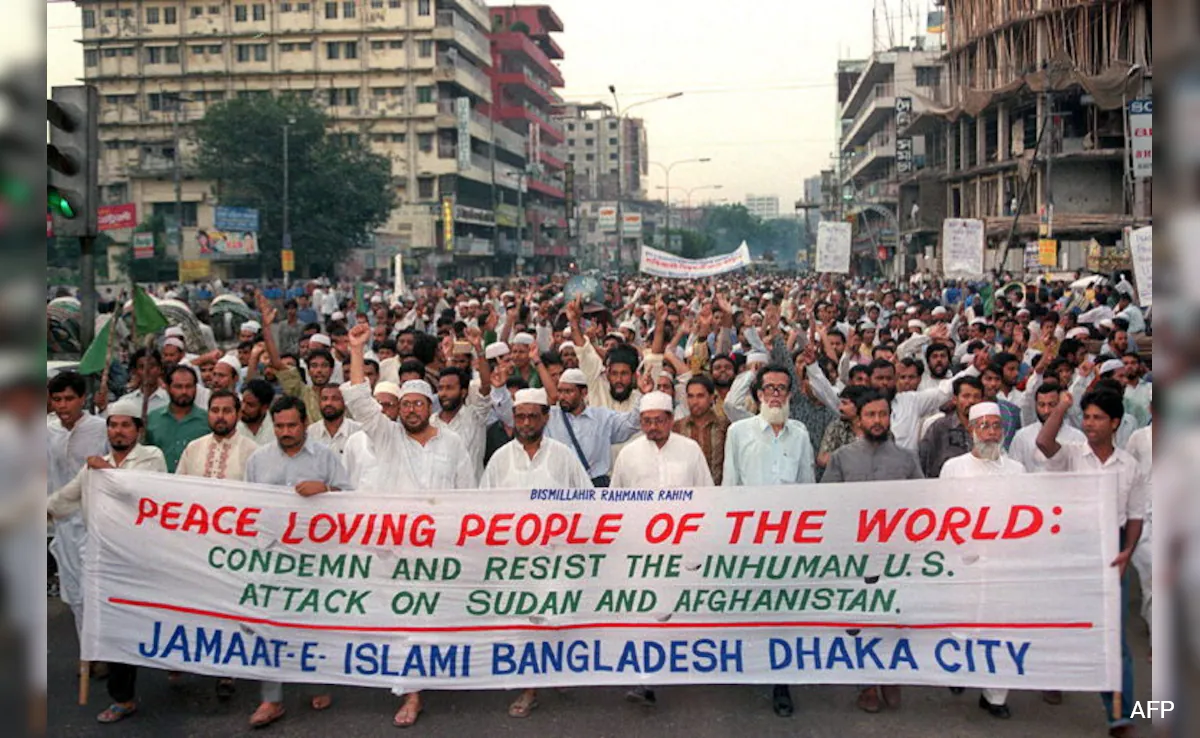
- Jamaat-e-Islami opposes Bangladesh independence and supported Pakistan in 1971 war
- Jamaat leaders formed paramilitary groups accused of mass killings and rapes
- Top leaders faced war crimes trials; some were executed, party registration cancelled
Bangladesh is preparing for a historic general election on February 12, and Jamaat-e-Islami (JI), a hardline Islamist party, is back in the spotlight. Once banned and politically weak, the party is now emerging as a strong contender. It comes with a controversial past.
Jamaat-e-Islami was founded in 1941 by Islamic scholar Syed Abul Ala Maududi. During the 1971 Liberation War, the party opposed Bangladesh's independence and supported West Pakistan.
Its leaders formed paramilitary groups such as Razakar, Al-Badr, and Al-Shams, killing thousands of civilians, allegedly raping hundreds of thousands of women, and targeting the Hindu community. The party aided the Pakistani army in suppressing the Bengali liberation struggle.
After independence, Jamaat was banned in 1972 for misusing religion for political gains. The ban was lifted in 1979, allowing the party to return to politics. Jamaat later joined coalitions with the Bangladesh Nationalist Party (BNP) and even held ministerial positions.
War Crimes Trials
Under Sheikh Hasina's government (2009-2024), Jamaat leaders faced war crimes trials in the International Crimes Tribunal (ICT). Leaders, including Motiur Rahman Nizami and Ali Ahsan Mohammad Mojaheed, were executed.
Thousands of members were jailed or killed. In 2013, the Bangladesh High Court cancelled Jamaat's registration, citing its conflict with the constitution.
During this period, its student wing, Islami Chhatra Shibir (ICS), remained active, sometimes violently clashing with the Awami League government and influencing madrassas. These actions kept Jamaat politically isolated for 15 years.
Resurgence After 2024
The student-led uprising of July 2024 toppled Sheikh Hasina and banned her Awami League party. Jamaat re-entered politics, re-organised its leadership, and started campaigning actively. Opinion polls show Jamaat now close to BNP, its former coalition partner.
The party has tried to rebrand itself as moderate. It promotes minority rights, fielded its first Hindu candidate, and presents itself as “pro-Uprising” and “anti-fascist.” Its student wing, ICS, won several key university elections.
Why Bangladesh's Jamaat-e-Islami Is Controversial
- Role in the 1971 Liberation War - Jamaat opposed Bangladesh's independence and sided with West Pakistan. Its leaders helped form paramilitary groups like Razakar and Al-Badr, which killed thousands of civilians, raped hundreds of thousands of women, and targeted Hindus.
- War Crimes And Trials - In 2009, the International Crimes Tribunal (ICT) convicted top Jamaat leaders for genocide and crimes against humanity. Some were executed, and the party's registration was banned in 2013 for violating the constitution.
- Political Violence - Its student wing, Islami Chhatra Shibir, has been involved in violent clashes with rivals and unrest. Critics link Jamaat to radical Islamist networks.
- Islamist Agenda vs Secularism - Jamaat promotes Sharia-based laws and has opposed women's rights reforms, raising fears about its commitment to Bangladesh's secular constitution.
- Minority Concerns - The party's rise has alarmed minorities due to past attacks on Hindus and ongoing communal tensions.
- Corruption Allegations - Jamaat leaders have been accused of financial misconduct.
Track Latest News Live on NDTV.com and get news updates from India and around the world


