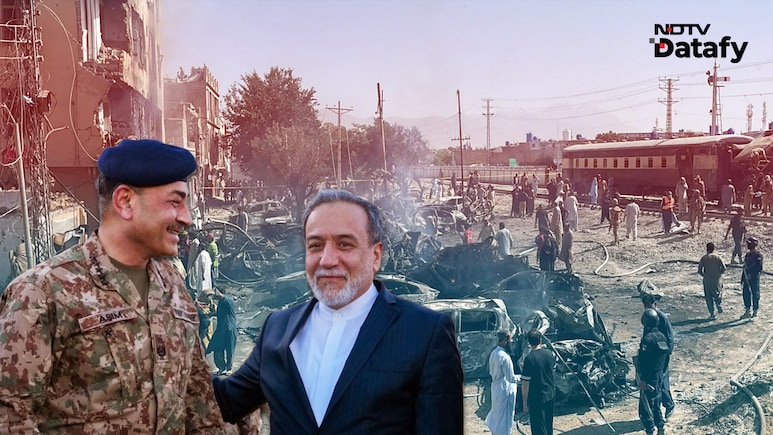
Pakistan's de facto ruler, Army chief General Asim Munir, is a globe-trotting general these days, trying to rebrand Islamabad's image as a peace broker rather than an exporter of jihadi terror. But large parts of his own country are burning in extremist violence.
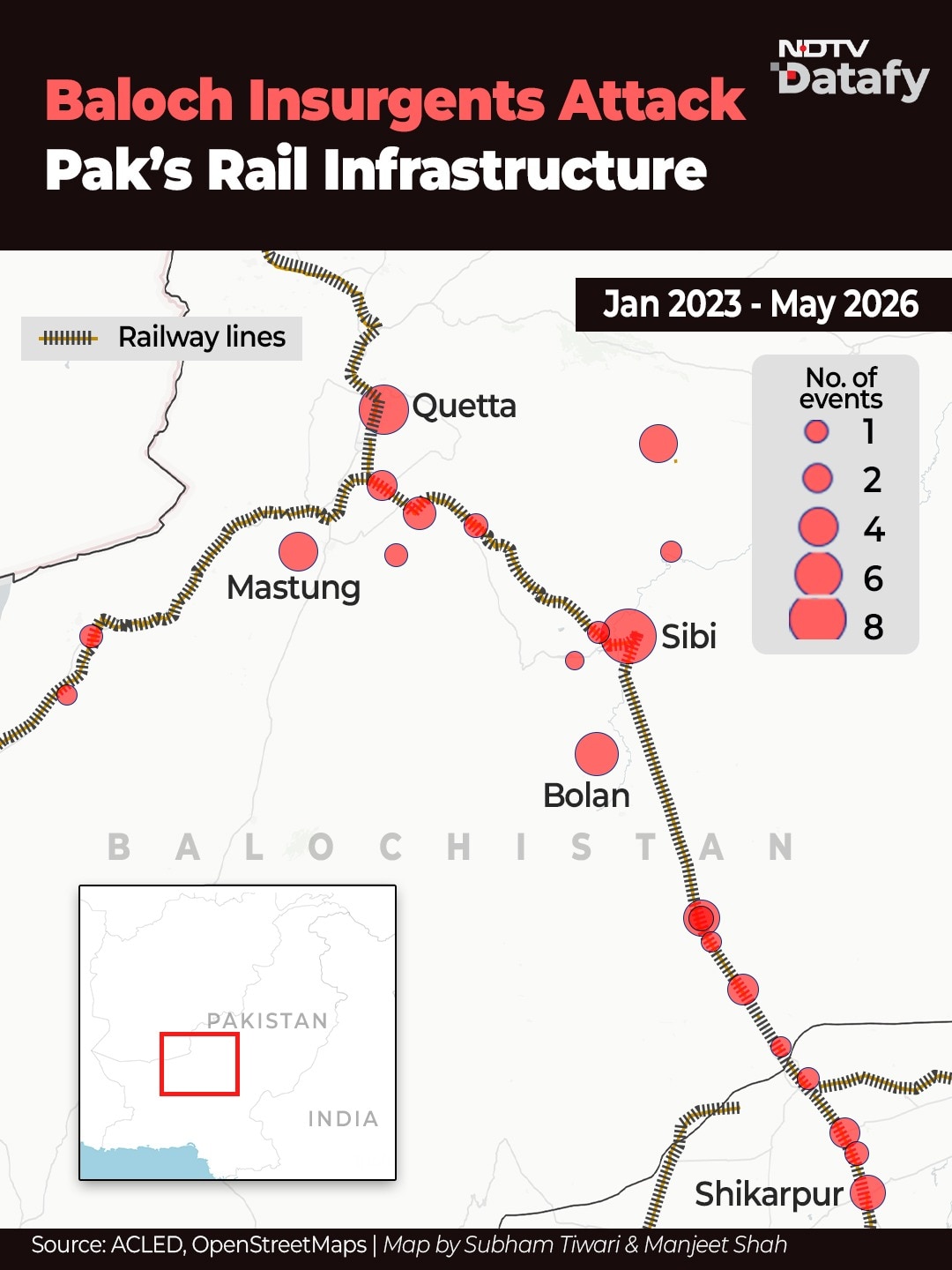
On May 25, while he was engaged in talks alongside the Pakistani PM with Chinese President Xi Jinping, Baloch separatists blew up a train carrying security personnel, killing at least 47 people and injuring dozens more. Many believe the attack may have been timed by the Balochistan Liberation Army (BLA), which frequently targets Chinese workers and infrastructure projects in Balochistan, to embarrass General Munir in Beijing.
Insurgency in two of Pakistan's largest provinces-Balochistan and Khyber Pakhtunkhwa-is at its highest level in a decade, according to data aggregated by watchdogs based in India and Pakistan.
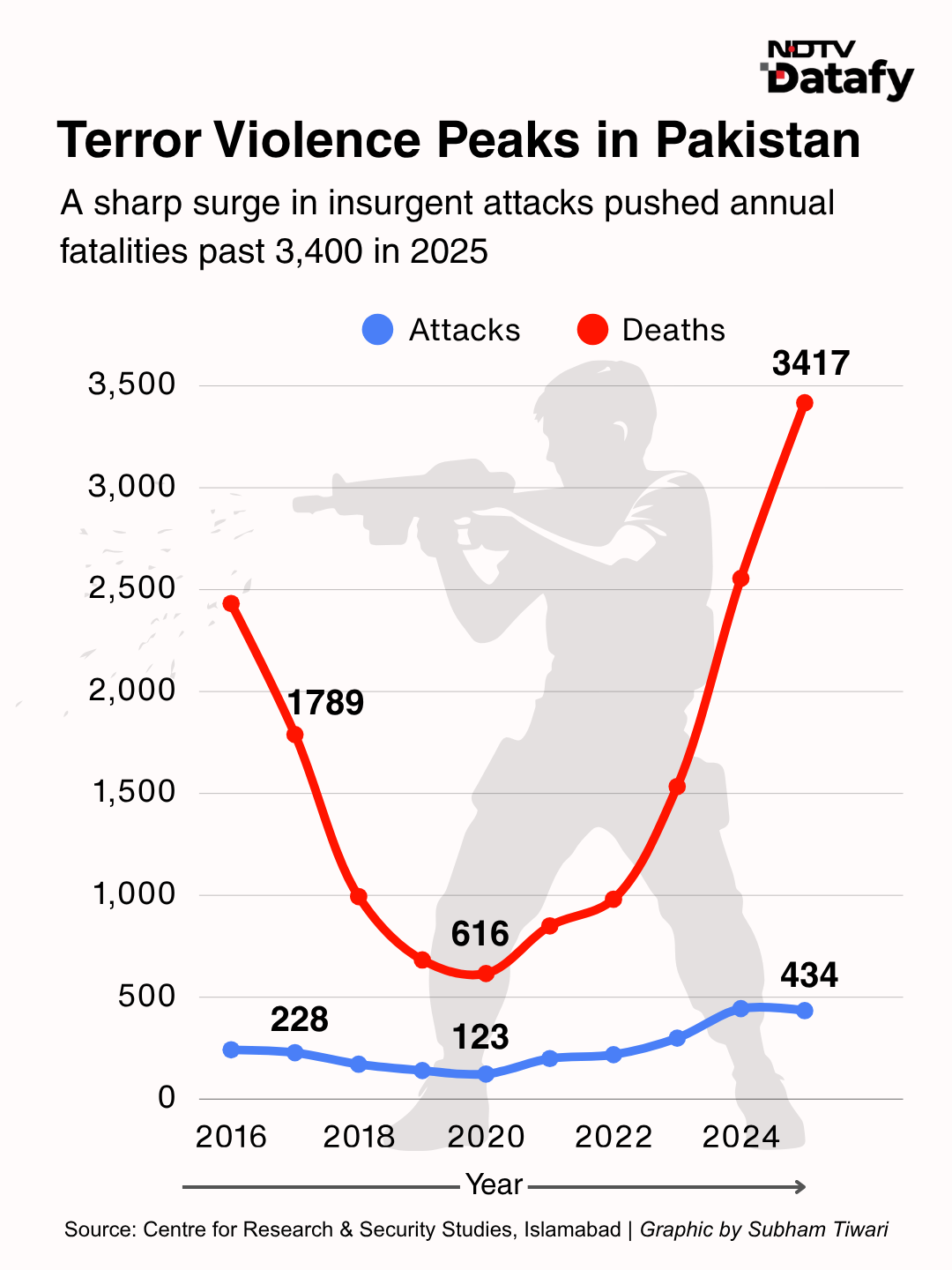
According to the Islamabad-based Centre for Research and Security Studies (CRSS), more than 3,400 people were killed in 1,272 extremist attacks in 2025. This number has already crossed 1,700 in just the first five months of 2026, according to the South Asia Terrorism Portal (SATP).
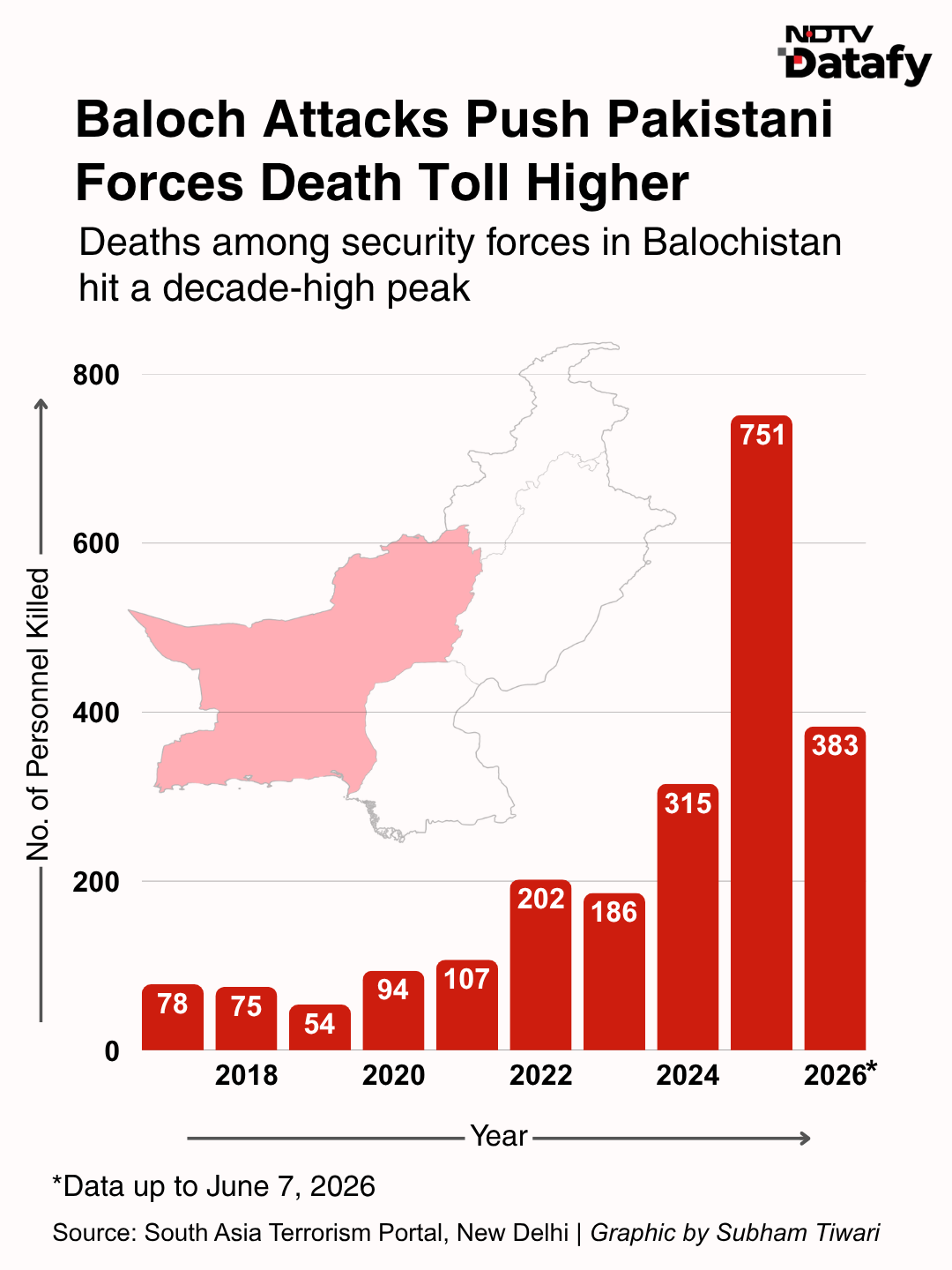
Fatalities among security forces have also risen rapidly, climbing from 195 in 2019 to 650 in 2025.
Pakistan has been primarily focused on eliminating the BLA because the group threatens the China-Pakistan Economic Corridor (CPEC), upon which Islamabad is heavily reliant for development and economic progress. According to Pakistan's National Counter Terrorism Authority (NACTA), Baloch separatists killed at least 20 Chinese citizens and injured 34 more in attacks targeting CPEC projects between 2021 and 2024.
The BLA's attacks on Chinese interests are aimed at discouraging foreign investment in Balochistan and embarrassing the rulers in Islamabad. The BLA argues that Chinese projects in Balochistan exploit local resources for Pakistan's Punjabi and Sindhi populace without providing due benefits to the local population.
In mid-2024, Pakistan launched a new military operation to curb insurgency but gained little success. On the contrary, it attracted allegations of human rights abuses, extrajudicial killings, and enforced disappearances.
According to reports, the attacks on Chinese nationals have placed a severe strain on the progress of CPEC, with China demanding the deployment of its own troops in Pakistan. To assuage Beijing's concerns, Pakistan recently launched a new security force specifically to protect Chinese citizens in the country.
But the most serious threat to Pakistan's military comes from Khyber Pakhtunkhwa, where the Tehreek-e-Taliban Pakistan (TTP), or the Pakistan Taliban, has ramped up its attacks since the Afghan Taliban took control of Afghanistan in 2021.
Its 6,000-odd fighters want to establish their own emirate in north-western Pakistan, just as their peers did in Afghanistan. In social media videos, TTP fighters demean the Pakistani state for being un-Islamic.
According to SATP data, TTP violence has reached its highest level in more than 10 years in Khyber Pakhtunkhwa-surging from 93 attacks in 2016 to 545 attacks in 2025. The number of attacks has already reached 198 this year alone.
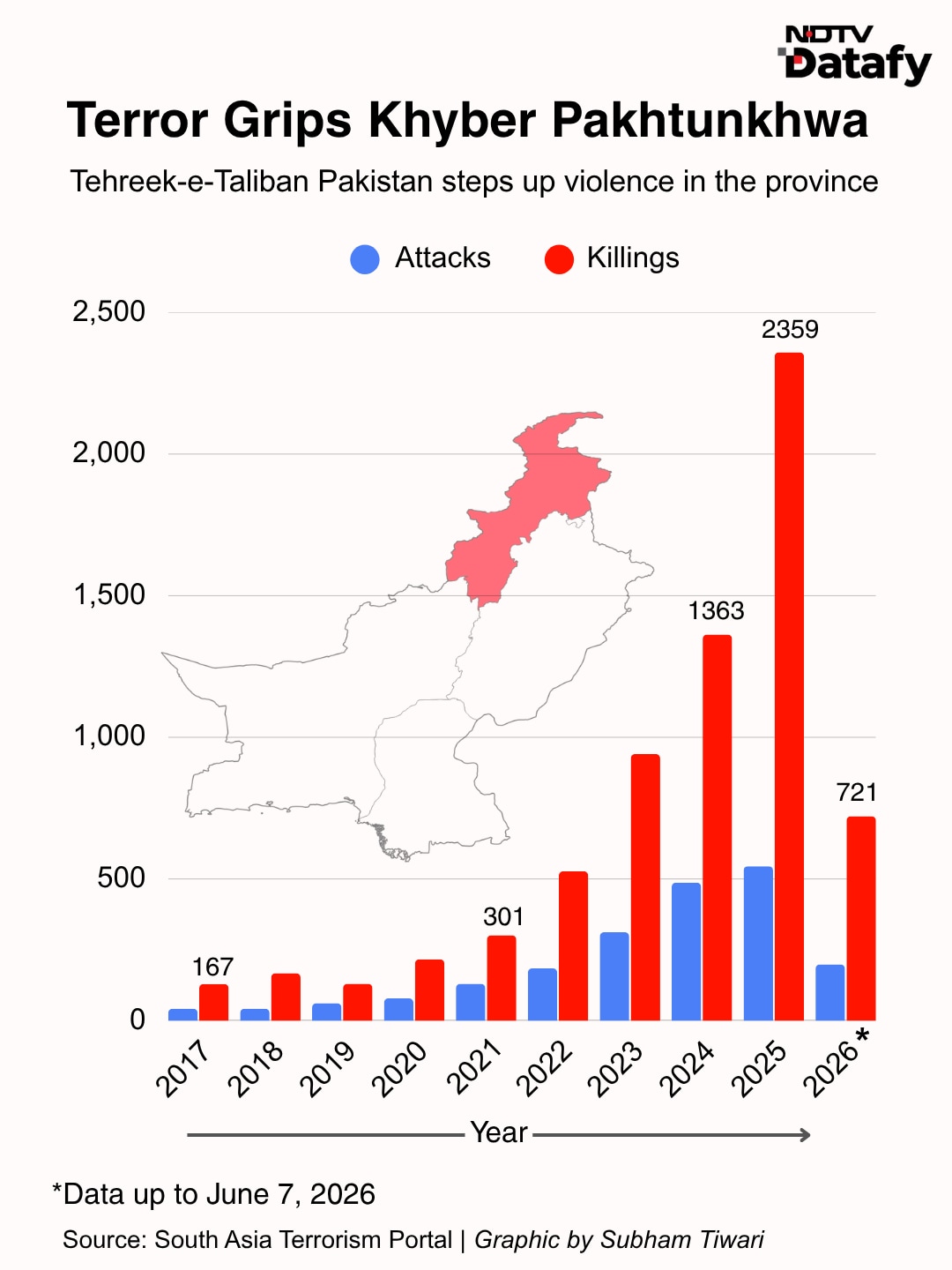
Pakistan has repeatedly accused the Afghan Taliban of providing safe haven to TTP fighters, and the group's violence has severely damaged Pakistan-Afghanistan relations. The tensions have triggered cross-border strikes between the two countries, with Islamabad conducting several airstrikes in border areas and near Kabul, Afghanistan's capital.
In February this year, Islamabad declared an open war against Afghanistan. But in recent months, Pakistan has exercised restraint, even as TTP members continue to kill Pakistani citizens and security forces.
In May alone, when General Munir was busy brokering peace between America and Iran, the TTP carried out 37 attacks and killed more than 200 people. The contrast underscores the widening gap between Pakistan's external positioning and its internal security reality.
On 9th June, over 30 people were killed and around 200 others were injured in clashes between protesters and security forces in Pakistan-occupied Kashmir (POK) after authorities banned the Joint Awami Action Committee (JAAC)-- a prominent civil society alliance that has spearheaded protests over economic and political grievances in the region.
When security forces tried to disperse the protesters, the group's activists used automatic rifles, petrol bombs and other weapons to target them.
Track Latest News Live on NDTV.com and get news updates from India and around the world


