Opinion | After US-Iran, Why Is Pakistan Suddenly 'Brokering' Peace In Libya Now? Hint: $4 Billion
According to reports, Pakistan became one of the interlocutors alongside the US, Saudi Arabia, Qatar, and Turkey.
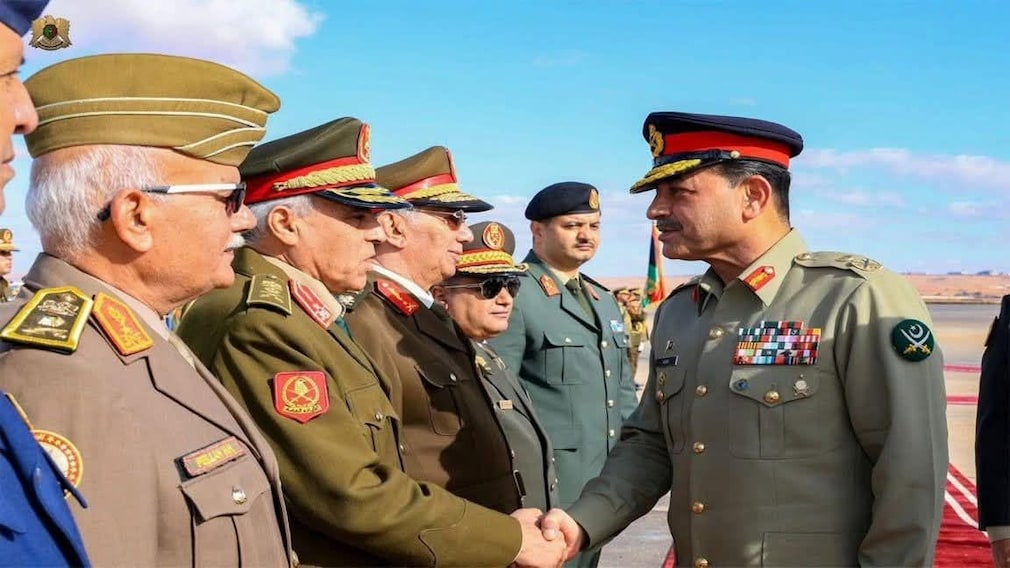
To further its freshly minted international reputation of interlocuting between Iran and the US, Pakistan seems to be rolling the dice on another conflict. This time, thousands of kilometres away from its borders, in a region with limited historical stake: Libya. Pakistan Army Chief Field Marshal Asim Munir on June 24 received the deputy commander of the Libyan National Army (LNA), Saddam Haftar, at the General Headquarters (GHQ) in Rawalpindi, under a guard of honour. The latest engagement in Rawalpindi followed Saddam's previous meetings with the Turkish intelligence chief and the US Secretary of State Marco Rubio.
Libya's civil conflict involves two rival administrations - the UN-recognised Government of National Unity (GNU) in Tripoli and the eastern Government of National Stability (GNS) in Benghazi, militarily led by Khalifa Haftar's LNA. The first faction is backed by Turkey and Qatar, and the latter by Egypt, Russia, and the UAE. In April 2026, both sides agreed on a unified national budget, a first since 2013, but the stalemate remains unresolved. The key issues include polls, a unified military command, and a share of Libya's oil revenue, which still remains under debate. Now, Pakistan has stepped into this conflict, where it has defence ties with the LNA.
This development is crucial given that Pakistan's policy in North Africa has been essentially non-existent, with the country also lacking any historical stake or a sizable expatriate community. This changed in late 2025, when Munir visited Benghazi to meet Khalifa Haftar, the military commander of the LNA. According to reports, Pakistan became one of the interlocutors alongside the US, Saudi Arabia, Qatar, and Turkey. Pakistan's position reportedly revolves around the 36-month reunification plan, where Tripoli-based Prime Minister would hold on to his power, while Saddam Haftar would chair a Presidency Council - essentially taking control of budget revenues and oil fields.
Merchant or Mediator?
Pakistan's mediation role comes as a surprise given its recent inclination towards a defence relationship with the LNA, with Pakistan reportedly finalising a defence deal worth over UDF 4 billion with it. As part of this deal, Pakistan will supply sixteen JF-17 fighter aircraft, jointly developed with China, and 12 Super Mushshak trainer aircraft, to eastern Libya. This is followed up with cooperation on training. Should the deal go through, this export will become the first sale of the JF-17 to an Arab country. That, notably, would be in violation of the 2011 UN arms embargo on Libya.
While Pakistan's broader position as a mediator deserves further investigation, its relationship with the LNA will undermine Islamabad's claim to neutrality. This stands in defiance of conventional mediation theory that necessitates the mediator's impartiality.
In that light, to view Pakistan's intentions as a product of altruism would be naive. Libya remains Islamabad's second act this year after it brokered a peace deal between the US and Iran, pausing the West Asian war and earning high praises from US President Donald Trump and his Vice-President, JD Vance. That episode further enhanced Pakistan's standing with the Trump administration, reflecting on a larger scale the role Islamabad played in facilitating the 2020 Doha agreement between the US and the Afghan Taliban, where Pakistani pressure on the latter and its logistical facilitation resulted in a deal. The implications of that agreement for Pakistan-Afghanistan ties and the wider Afghan population, especially women, is a story for another time.
In both cases, the payoff for Pakistan is the same: closer ties with the US and an opportunity to refurbish its international reputation. In Libya, the additional benefits include potential access to a lucrative arms export market and a strategic foothold in an energy-rich state, all at a lower political cost. At best, this remains transactional diplomacy and not humanitarian instict.
Pak Punching Above Its Weight?
Despite its recent global stature, this does not mean Pakistan can solely determine the future of Libya's conflict. While it is likely viewed as a Muslim-majority, nuclear-powered state with no direct territorial agenda in Libya, the country still lacks influence or a historic clout, like that of Egypt, or oil investments like Qatar or the UAE. Pakistan remains a secondary player in a ground dominated by the US and other middle powers of the Arab world. That said, Pakistan's close ties with all stakeholders are likely to work in its favor, despite other diplomatic constraints, which explains Qatar and Turkey's insistence on bringing Islamabad into the mix.
For policymakers in Islamabad, the key is to manage international and national expectations. Pakistan can either be a benefactor or broker. In the end, seeing Pakistan, currently embroiled in its own internal economic and security crisis as well as an external conflict with Afghanistan, as a power with the capacity to underwrite peace in other parts of the world, is a folly.
(Aishwaria Sonavane is a research analyst at the Takshashila Institution)
Disclaimer: These are the personal opinions of the author
-
Jantar Mantar Tells The Time. Clock Is Now Ticking On Its Future As Protest Site

Built in 1724, Jantar Mantar became Delhi's protest hub decades ago. The Supreme Court has been wondering whether the site is even feasible for that role, even as questions hang over the government's curbs on recent protests led by the Cockroach Janta Party.
-
Opinion | Visa Shocks To Racist Attacks, When Did America Come To Hate Indians So?
Sometimes it is about H-1B visas. Sometimes it is jobs. Sometimes it is "foreigners." Sometimes it is about temples. The language of the attack varies, but the message is consistent
-
How El Nino And Warming Oceans Could Shape Earth's Climate In 2027
From changing ocean currents to extreme weather, scientists are watching a combination of climate signals that could influence temperatures, rainfall and ecosystems in the months ahead.
-
Blog | Nana Patekar, And The Sharp, Lasting Sting Of His 'Plain-Speak'
"Subah ghar se niklo, bheed ka hissa bano..." Nana Patekar's characters often spoke with the bluntness of men who had little patience for pretence. Just like Nana himself.
-
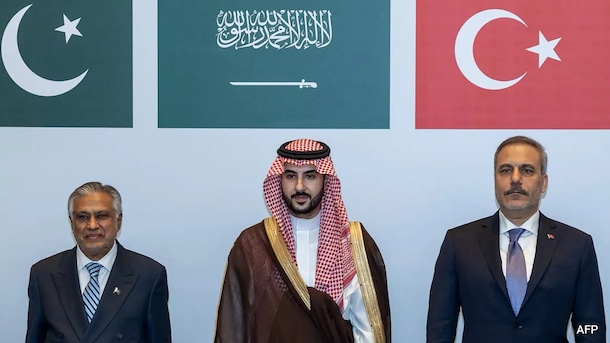
Opinion | Pakistan's Saudi Pact Is Now Entering Dangerous Territory - As Expected
On October 5, the ministers of the pact's member states met in Riyadh for an emergency session and agreed to move to a 'practical implementation' of the defence commitments.
-
Hindu ka khoon-Musalman ka khoon? Nana Patekar's Krantiveer Questions Still Hang
Krantiveer was released in 1994, after the communal violence that had scarred Bombay and other parts of India. Nana's voice carried the pain of every riot, every broken home
-
'SIR' In America Too? India Cue In Trump's Mass Citizenship Check For Voters
Having got the nod from the US Supreme Court, Donald Trump's push for a voter roll "cleanup" puts citizenship at its centre. Arguments for India's Special Intensive Revision (SIR) have also centred on "illegal immigrants". Data remains scarce. Let's map the similarities and the nuance.
-
Opinion | Gyanesh Kumar Row May Be Doing Something Unthinkable For India's 'Lost' Opposition
There seems to be a greater willingness within the Opposition to accept Rahul Gandhi's leadership, at least on the SIR controversy. But the INDIA bloc itself seems to be undergoing a strange renewal.
-
Opinion | flydubai Hijack, And How Syria's Descent Into 'Jihadism' Has Now Become Everyone's Problem
Al Hammimi, the Omani pilot who tried to crash a plane with 175 passengers on September 30, is a symptom of Syria's long-raging sectarian and extremist fire that has now reached far beyond Syria's borders.