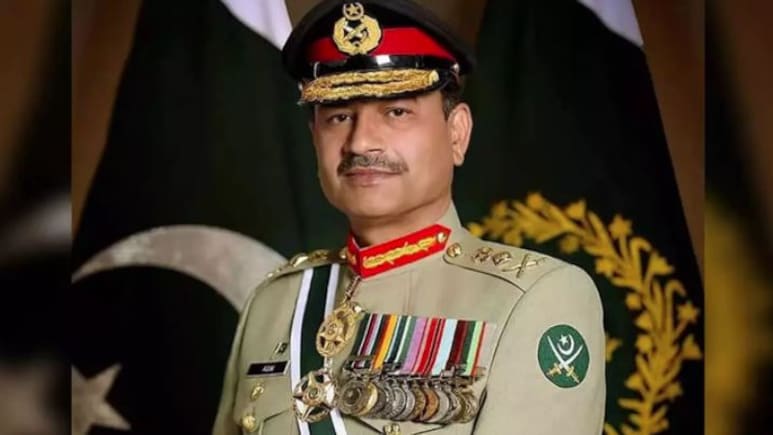
From insurgency in Balochistan and uprising in Pakistan-occupied Kashmir (PoK) to relentless attacks by the Tehrik-e-Taliban Pakistan (TTP) in Khyber Pakhtunkhwa (KP), Islamabad is battling security threats on multiple fronts. And to deal with the brewing crisis, the security apparatus under Defence Chief, Field Marshal Asim Munir, seems to have turned to its old playbook of cultivating terror proxies, deploying them selectively, and then performing just enough counterterrorism theatre to retain international legitimacy.
Recent reports have suggested that Islamabad is extending patronage to Islamic State Khorasan Province (ISKP), also known as ISIS-K or Daesh Khorasan, to tackle Taliban and Baloch rebels. And evidence of this was seen on June 30, with reports claiming cross-border activity between Afghanistan and Pakistan, centred on the alleged hideouts of the ISKP.
"Such incidents have occurred repeatedly in recent years as Pakistan has created a plan to counter the Taliban through the other terror proxies in the region," according to the report in Tanzania-based The Citizen.
Pak's Solution To Security Concerns
Over the past year, the Tehreek-e-Taliban Pakistan (TTP) has launched over a thousand attacks in Pakistan, killing hundreds of Pakistani security personnel across Khyber Pakhtunkhwa. All efforts of mediation by Qatar, Turkey, and China have borne no fruit so far.
At the same time, Baloch rebels have stepped up attacks against security forces and major infrastructure projects in Balochistan, including the China Pakistan Economic Corridor (CPEC). Per The Citizen report, Beijing has shared its concerns about the vulnerability of their personnel and projects at the highest levels in Pakistan, putting Army Chief Munir under serious pressure to deliver results.
"His answer has been a "hard state" policy of coercion in both Khyber Pakhtunkhwa and Balochistan, which has further alienated Pashtun and Baloch populations and deepened the crisis rather than resolving it. Facing these converging pressures, the Pakistan security establishment resorted to the old playbook by ignoring legitimate political grievances and counterbalancing through new ties with international terrorist outfits like the Islamic State," the report said.
Wave Of Unrest In PoK
Meanwhile, the United Nations human rights agency has voiced concern over the "wave of unrest" in PoK, calling for investigations into killings of protesters as well as members of security forces.
UN High Commissioner for Human Rights Volker Turk last week appealed for calm in PoK amid a wave of unrest ahead of regional elections at the end of the month. A statement issued in Geneva noted that dozens of people, mostly protesters but also law enforcement personnel, have reportedly been killed since June ahead of the vote for the legislative assembly on July 27.
The high commissioner called for prompt, thorough, and impartial investigations into all deaths that have occurred due to the unrest, both amongst protesters and members of security forces.
The Pattern
Strategic affairs expert Brahma Chellaney, in a post on X, pointed to the widening crisis of Pakistani authority in its frontier regions and noted that it reflects a common pattern -- "economically marginalised and politically disenfranchised populations demanding autonomy and accountability while the Pakistani state responds with iron-fisted security crackdowns rather than political accommodation."
He noted that in PoK, protests that began over economic grievances have evolved into a broader movement for autonomy. In Balochistan, the separatist insurgency is no longer merely a security challenge and is threatening Pakistan's economic lifelines by jeopardising Chinese mining projects and investor confidence.
"Together, the dual-front crisis exposes the limits of Pakistan's security-first approach and underscores a deeper structural problem: a weakening ability to govern its frontier regions through consent rather than brute force," he added.
Track Latest News Live on NDTV.com and get news updates from India and around the world


