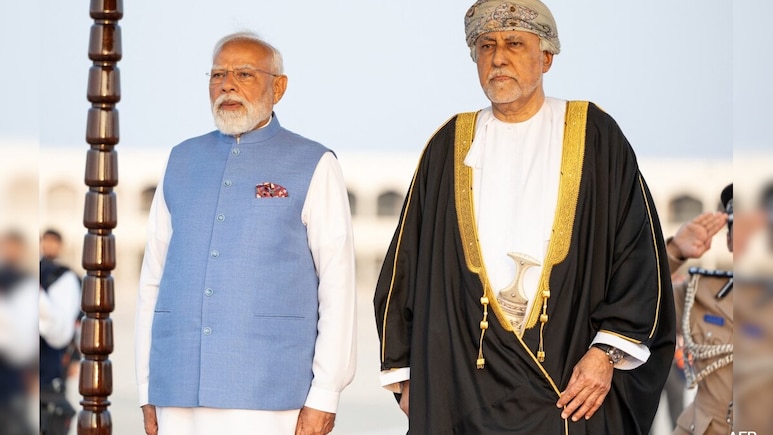
In an age when economic landscapes shift like sand dunes beneath a relentless sun, the recent India-Oman Comprehensive Economic Partnership Agreement (CEPA) emerges as a testament to the enduring spirit of collaboration amidst geopolitical uncertainties. As Prime Minister Narendra Modi alighted upon the sandy shores of Muscat on December 17, 2025, the air was thick with promises-not just of trade, but of a deeper interconnection that reverberates through the heart of the Middle East.
India and Oman share a bond that transcends mere commerce, intertwining history, culture, and a common vision for prosperity. The CEPA, which places Oman as a pivotal gateway to the Strait of Hormuz, opens a corridor not just for goods but for ideas and shared futures. PM Modi, speaking passionately about new opportunities, encapsulated a truth that resonates in the dialogue of nations: "Trade is not merely about tariffs and quotas; it is about trust and relationships."
At the core of the CEPA lies a strategic intention-to diversify exports amid the growing shadow of steep US tariffs that have lingered like dark clouds over bilateral relations. As the Indian Trade Ministry outlined, Oman's generous offer of zero-duty access on over 98 per cent of its tariff lines has the potential to transform the contours of trade between the two nations, buoying Indian exports of gems, jewellery, textiles, pharmaceuticals, and automobiles. The promise of cutting tariffs on nearly 95 per cent of imports from Oman reflects a mutual commitment to growth that has been long overdue, especially in a region often dominated by larger players.
India-Oman CEPA is the first bilateral agreement for Oman after the 2006 deal with the US
Moreover, the CEPA agreement marks a significant milestone for Oman-a country that has cultivated a reputation for neutrality in a tumultuous landscape and is now taking bold strides in international relations. As the first bilateral agreement since its 2006 deal with the United States, the CEPA signifies a fresh chapter. The shadows of failed negotiations with the West seem to have paved the way for a more meaningful engagement with India, a partner that is not just a market but a shared heritage.
For India, the 2022 CEPA with UAE became the template for FTAs with other GCC countries
India inked the Comprehensive Partnership Agreement (CEPA) with the UAE between PM Modi and the UAE President Sheikh Mohamed bin Zayed Al Nahyan on February 18, 2022, during a virtual summit, given the threat of the COVID-19 crisis. The CEPA agreement with the UAE officially came into force on May 1, 2022, marking a significant step in boosting bilateral trade and economic ties. It was India's first comprehensive free trade agreement (FTA) with any country in a decade, aiming to increase bilateral trade and opportunities.
The implications of CEPA between India and Oman are profound. This pact is as much about geopolitics as it is about tariffs, revealing the intricate tapestry of alliances that underpin modern trade agreements. The Gulf region, with Oman at the helm, finds itself at a crossroads, becoming a vital artery of oil and goods. For India, this relationship is not merely transactional; it represents a strategic pivot towards a more resilient economic framework that can withstand external shocks.
Delving deeper, the potential surge in gem and jewellery exports from $35 million to an anticipated $150 million over the next three years paints an optimistic picture of growth. The vision extends beyond mere economic figures; it signifies a renaissance-a revival of artisanal craftsmanship and cultural identities that demand recognition on the global stage. Likewise, the opportunity to tap into Oman's burgeoning $12.5 billion services import market represents a canvas waiting to be painted with Indian ingenuity and expertise.
Oman: A Paradise in the Desert and Its Historic Ties with India
In the annals of seafaring legends, the tales of Sinbad the Sailor stand out as vivid imaginings of adventure, trade, and the allure of far-off lands. Historically, Sinbad is said to have hailed from the coastal town of Sohar, an emblem of Oman's prominent maritime heritage. Long before Vasco da Gama traversed the tempestuous waters of the Indian Ocean, the Omanis had already established themselves as its navigators, plying the waves with the scents of frankincense and spices, their dhows like whispers of sails in the warm Arabian breeze.
The Legendary Seafarers
Oman's identity is intertwined with its status as a seafaring nation, the very essence of which is captured in Sinbad's mythical voyages. Omani mariners, with their knowledge of the winds and the waters, were the true pioneers of trade routes that linked the East African coasts to the shores of India. Their legacy is evidenced not only in the rich cargoes of frankincense, myrrh, and pearls that they transported but also in the cosmopolitan thread that they wove through centuries of cultural exchange.
This maritime legacy is not merely a backdrop but the foundation of Oman's historical narrative. The Omanis dominated the slave trade and played a significant role in creating an empire along the Swahili coast, enriching their culture with influences from Africa and Asia. As a result, Oman emerged as a melting pot of civilisations, where the echoes of diverse languages and customs painted a rich tapestry.
Millennia of Trade and Cultural Exchange
The ties between India and Oman date back thousands of years, thriving through a confluence of trade and cultural exchange that has left indelible marks on both lands. Archaeological findings suggest that Indo-Omani trade flourished during the Classical Age, around the third century BCE, and this early connection laid the groundwork for what would become enduring relationships. The coasts of Gujarat, Kerala, and the Malabar Coast in India served as crucial partners in this symbiotic relationship, as echoes of merchants traversed the Arabian Sea, their dhows laden with goods and dreams.
Kutchi merchants from Gujarat were legendary maritime traders, especially from the Kutch region, who dominated Indian Ocean trade for centuries (18th-19th centuries), known for their entrepreneurial spirit, risk-taking, and building vast networks to East Africa and the Middle East (Muscat, Zanzibar), trading textiles, spices, gold, ivory, and even slaves, establishing communities globally, and acting as early globalisers with traits of modern venture capital and finance.
My personal encounter with Oman as an Editor in Muscat
During my own journey to Oman in 2004 as the Founding Editor of Oman Tribune (the English daily newspaper of the Al Watan Group), I was struck not only by the architectural grandeur-the six palatial marvels of Muscat and the scores of ancient forts scattered like sentinels across the land-but also by the warmth and hospitality that radiated from its people. Each interaction, each exchange at bustling markets filled with spices, dates, and textiles, unveiled a canvas of shared history and mutual respect.
The Kutchi merchants from Gujarat and business entrepreneurs from Kerala dominated Omani businesses in Basmati rice, gems and jewellery, the hospitality industry, real estate, retail and other sectors. Every Omani I met knew Hindi and Malayalam and had an extraordinary love for Bollywood and India. The affection for India began from the top: Former Sultan Qaboos was educated at Mayo College, Ajmer, and was also a student of former Indian Vice President Shankar Dayal Sharma. Even today, one of the elite hostels of Mayo College, for boys, is called Oman House.
I learnt that the historic connection between Oman and India deepened in the past with figures like Raja Tipu Sultan, who famously sent diplomatic delegations to Oman during his reign, weaving threads of political and cultural alliances that have endured. Today, the landscape still reflects a confluence of Indian and Omani traditions, where Indian merchants and labourers are as integral to the fabric of Omani society as the sands and seas that cradle this desert paradise.
A Contemporary Economic Partnership
Fast forward to 2022 (when I visited Oman last) and today in 2025, with PM Modi's visit and the trade dialogues between India and Oman, they have blossomed into a robust partnership. Bilateral trade figures have soared, reaching beyond $10 billion during FY 2024-2025, nearly doubling over a year despite global challenges. This remarkable growth signifies not only economic cooperation but also an ever-evolving relationship that is founded on shared interests and mutual benefits.
Indian entrepreneurs and investments have become a pivotal part of Oman's economic landscape, particularly in the free zones of Sohar and Salalah, where Indian companies are shaping the future of infrastructure, commerce, and innovation. The institutional mechanisms of the India-Oman Joint Commission Meeting (JCM) and the Joint Business Council (JBC) further solidify this partnership, creating platforms for dialogue that are as vibrant as the markets they represent.
The Heartbeat of Cultural Unity
As I immersed myself in Oman's rich historical legacy, I discovered the deep-rooted presence of Indians who have lived harmoniously in this land for centuries. The Kutchi merchants from Gujarat, the hospitality providers, and the artisans from Kerala and Andhra Pradesh are woven into the very fabric of Omani life. Their stories of resilience, enterprise, and cultural intermingling enrich the Omani narrative. The two Hindu temples standing in Muscat, each over a century old, stand as a testament to the longstanding coexistence of diverse faiths and traditions.
In a world often fraught with division, Oman emerges as a sanctuary of unity, a place where the past is cherished and the future is forged in collaboration. The hospitality and warmth extended by the Omani people, intertwined with a sense of shared history and community brought by Indians, beckon you to return again and again.
Oman is one of the finest tourist destinations for Indians
With its ethereal beauty, Oman is perhaps one of the finest destinations for Indian tourists. Oman, with its sun-drenched deserts and azure waters, is not merely a geographical entity; it is a historical and cultural paradise. The interwoven tales of Sinbad, the ancient maritime routes, and the contemporary urban vibrancy speak to a nation that embodies the spirit of adventure, resilience, and unity. The bonds between Oman and India are not just historical remnants; they are living narratives that continue to evolve, ensuring that the legacy of this desert paradise is cherished for generations to come.
As the sun dipped below the horizon of Muscat on December 17, 2025, casting golden hues over the Arabian Sea, a new narrative was woven-a narrative not just of bilateral trade, but of friendship, resilience, and collective ambition. With every agreement, new opportunities beckon, and the world watches as India and Oman embark on this journey together, crafting a future that honours their shared history while paving paths toward uncharted territories. Here lies the beauty of trade: it is more than goods crossing borders; it is the raw material of connection, threading together nations in a world that ever yearns for unity amidst diversity.
Track Latest News Live on NDTV.com and get news updates from India and around the world


