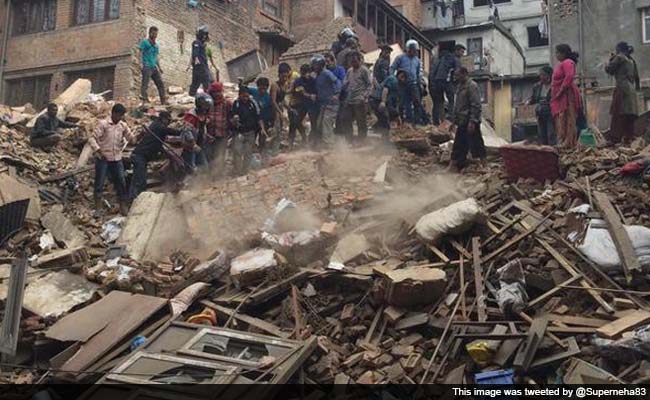
Over a decade ago, a devastating earthquake in Nepal killed around 9,000 people and left hundreds of thousands homeless. On April 25, 2015, a 7.8 magnitude earthquake, its strongest and worst in eighty years, hit the Himalayan nation. The epicentre was in Gorkha, a district about 1 hour from Kathmandu, the capital.
Apart from the massive death toll, it also left over 22,000 injured and displaced a mammoth 2.8 million, reducing homes, schools, roads, and centuries-old heritage sites into rubble.
Over eight million people, almost one-third of Nepal's population, were impacted by the earthquake. Over 500,000 houses were destroyed, and another 269,000 were damaged.
The earthquake turned entire villages into mountains of debris. Important UNESCO World Heritage Sites such as Kathmandu Durbar Square, Patan Durbar Square, Bhaktapur Durbar Square, Changu Narayan Temple, Boudhanath Stupa and Swayambhunath Stupa were also destroyed in the natural disaster.
Dharahara (Bhimsen Tower), a nine-storey, 61.88-metre-tall tower, an emblem of Kathmandu's architecture and recognised by UNESCO, suffered massive damage.
The earthquake also impacted livelihoods on a large scale. Key sectors such as agriculture and tourism were hit hard.
On Mount Everest, the quake triggered an avalanche, which killed 22 climbers, marking the deadliest accident in the mountain's history. Another massive avalanche occurred in the Langtang Valley, where 250 people went missing.
After the main earthquake, the country faced aftershocks every 15-20 minutes. The earthquake loosened soil and rocks, exposing Nepal to a high risk of landslides in many areas. One significant aftershock on April 26 had a magnitude of 6.7.
Another was on May 12, 2015, when a 7.3-magnitude aftershock struck near the Chinese border, between Kathmandu and Mount Everest, causing another 200 deaths, over 2,500 injuries, with several people losing their homes again.
According to the Post Disaster Needs Assessment by the UN, World Bank, and EU, the total damages and losses were estimated at $7.1 billion and recovery needs were estimated at $6.7 billion.
Track Latest News Live on NDTV.com and get news updates from India and around the world


