Numerous bills were passed around the world throughout 2025. However, some of them ignited fierce debates, with some citizens and opposition leaders expressing concerns over rights, security, and economics against national priorities.
Here's a look at bills that gained eyeballs around the world in 2025:
One Big Beautiful Bill Act
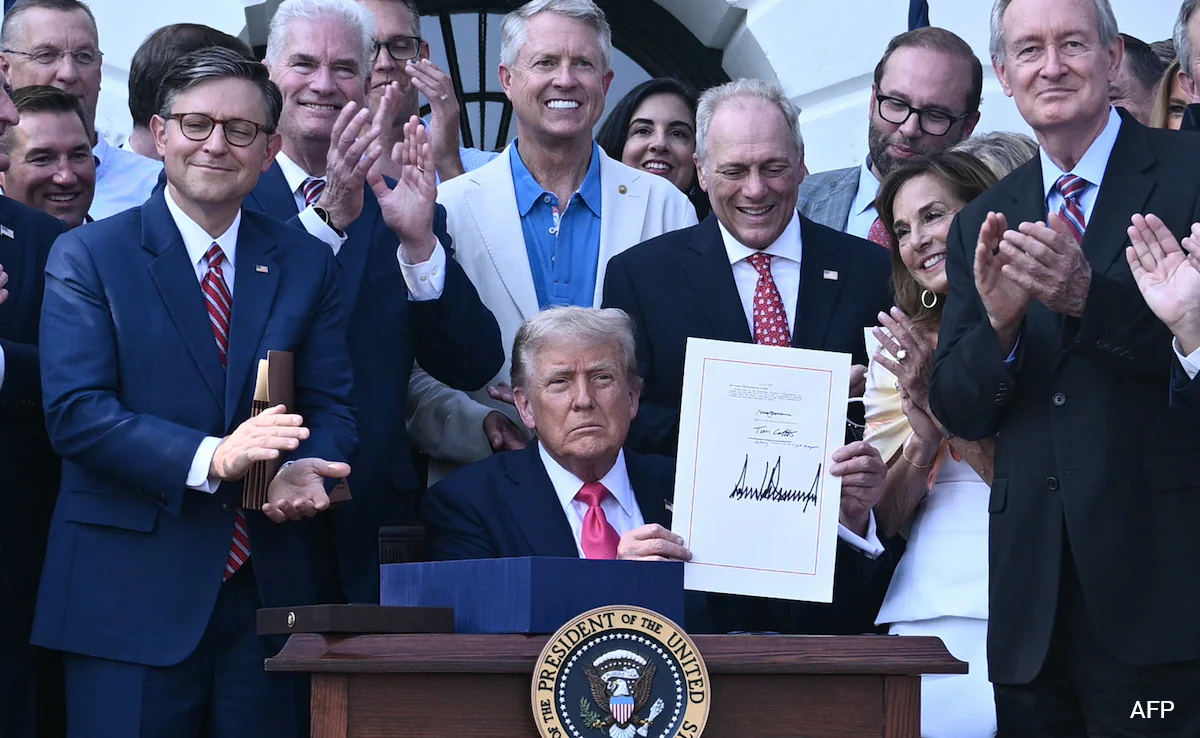
US President Donald Trump, who returned to power in January, signed into law his 'One Big Beautiful Bill' at the White House in July. It focuses on cutting taxes, mainly for households that earn $217,000 or more each year, as well as increasing funding for military and border security and revamping social programs.
Republicans said it will provide "an economic lifeline for working families" and "lay a key cornerstone of America's new golden age." Democrats, however, argue that, in reality, Trump's act "steals from the poor to give to the ultra-rich." The act is estimated to increase the country's debt by more than US$3 trillionover 10 years, while knocking more than 10 million people off Medicaid.
SIGNED. SEALED. DELIVERED. 🧾🇺🇸
— The White House (@WhiteHouse) July 4, 2025
President Trump's One Big Beautiful Bill is now LAW — and the Golden Age has never felt better. pic.twitter.com/t0q2DbZLz5
Billionaire Elon Musk's relationship with Trump also collapsed after he criticized the "big, beautiful" spending bill.
Epstein Files Transparency Act
Passed in November, the Epstein Files Transparency Act gives the Justice Department 30 days to release nearly all files related to notorious sex offender Jeffrey Epstein.
Under the law, the Justice Department must release by December 19 its vast cache of records on the late financier's sex-trafficking empire, which is alleged to have entangled underage girls and brushed against the world's elite.
Epstein -- who died in custody after his 2019 arrest -- moved in elite circles for years and had ties with tycoons, politicians, academics and celebrities to whom he was accused of trafficking hundreds of girls and young women for sex.

The release of Epstein files could shed light on how he operated, who helped him and whether influential figures received protection.
Promotion and Regulation of Online Gaming Bill, India
The Promotion and Regulation of Online Gaming Bill, which bans the operation, facilitation and advertising of online games played with money, was cleared by Parliament in August, amid intense protests by the Opposition who alleged the legislation was passed without a discussion.
The legislation seeks to make online money gaming punishable by imprisonment of up to 3 years and/or a fine of up to Rs 1 crore.

It outlaws all online betting and gambling (satta and jua) activities -- from online fantasy sports to online gambling (like Poker, Rummy and other Card games) and online lotteries.
It also prohibits advertisement related to online money games and bars banks and financial institutions from transferring funds for any of such games.
Advertising of money games can attract imprisonment up to two years and/or fine up to Rs 50 lakh. Facilitating financial transactions related to money games can lead to imprisonment up to three years and/or fine up to Rs 1 crore. Repeat offences attract enhanced penalties, including three to five years' imprisonment and fines up to Rs 2 crore.
27th Constitutional Amendment Bill, Pakistan
Pakistan's National Assembly last month passed the 27th Constitutional Amendment Bill, which grants lifetime immunity to the president as well as the current army chief. The 27th amendment also consolidates military power under a new Chief of Defence Forces role and establishes a Federal Constitutional Court.
The changes grant army chief Asim Munir, who was promoted to field marshal earlier this year, command over the army, air force and the navy. He and other top military brass will enjoy lifelong protections.
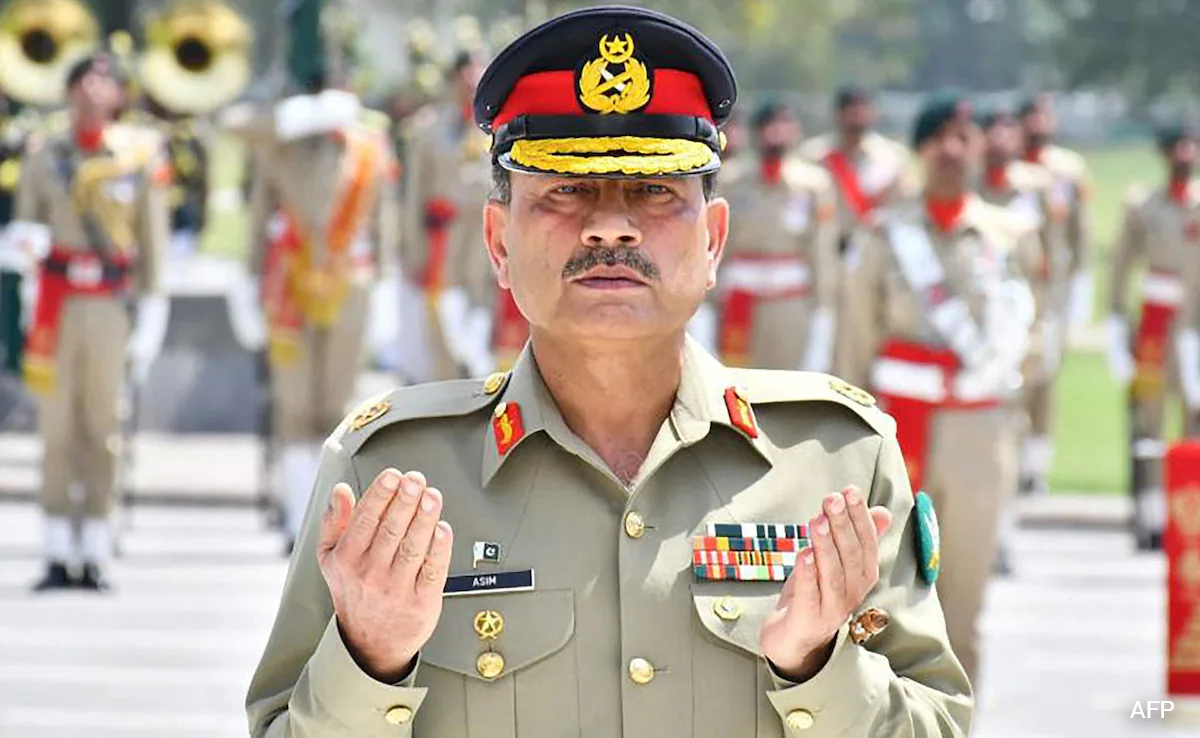
Under the amendment, any officer promoted to field marshal, marshal of the air force, or admiral of the fleet will now retain rank and privileges for life, remain in uniform, and enjoy immunity from criminal proceedings. Such protections were previously only reserved for the head of state.
The amendment also shields President Asif Ali Zardari from any criminal prosecution, although that immunity will not apply if he or any other former president later holds another public office.
The bill also creates a Federal Constitutional Court with exclusive jurisdiction over constitutional cases, stripping the Supreme Court of its original powers and transferring pending petitions.
Opposition parties, led by former prime minister Imran Khan's Pakistan Tehreek-e-Insaf (PTI), tore up copies of the bill. The opposition alleged that the government was sounding "the death knell for the Supreme Court."
Personal Status Law Amendment, Iraq
In January, the Iraqi parliament amended the 1959 Personal Status Law to allow people to choose between religious or civil regulations for family matters such as marriage, inheritance, divorce and child custody.
Under the amendment, the Shiite Endowment Office established the "Code of Jaafari (Shiite) Rulings on Personal Status Matters", which was approved by parliament.
The amendment allows a man to convert his marriage contract to be governed by the Shiite religious code without informing his wife.
The new code also allows husbands to divorce their wives without informing them or seeking their consent and "automatically transfers responsibility and care of children to the father after age seven".
While a wife can ask that no polygamy or divorce can take place without her consent, the marriage or divorce remains valid even if the husband breaches these conditions.
An earlier version of the amendment faced a backlash from feminists and civil society groups over fears it would lower the minimum age for Muslim girls to marry to as young as nine years old.
While the new amendment allows Sunni courts to issue their own code, they are still abiding by the 1959 law.
The Right to Disconnect Bill, India
Indian lawmaker, Supriya Sule, this month introduced the "Right to Disconnect Bill, 2025" in Lok Sabha, which proposes to establish an employees' welfare authority to confer the right on every employee to disconnect from work-related telephone calls and emails beyond work hours and on holidays.
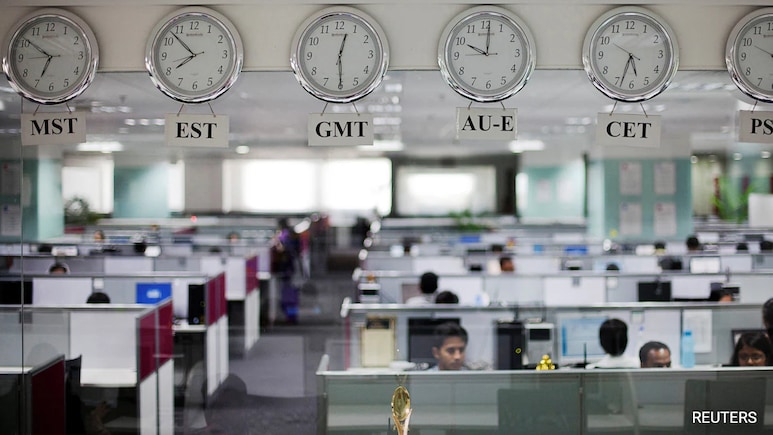
The bill proposes right to refuse to answer calls and emails outside work hours and for all matters connected therewith.
According to the bill, no employee can face disciplinary action for refusing to respond to all forms of communication like phone calls, texts, emails, video calls, etc.
The proposal also suggests a penalty of 1 per cent of the total employee remuneration for organisations that violate this right.
Bill To Sack Arrested Ministers, India
A bill to ensure the removal of elected representatives arrested or detained on serious criminal charges, from office, was introduced in parliament in August. The proposed law will cover a Prime Minister, Union ministers, Chief Ministers and ministers of Union Territories.
So far, under the Constitution, only public representatives who have been convicted could be removed from office. The proposed law says a Prime Minister, any Union minister, Chief Ministers and ministers of states and Union Territories, who are arrested and kept in custody for 30 consecutive days, will have to resign by the Day 31 or be automatically removed.
While there was no description of the kind of criminal charges contemplated, the alleged offence has to be punishable with at least a five-year jail term. This would cover serious crimes like murder and even largescale corruption.
Opposition leaders argue that the bills violate the fundamental principle of law of a person being innocent until proven guilty and resort to automatic sacking of the prime minister, chief ministers and ministers if they fail to get bail within a month of arrest in serious criminal matters.
Waqf Amendment Act, India
Amendments to the 1995 Waqf law cleared Parliament and got the President's assent in April, triggering massive protests across the country.
The new Waqf law aimed to make significant changes to the existing system: Only a person practising Islam for at least five years may declare a waqf; the person declaring a property as Waqf must own it at the time; removes the provision of 'Waqf by user', under which properties could be deemed as Waqf solely on the basis of prolonged use for religious purposes; a Waqf declaration must not lead to the denial of inheritance rights of the donor's heir, including women heirs; any government property identified as Waqf will cease to be so; removes Waqf board's power to inquire and determine if a property is Waqf.
It also proposed changes to the composition of the Central Waqf Council and Waqf boards. The 1995 Waqf Act required that all Council members be Muslims, and at least two must be women. The new law stated that two members must be non-Muslims and of the Muslim members, two must be women.
The Supreme Court, however, in September put on hold several key provisions of the Waqf (Amendment) Act, 2025 including the clause that only those practising Islam for the last five years can dedicate a property as Waqf, but refused to stay the entire law outlining the presumption of constitutionality in its favour.
Muslim bodies had termed the amendments unconstitutional and a conspiracy to capture Waqf land. The government had trashed these allegations and said many Waqf properties are caught in major land disputes and flagged encroachment. The Centre had said the new law aimed to iron out these issues.
G RAM G Bill, India
The Viksit Bharat-Guarantee for Rozgar and Ajeevika Mission (Gramin) bill, or the G RAM G bill, cleared Parliament this month amid objections by opposition lawmakers angry about the name - which invokes the name of Lord Ram over that of Mahatma Gandhi - and provisions they called "feudal" and said "kills" job guarantees for the rural poor.

The new bill replaces the Mahatma Gandhi National Rural Employment Guarantee Act (MNREGA) enacted by the Congress-led UPA government in 2005.
The government defended its new scheme by stressing the need to update a 20-year-old scheme, it argued, was inefficient and riddled with corruption. It has also pointed to an increased minimum number of workdays - from 100 under MNREGA to 125 under G RAM G.
Australia Social Media Bill, Now Law
Australia became the first country in the world to ban social media ban for children younger than 16.
The law, passed last year, mandated social media platforms, including Facebook, Instagram, YouTube, and TikTok, to remove users under the age of 16 starting December 10 or face fines of up to 49.5 million Australian dollars ($32.9 million).

"This reform will change lives for Australian kids, allowing them to just have their childhood," Australian Prime Minister Anthony Albanese said.
YouTube, Meta and other social media giants condemned the ban. Many teenagers also said they were against the ban.
Track Latest News Live on NDTV.com and get news updates from India and around the world


