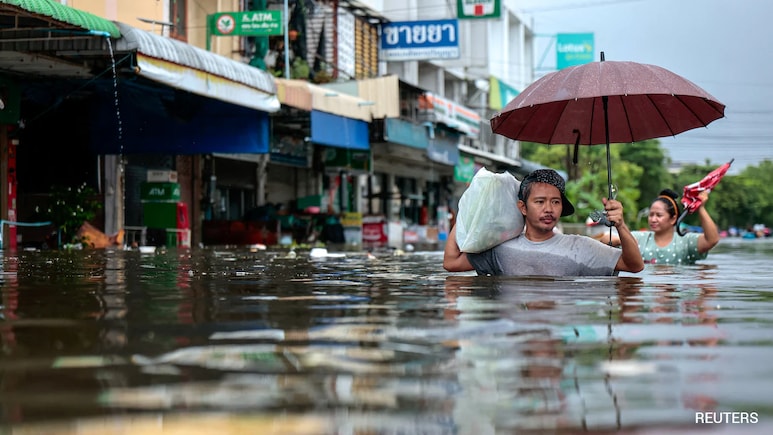
Bangkok has witnessed some of its worst flooding in years. After days of relentless rain, the authorities declared the entire city a disaster zone. Around 320 millimetres of rain on Bangkok over two to three days, close to the amount the city usually receives in the whole month of September.
Around 700,000 people in more than 329,000 households were affected by the flood, and nearly 6,000 people were evacuated from their homes. However, as the rain eases and drainage operations continue, the conditions are beginning to improve.
If you are wondering whether it is safe to travel to Bangkok, the Tourism Authority of Thailand (TAT) declared that the capital's major visitor areas are now accessible. On Thursday, the government stated that any remaining standing water could largely clear within two to three days if there is no further significant rainfall.
Also Read: Can't Afford Paris? Traveller Says These 3 European Countries Cost Far Less
Is It Safe To Visit Bangkok Right Now?
Although people travelling over the next few days should expect some disruption, the Tourism Authority of Thailand said visitor hotspots such as Siam and Ratchaprasong remain accessible, as do Yaowarat Road in Chinatown, Talat Noi and Song Wat. The Grand Palace and Temple of the Emerald Buddha, Wat Pho and Wat Arun are all open. Restaurants, shops and other tourism businesses across the main visitor areas are largely operating as usual.
Are Bangkok's Airports Open?
Both Suvarnabhumi Airport and Don Mueang International Airport remain open, but major disruption is currently affecting Thai Airways flights at Suvarnabhumi. The airline said on Tuesday that it would temporarily reduce departures from Bangkok by around 30 to 40 per cent as it tries to stabilise operations after severe staffing and baggage handling problems.
Also Read: 30 Out Of Every 100 Domestic Trips In India Are For Treatment, Not Tourism
Is Public Transport Operating?
According to Conde Nast Traveller, the BTS Skytrain and MRT network are operating, as are the Airport Rail Link to Suvarnabhumi and the SRT Red Line serving Don Mueang. Thailand's intercity railway network has been more changeable. Road transport, meanwhile, remains more vulnerable. Even as the water drains, individual streets can remain flooded or congested long after neighbouring roads have returned to normal.
Track Latest News Live on NDTV.com and get news updates from India and around the world


