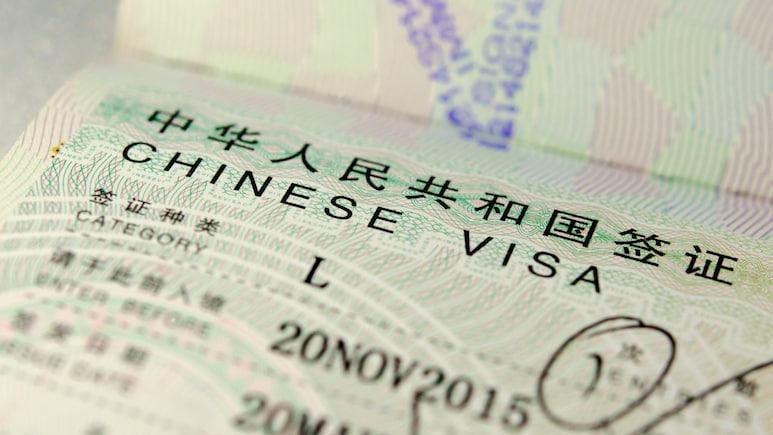
- Business visa approvals for Indian executives traveling to China have sharply declined
- Approval rates for Chinese business visas range from 20% to 40%, with some at 5%
- Visa applications now face increased scrutiny and slower, less predictable processing
Indian professionals travelling to China for work are facing a new issue as business visa approvals have fallen significantly. It has been harder for companies to send executives, engineers and technical teams to the country.
As Economic Times reports, some Indian companies are able to get only 20% to 40% of their Chinese business visa applications approved. Earlier, almost all the applications used to get easy approvals. For some companies, executives say the rejection rate has climbed as high as 95%.
Indian Companies Face Massive China Visa Problem
Chinese business visas were earlier considered relatively routine for Indian companies with regular business ties in China. That process has now become slower and less predictable, according to executives cited by ET.
Applications are now being examined more closely. Yes, rejected applications have to be filed again, but it doesn't guarantee approval either. Consequently, it is turning into a growing problem for businesses that regularly conduct company dealings in China.
Many Indian manufacturers still depend heavily on China. Depending on the industry, up to 50% of capital goods and parts are imported from China, according to executives from electronics and automotive contract manufacturing companies who spoke with ET. It means that travelling to China remains a significant part of their business operations.
Also Read: Indian Railways Announces 5-Day Bali Tour Package Starting At Rs 95,500
Several Indian businesses send workers to China for tasks related to manufacturing, technical assignments, sourcing, business negotiations, and other purposes. When those employees cannot get visas on time, even ordinary plans can be put on hold.
The visa problems are already changing how some companies conduct business. Indian and Chinese companies are reportedly shifting meetings to Singapore, Thailand, Malaysia and Hong Kong.
A business trip that may previously have been relatively straightforward could now involve longer processing times, possible rejection, fresh applications, and meetings moved to another country. This particularly affects executives, engineers, technical specialists, sales teams and management personnel who need to travel frequently.
Is China Stopping Indian Business Visas Completely?
Photo: Canva
According to Economic Times reports, there's no blanket ban on Indian business visas. However, companies are reporting sharply lower approval rates and increased scrutiny. Sure, some firms have reportedly received approvals, but the number of successful applications has fallen significantly compared with earlier periods.
Also Read: Samantha Ruth Prabhu Shows Why Vietnam Is Perfect Babymoon Destination
Indian companies may be able to hold a meeting in Singapore or Thailand instead of China. But some work cannot be easily moved. Equipment installation, factory visits, technical troubleshooting and certain manufacturing discussions may require personnel to be physically present in China.
That is why the visa restrictions could create complications for some businesses.
China's Business Visa
The M visa is China's business visa that lets foreigners travel to China for commercial and trade activities such as business meetings, workshops, training sessions, or other business-related activities.
It is generally suitable for people making work-related visits to China who are not employed or paid by a company incorporated in China and who spend less than six months in China in a given year. A key requirement is a business invitation from a company based in China.
The Process Of Application
- The first step is to establish that the trip is genuinely for commercial or trade-related purposes.
- Next, it is imperative to obtain a business invitation, one of the most important documents. It should include all the details of the applicant, the specifics of the trip, like the purpose of the visit, arrival and departure dates, places to be visited, the relationship between the applicant and the inviting party, and who will pay for the trip. It should also mention the inviter's details. The invitation should also be on the company's letterhead and carry its official company seal or stamp.
Documents Required
- Passport with at least six months' validity remaining
- At least two blank passport pages
- Previous passport containing a valid Chinese visa, if applicable
- Completed visa application form
- Photograph attached to the application form
- Business covering letter
- Company registration certificate
- Business invitation letter from the Chinese company
The application cannot be submitted online, by fax or by post. The applicant or an authorised agent must submit the documents to the relevant Chinese Visa Application Centre based on the applicant's state of residence.
After the documents are successfully submitted, the applicant receives a receipt containing the visa application reference number.
The visa fee is paid once the application has been approved and processed.
How Can Applicants Reduce Avoidable Problems?
Given the current reports of increased scrutiny and rejection rates, even applicants with complete paperwork may face delays or rejection.
However, applicants can avoid preventable documentation problems by making sure:
- The M visa matches the actual purpose of travel.
- The Chinese company invitation is complete.
- The applicant's details are identical across the passport, application and invitation.
- The inviting company's details are clearly mentioned.
- The invitation is properly signed and stamped.
- All supporting documents are submitted according to the applicable checklist.
While the application process remains available, the approval rates for some Indian companies have fallen dramatically. Hence, ensuring the all the documents are in order is more crucial than ever.
Track Latest News Live on NDTV.com and get news updates from India and around the world


