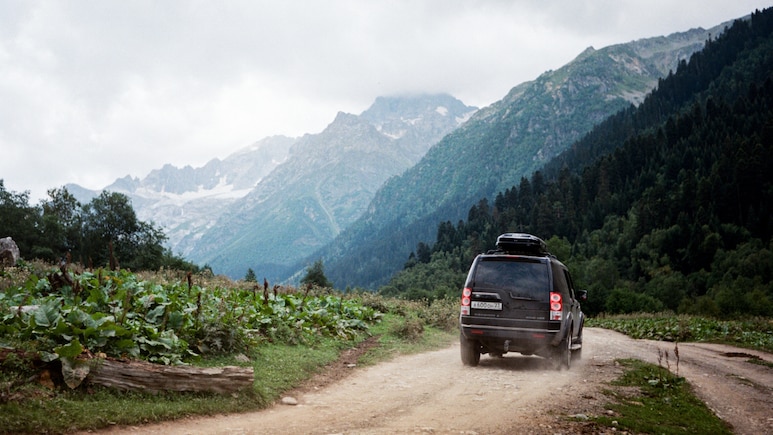
A trip to Europe is hardly uncommon anymore. Flying from India to Paris, London, Amsterdam, or Rome is a fairly simple holiday plan. But getting to Europe by road is a very different proposition.
It is possible, but obviously, you can't simply just drive across one long highway. You have to cross multiple countries, borders, and visa systems. Depending on the route, the journey from India to London can cover roughly 15,000 km and take six weeks or more.
For travellers who like long road trips, that is also what makes the idea interesting.
The 15,000-Km Road Trip Across 20 Countries
Yes, an overland journey from India to Europe can be done by road. The route can cover 15 or more countries. Some itineraries can even stretch to 20 countries, depending on where travellers enter Europe and how many places they stop at along the way.
When it comes to which direction you start driving towards, there are a few options. One possible route starts with Nepal, then China, covering Kyrgyzstan, Uzbekistan, Kazakhstan, and Russia, before finally entering Europe through Belarus. To further continue the journey towards London, you need to cross Poland, Germany, the Netherlands, Belgium, and France, and then finally come to the UK.
This route covers a large part of Central Asia before reaching Europe.
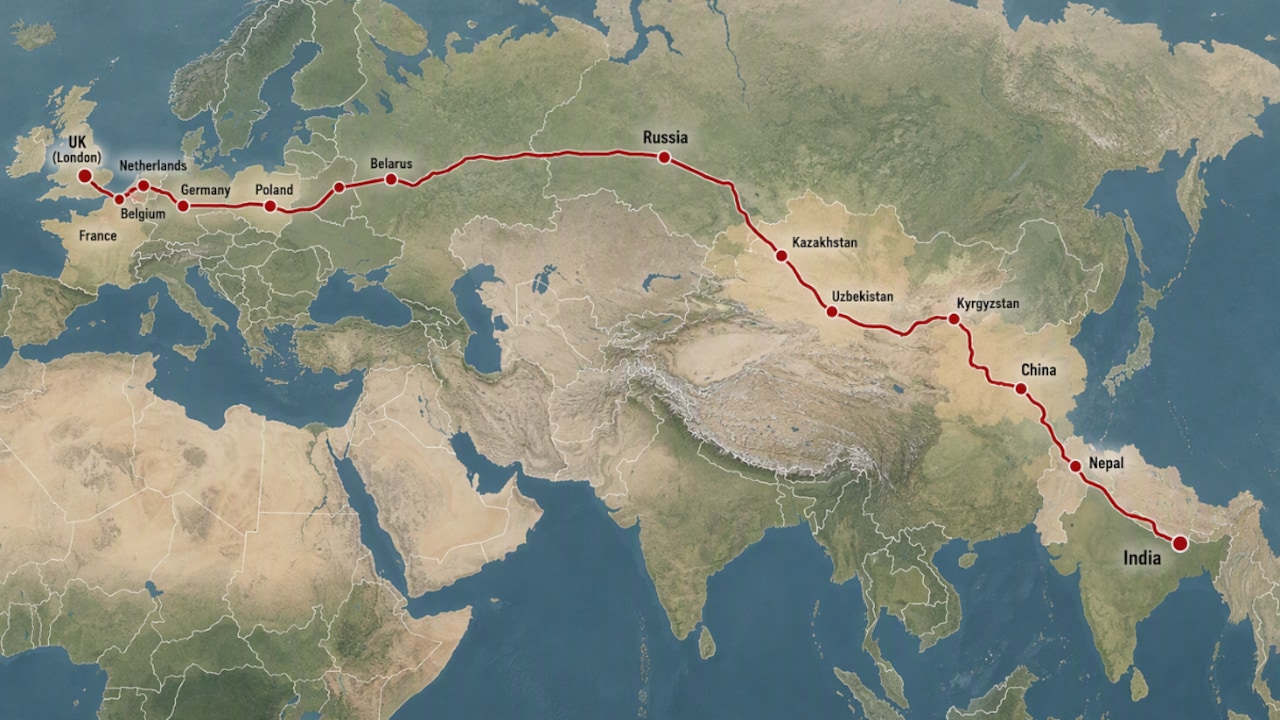
A longer itinerary can also include Georgia and Turkiye before continuing into Europe. Adventures Overland's itinerary for the 2027 expedition, for example, covers India, Nepal, China, Kyrgyzstan, Uzbekistan, Kazakhstan, Russia, Georgia, Turkiye, Bulgaria, Serbia, Croatia, Hungary, Slovakia, Czechia, Germany, the Netherlands, Belgium, France and the UK over 69 days.
Also Read: Name Mismatch On Flight Ticket? Know Boarding, Refund Rules Before You Fly
That is why there is no single fixed "India to Europe by road" itinerary. The number of countries and total duration depend on the route and the amount of time spent in each place.
The other broad option is to go via Pakistan, Iran, and Turkiye to reach Europe. From there, travellers can continue through countries such as Greece, Bulgaria, Serbia, Hungary, Austria, Germany and France before reaching the UK.
The major crossings on this route include the Wagah border between India and Pakistan, the Taftan border between Pakistan and Iran, and Kapikule on the Turkiye-Europe route.
When picking a route, you can't simply choose the countries you would want a stopover at. Before you even start your car, information about order permissions and current entry conditions is critical, especially for the India-Pakistan leg. These need to be checked before planning the journey.
The Duration Is Largely Subjective
The basic journey can take about six weeks, but that only applies if you don't stop to explore every country you cross. If sightseeing is part of your plan, the trip can become considerably longer. Adventures Overland's itinerary covers 20 countries and is planned over 69 days.
Clearly, there is a big gap between reaching London in the shortest practical time and actually having time to stop in the countries you cross.
A trip that takes you through so many countries is bound to be expensive, but to be able to cover it by road is what makes it worth the pound. And fuel is only one part of the expense.
Travellers also have to arrange for international visas, accommodation, food, toll taxes, maintenance of the vehicle, border and permit requirements, and variables of sightseeing.
The Documentation Is More Complicated Than A Regular International Trip
Technically, it's the documentation that makes an India-to-Europe road trip so much more complicated than any other international holiday.
Here's a list of things travellers must carry:
- A valid passport with plenty of blank pages.
- Visas for every country you will enter. Checking the latest immigration rules is important so that you don't miss out on any formalities.
- An International Driving Permit that lets you drive in foreign countries.
- Then there is the document that applies specifically to the vehicle.
- The Carnet de Passages en Douane, or CPD, a customs document that is used when taking a vehicle across international borders.
Even if you have all the documents in hand, think it through before you commit to being on the road for weeks. Yes, driving for so many days at a stretch is difficult, but that's only part of it.
Travellers must ensure that the vehicle they take is reliable. Supplies and accommodation also need to be managed. And the itinerary needs enough flexibility for unexpected delays at borders or on the road.
Also Read: Indian Apple Pay Users Can Now Use Their iPhone As A Metro Ticket Abroad
There is also the question of geopolitical conditions. A route that works on paper may not be practical when border rules or regional conditions change.
That is why current travel advisories and border information need to be checked before setting off.
Obviously, flying is easier. You don't have to take your own vehicle through multiple customs checkpoints and road borders. You also avoid weeks of driving and the associated fuel, maintenance and accommodation costs.
But that is also why the road journey appeals to a very specific kind of traveller. You are not just going to Europe. You are driving through the route that gets you there.
From India, the landscape changes gradually. So do the languages, food, road systems, currencies and border procedures. By the time you reach London, the trip itself has already covered thousands of kilometres and multiple countries.
That is what makes an India-to-Europe road trip possible, but far from simple.
Track Latest News Live on NDTV.com and get news updates from India and around the world


