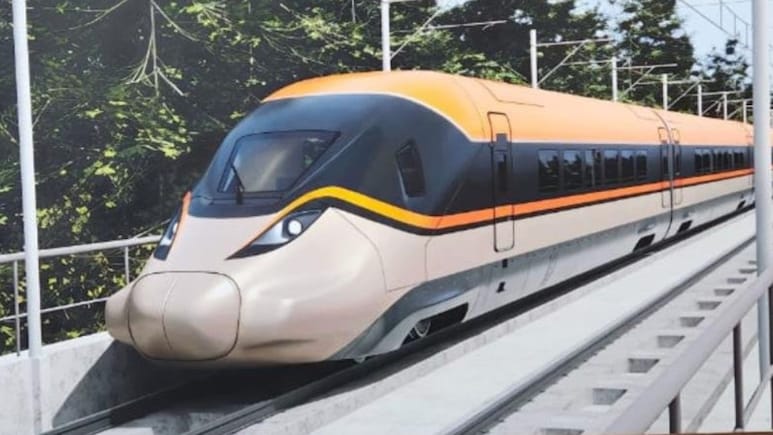
Travelling from Delhi to Varanasi could soon become much faster with the proposed bullet train corridor. The project, which has received approval from Prime Minister Narendra Modi, will reduce the journey time between the two cities to just 3.5 hours.
The proposed corridor will start in Delhi and connect several key cities, including Agra, Kanpur, Lucknow and Ayodhya. It will then extend towards Guwahati via Varanasi, Patna and Siliguri. The journey from Delhi to Agra is also expected to take just 59 minutes.
Delhi-Varanasi Bullet Train To Cover 807 Km In 3.5 Hours
Varanasi is located approximately 800 km from Delhi, and existing premium trains such as the Tejas Express and Rajdhani Express take over 10 hours to cover the distance. The New Delhi-Varanasi Vande Bharat Express, on the other hand, completes the journey in 8 hours. The proposed bullet train is expected to bring down the travel time significantly, completing the journey in just 3 hours and 33 minutes.
The journey from Delhi to Agra is expected to take just 59 minutes. Other proposed travel times include 33 minutes between Delhi and Prayagraj, 1 hour and 45 minutes to Kanpur and 2 hours and 12 minutes to Lucknow.
The journey from Varanasi to Lucknow is expected to take 1 hour and 21 minutes, while Varanasi to Agra could take 2 hours and 34 minutes. Passengers travelling from Varanasi to Patna are expected to cover the distance in approximately one hour.
Also Read: Soon, Bullet Trains Will Run Under The Sea In India. Massive Tunnel In Progress
The train schedules will also be coordinated to ensure seamless connectivity at Varanasi, according to reports. Passengers arriving from Siliguri will be able to get off one bullet train and board another departing for Delhi.
How Is The Proposed Corridor Expected To Cut Travel Time?
Unlike conventional trains, which operate at comparatively lower speeds and make several stops, bullet trains are designed for high-speed travel. They operate at 300-350 kmph, which allows them to cover long distances much faster.
The reduction in travel time will be possible through a dedicated high-speed rail corridor designed to support faster train operations, rather than sharing tracks with regular passenger and freight services. The proposed network will also feature modern signalling systems and advanced railway infrastructure to support high-speed operations
The proposed corridor connecting major cities is expected to make intercity journeys considerably shorter and improve access for people travelling for work, education, tourism and other purposes. The final operational schedules and other details are yet to be announced.
Track Latest News Live on NDTV.com and get news updates from India and around the world


