Solar Storm Impact
- All
- News
- Videos
-
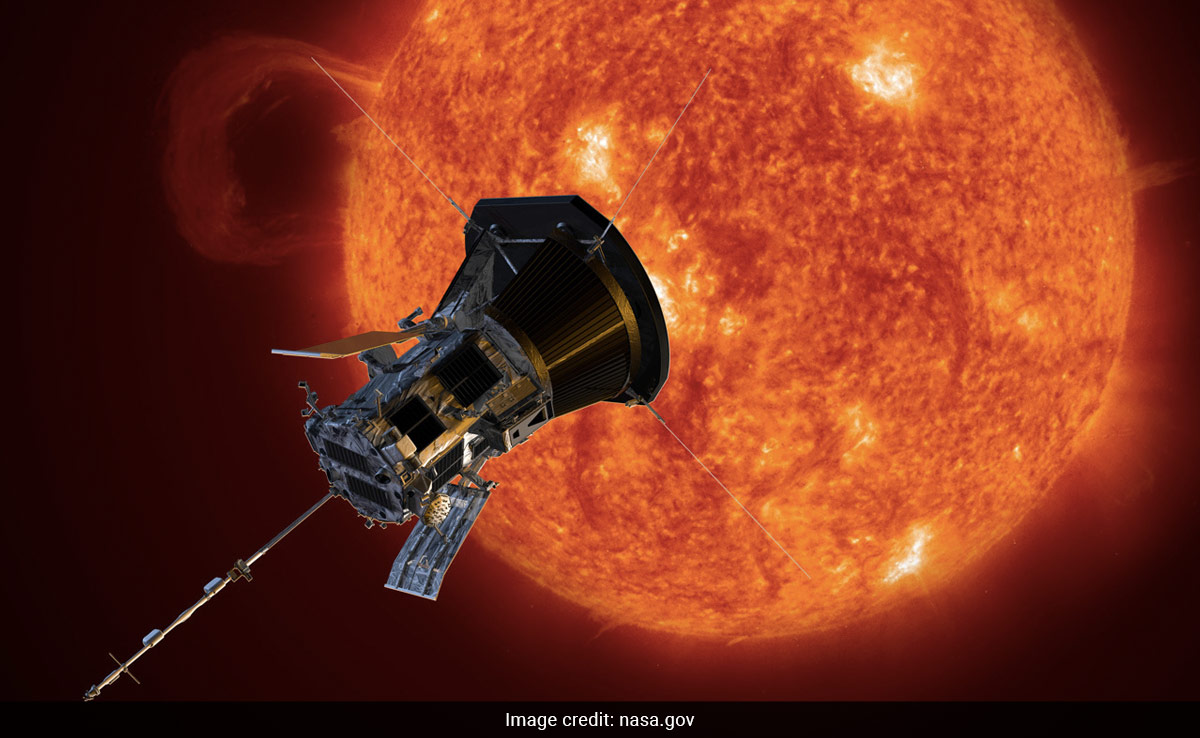
NASA’s Parker Solar Probe Observes Solar Wind Making ‘U-Turn’, Shedding Light on Space Weather
- Wednesday December 17, 2025
- Written by Gadgets 360 Staff
NASA’s Parker Solar Probe captured solar wind reversing toward the sun, revealing how magnetic fields recycle coronal material. This process, seen during a close flyby, helps refine models of space weather and may allow scientists to better predict solar storms that can impact satellites, communications, and power systems across the solar system.
-
www.gadgets360.com
-
With The Sun Nearing Its Peak, Aditya-L1 Prepares For Fierce Coronal Mass Ejections
- Monday December 1, 2025
- Science | Edited by Astitva Raj
Although CMEs do not directly harm humans, their impact on technological infrastructure can be severe.
-
www.ndtv.com
-
Indian Scientists Unravel the Mystery Behind Rare Aurora Over Ladakh
- Sunday July 20, 2025
- Written by Gadgets 360 Staff
A team of Indian astronomers has successfully explained the rare aurora seen over Ladakh, caused by intense solar activity and CME collisions. The event, captured in May 2024, was traced using global data and advanced solar models, offering new insights into space weather forecasting and solar storm impacts on Earth.
-
www.gadgets360.com
-
X-Class Solar Flare From Emerging Sunspot Causes Radio Blackouts
- Wednesday April 2, 2025
- Written by Gadgets 360 Staff
An unexpected X1.1-class solar flare erupted from sunspot AR4046, triggering shortwave radio blackouts over North and South America. The flare originated from the sun’s eastern limb and was accompanied by a coronal mass ejection that is not expected to impact Earth. Space weather experts have warned that the sunspot will face Earth in the coming ...
-
www.gadgets360.com
-
Solar Storm to Trigger Northern Lights in US: Visibility, Timing & Impact
- Thursday March 6, 2025
- Written by Gadgets 360 Staff
A solar storm is expected to reach Earth tonight, potentially creating auroras visible as far south as New York and Idaho. The Space Weather Prediction Center (SWPC) of NOAA forecasts a G1-class geomagnetic storm, with a possibility of stronger G2 conditions. This may lead to disruptions in GPS and radio signals. The best time to witness the northe...
-
www.gadgets360.com
-
Tiny Plasma Jets on Sun Identified as Key Drivers of Solar Wind
- Friday February 14, 2025
- Written by Gadgets 360 Staff
Observations from ESA’s Solar Orbiter have revealed that tiny plasma jets, known as picoflares, are responsible for both the fast and slow components of the solar wind. The discovery challenges previous assumptions that different mechanisms drive these solar wind types. With further research, scientists hope to refine space weather predictions, p...
-
www.gadgets360.com
-
May 2024 Solar Storm Triggers Unusual Radiation Belts, Raising Space Safety Concerns
- Wednesday February 12, 2025
- Written by Gadgets 360 Staff
A significant solar storm in May 2024 led to the creation of two temporary radiation belts, detected by the CIRBE satellite in June. One belt contained high-energy electrons, while the other was rich in protons, a rare occurrence. While the electron belt dissipated in three months, the proton-dominated belt remains, potentially affecting space miss...
-
www.gadgets360.com
-
Massive Coronal Hole on Sun Sends High-Speed Solar Wind Toward Earth
- Tuesday February 4, 2025
- Written by Gadgets 360 Staff
A giant 800,000 km coronal hole on the Sun is unleashing high-speed solar wind toward Earth, potentially triggering a G1 geomagnetic storm on January 31 and February 1. The NOAA has issued a watch, predicting enhanced auroras in higher latitudes. While G1 storms are minor, they can impact satellites and power grids. The storm’s intensity remains ...
-
www.gadgets360.com
-
Massive 500,000-Mile Coronal Hole on the Sun Blasts Solar Wind Toward Earth
- Thursday January 30, 2025
- Written by Gadgets 360 Staff
A gigantic coronal hole, spanning 500,000 miles, has formed on the sun’s surface, allowing solar wind to escape at speeds of over 310 miles per second. Forecasts indicate that this solar wind may reach Earth by January 31, triggering a minor (G1) geomagnetic storm. While no severe impact is expected, the storm could enhance auroras at higher lati...
-
www.gadgets360.com
-
NASA’s Parker Solar Probe Observes Solar Wind Making ‘U-Turn’, Shedding Light on Space Weather
- Wednesday December 17, 2025
- Written by Gadgets 360 Staff
NASA’s Parker Solar Probe captured solar wind reversing toward the sun, revealing how magnetic fields recycle coronal material. This process, seen during a close flyby, helps refine models of space weather and may allow scientists to better predict solar storms that can impact satellites, communications, and power systems across the solar system.
-
www.gadgets360.com
-
With The Sun Nearing Its Peak, Aditya-L1 Prepares For Fierce Coronal Mass Ejections
- Monday December 1, 2025
- Science | Edited by Astitva Raj
Although CMEs do not directly harm humans, their impact on technological infrastructure can be severe.
-
www.ndtv.com
-
Indian Scientists Unravel the Mystery Behind Rare Aurora Over Ladakh
- Sunday July 20, 2025
- Written by Gadgets 360 Staff
A team of Indian astronomers has successfully explained the rare aurora seen over Ladakh, caused by intense solar activity and CME collisions. The event, captured in May 2024, was traced using global data and advanced solar models, offering new insights into space weather forecasting and solar storm impacts on Earth.
-
www.gadgets360.com
-
X-Class Solar Flare From Emerging Sunspot Causes Radio Blackouts
- Wednesday April 2, 2025
- Written by Gadgets 360 Staff
An unexpected X1.1-class solar flare erupted from sunspot AR4046, triggering shortwave radio blackouts over North and South America. The flare originated from the sun’s eastern limb and was accompanied by a coronal mass ejection that is not expected to impact Earth. Space weather experts have warned that the sunspot will face Earth in the coming ...
-
www.gadgets360.com
-
Solar Storm to Trigger Northern Lights in US: Visibility, Timing & Impact
- Thursday March 6, 2025
- Written by Gadgets 360 Staff
A solar storm is expected to reach Earth tonight, potentially creating auroras visible as far south as New York and Idaho. The Space Weather Prediction Center (SWPC) of NOAA forecasts a G1-class geomagnetic storm, with a possibility of stronger G2 conditions. This may lead to disruptions in GPS and radio signals. The best time to witness the northe...
-
www.gadgets360.com
-
Tiny Plasma Jets on Sun Identified as Key Drivers of Solar Wind
- Friday February 14, 2025
- Written by Gadgets 360 Staff
Observations from ESA’s Solar Orbiter have revealed that tiny plasma jets, known as picoflares, are responsible for both the fast and slow components of the solar wind. The discovery challenges previous assumptions that different mechanisms drive these solar wind types. With further research, scientists hope to refine space weather predictions, p...
-
www.gadgets360.com
-
May 2024 Solar Storm Triggers Unusual Radiation Belts, Raising Space Safety Concerns
- Wednesday February 12, 2025
- Written by Gadgets 360 Staff
A significant solar storm in May 2024 led to the creation of two temporary radiation belts, detected by the CIRBE satellite in June. One belt contained high-energy electrons, while the other was rich in protons, a rare occurrence. While the electron belt dissipated in three months, the proton-dominated belt remains, potentially affecting space miss...
-
www.gadgets360.com
-
Massive Coronal Hole on Sun Sends High-Speed Solar Wind Toward Earth
- Tuesday February 4, 2025
- Written by Gadgets 360 Staff
A giant 800,000 km coronal hole on the Sun is unleashing high-speed solar wind toward Earth, potentially triggering a G1 geomagnetic storm on January 31 and February 1. The NOAA has issued a watch, predicting enhanced auroras in higher latitudes. While G1 storms are minor, they can impact satellites and power grids. The storm’s intensity remains ...
-
www.gadgets360.com
-
Massive 500,000-Mile Coronal Hole on the Sun Blasts Solar Wind Toward Earth
- Thursday January 30, 2025
- Written by Gadgets 360 Staff
A gigantic coronal hole, spanning 500,000 miles, has formed on the sun’s surface, allowing solar wind to escape at speeds of over 310 miles per second. Forecasts indicate that this solar wind may reach Earth by January 31, triggering a minor (G1) geomagnetic storm. While no severe impact is expected, the storm could enhance auroras at higher lati...
-
www.gadgets360.com