



Quasars
-
{
- All
- News
-

Scientists Discover 77 Rare Red Quasars Hidden Behind Cosmic Dust
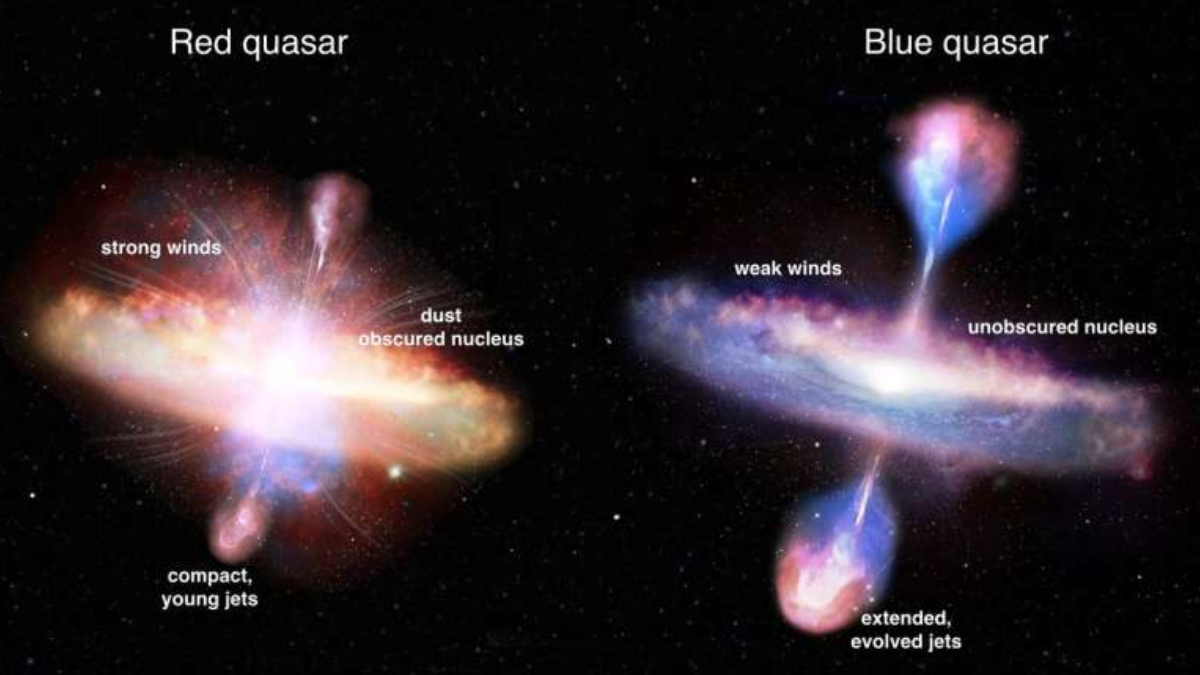
Scientists have discovered 77 rare red quasars hidden behind cosmic dust using NASA’s SPHEREx telescope. The findings support theories linking galaxy mergers to rapid black hole growth and galaxy evolution.
-
New Einstein Cross Reveals Surprising Galaxy Evolution
Astronomers discovered a rare Einstein Cross around galaxy J1453g, revealing a stellar structure similar to the Milky Way. The finding challenges current theories of how elliptical galaxies form and evolve.
-
Indian Team Finds 53 Massive Quasars Blasting Jets Millions of Light-Years Long
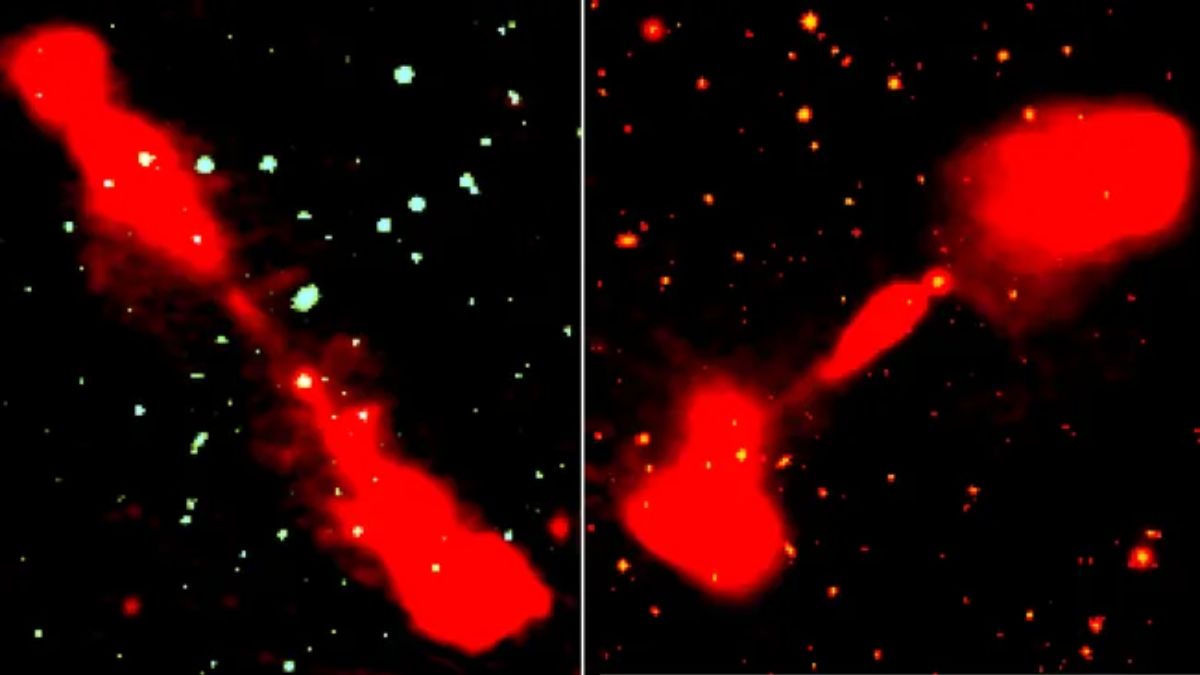
Astronomers in India have identified 53 previously unknown giant radio quasars powered by supermassive black holes, each releasing enormous plasma jets reaching up to 7.2 million light-years—nearly 50 times the Milky Way’s diameter. Using GMRT data, the team expanded the catalog of known giant quasars and offered valuable clues about how black ...
-
Supermassive Black Hole Burps Matter at Near-Light Speeds After Consuming Gas Too Fast
Astronomers observed a supermassive black hole expelling gas at nearly a third the speed of light after consuming matter too fast. This outflow could suppress star formation by heating and ejecting gas, revealing how black holes regulate galaxy evolution. The finding helps decode the feedback mechanisms of quasars and active galactic nuclei in shap...
-
NASA Chandra Spots Distant X-Ray Jet; Telescope Faces Major Budget Cuts
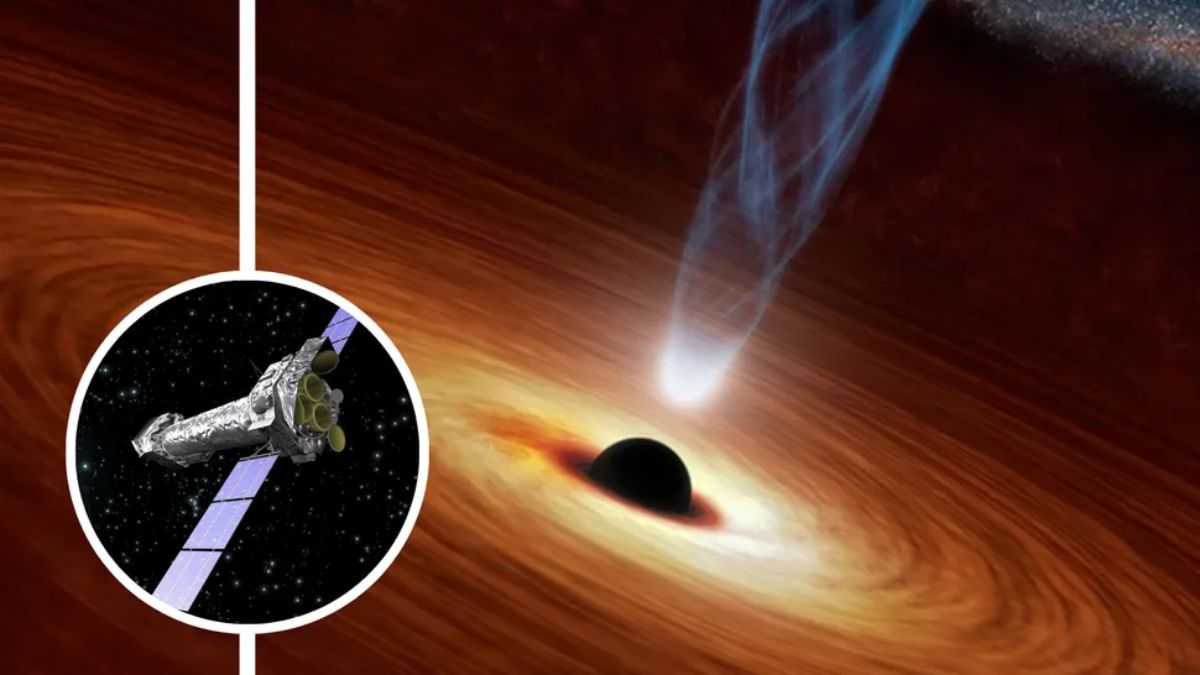
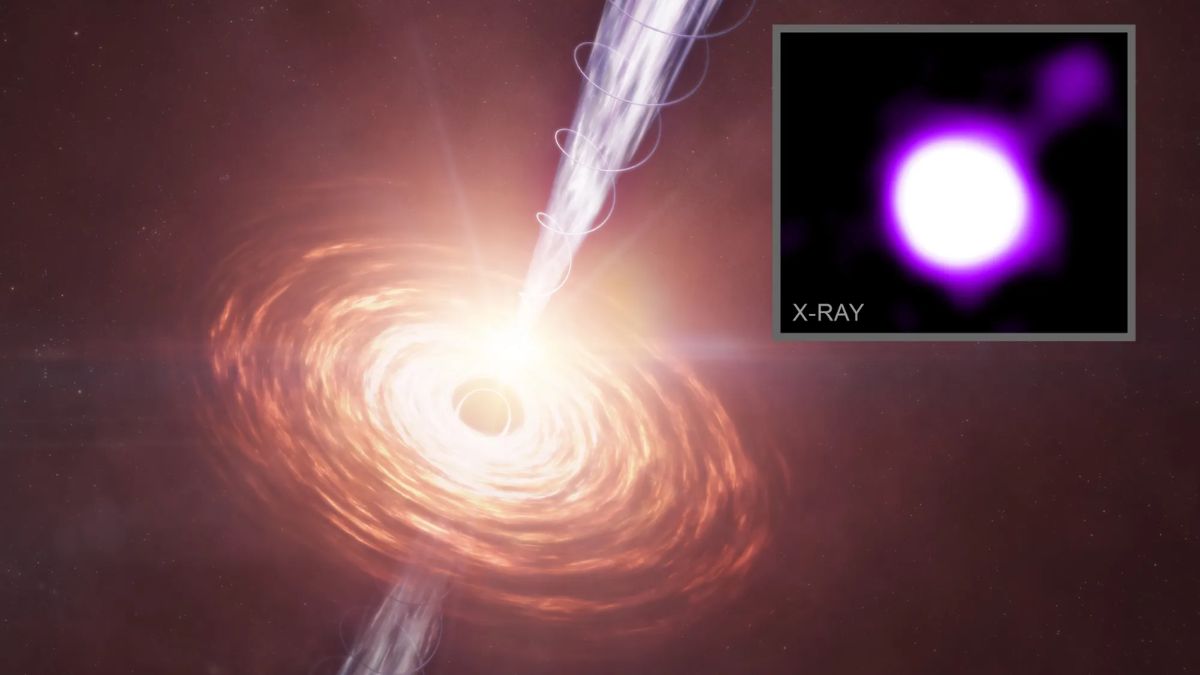
NASA’s Chandra X-ray Observatory has detected a massive X-ray jet from quasar J1610+1811, 11.6 billion light-years away. The jet travels at nearly the speed of light, illuminating black hole behavior during the universe’s early era. However, Chandra now faces potential defunding under NASA’s proposed budget. Astronomers warn that cutting Chan...
-
NASA’s Chandra Spots Unexpectedly Strong Jet from Distant Black Hole at Cosmic Noon
NASA’s Chandra telescope has spotted two powerful black hole jets from over 11.6 billion light-years away. Detected during the universe’s cosmic noon, these jets reveal rare high-speed behaviour boosted by Big Bang remnants. The findings, which factor in relativistic effects, shed new light on early black hole growth and will be published in Th...
-
Astronomers Find a 200,000-Light-Year Black Hole Jet in the Early Universe
Astronomers have identified the longest black hole jet observed in the early universe, stretching 200,000 light-years—twice the Milky Way’s width. Found in quasar J1601+3102, this jet was detected using the LOFAR telescope. Despite the black hole being 450 million times the Sun’s mass, it isn’t among the most massive. Scientists believe env...
-
Astronomers Discover 19 New Quasars Using DESI Legacy Surveys Data
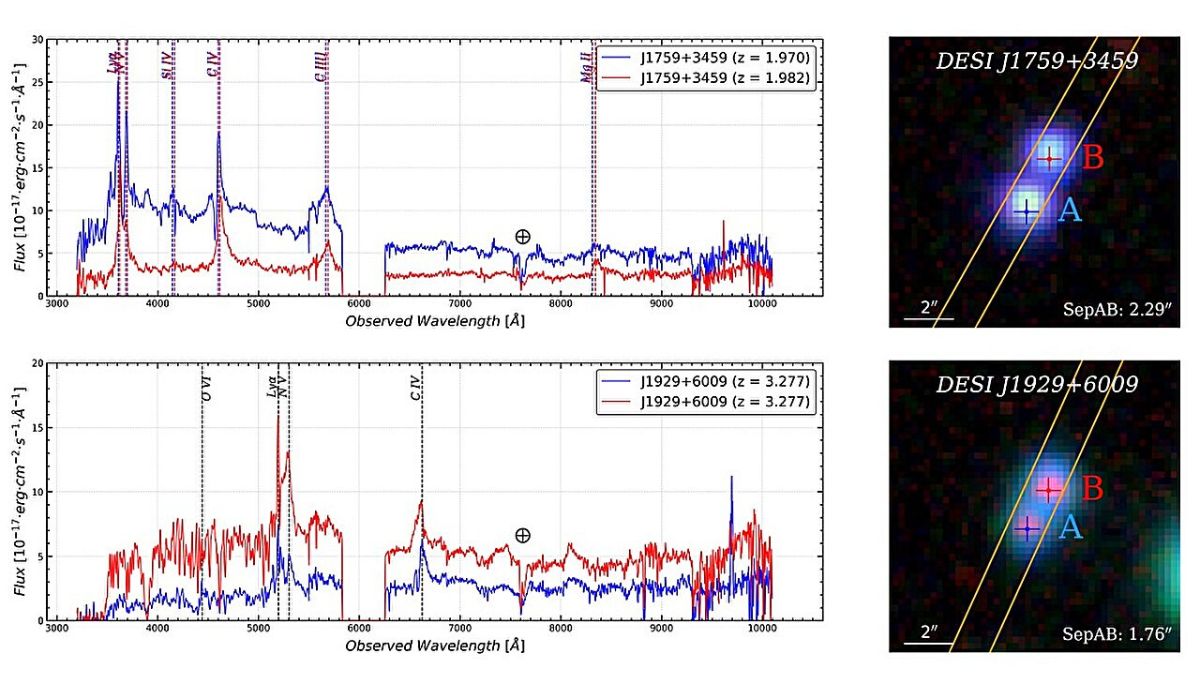
Using data from the DESI Legacy Surveys photometry catalog, 19 new quasars were identified, including strongly-lensed, dual, and projected types. Observations were carried out on October 15–16, 2023, at California's Palomar Observatory using the P200/DBSP instrument. Among the findings are two lensed quasars, J0746+1344 and J2121-0826, which exhi...
-
Powerful Beam From Ancient Black Hole 12.9 Billion Light-Years Away Targets Earth
Supermassive black holes with powerful jets of high-energy particles, pointing directly at Earth are called blazars.
-
140 Trillion Oceans Of Water Found In Space Around 12 Billion Light-Years Away
This vast reservoir resides near a supermassive black hole, approximately 20 billion times more massive than our sun.
-
Hubble Captures Closest View of Quasar 3C 273, Revealing Mysterious Structures
The Hubble Space Telescope has provided an unprecedented view of quasar 3C 273, one of the brightest objects in the universe, unveiling mysterious features near its core. These include an L-shaped structure and blobs, likely smaller galaxies feeding the quasar’s black hole. The discovery also highlights a massive jet spanning 300,000 light-years ...
-
Hubble Offers Closest Look at Quasar 3C 273, Reveal Hidden Structures
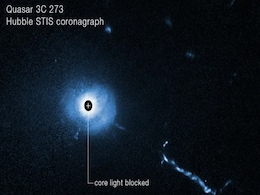
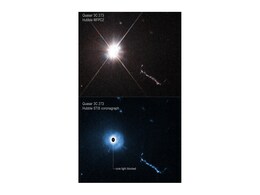
NASA’s Hubble Space Telescope has captured unprecedented views of quasar 3C 273, located 2.5 billion light-years away. Using the STIS coronagraph, researchers uncovered unusual structures around the black hole, including an extragalactic jet and a mysterious L-shaped filament. The findings hint at galaxy interactions fuelling the quasar’s activ...
-
James Webb Space Telescope Spots Massive Black Hole With Half the Mass of Its Surrounding Galaxy
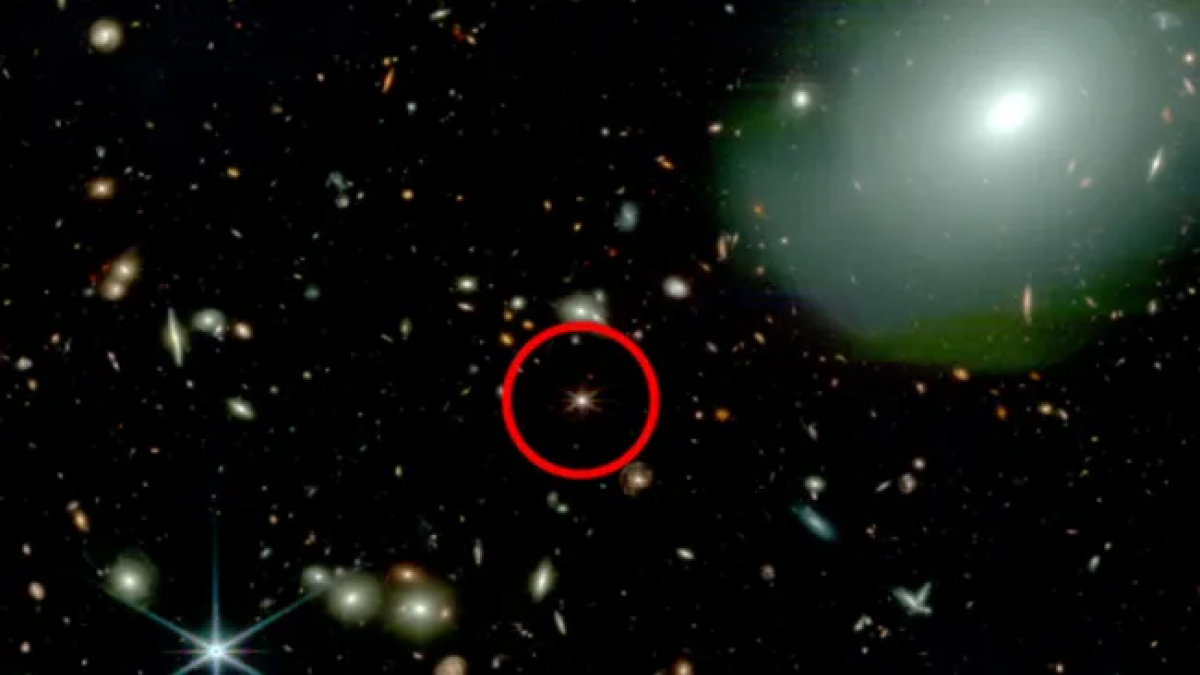
A groundbreaking discovery has been made with the identification of a remarkably massive black hole in the quasar ULAS J1120+0641. This black hole, with a mass of 1.4 billion solar masses, constitutes nearly half of the total mass of its host galaxy. Observations were made using the James Webb Space Telescope, which provided unprecedented detail in...
-
JWST Spots Isolated Supermassive Black Hole-Powered Quasars in the Early Universe
A team using the James Webb Space Telescope has discovered supermassive black hole-powered quasars in unexpectedly isolated environments. These lonely quasars, some of the earliest in the universe, present a mystery as they lack the dense surroundings that current theories suggest are needed for black hole growth. This discovery is pushing scientis...
-
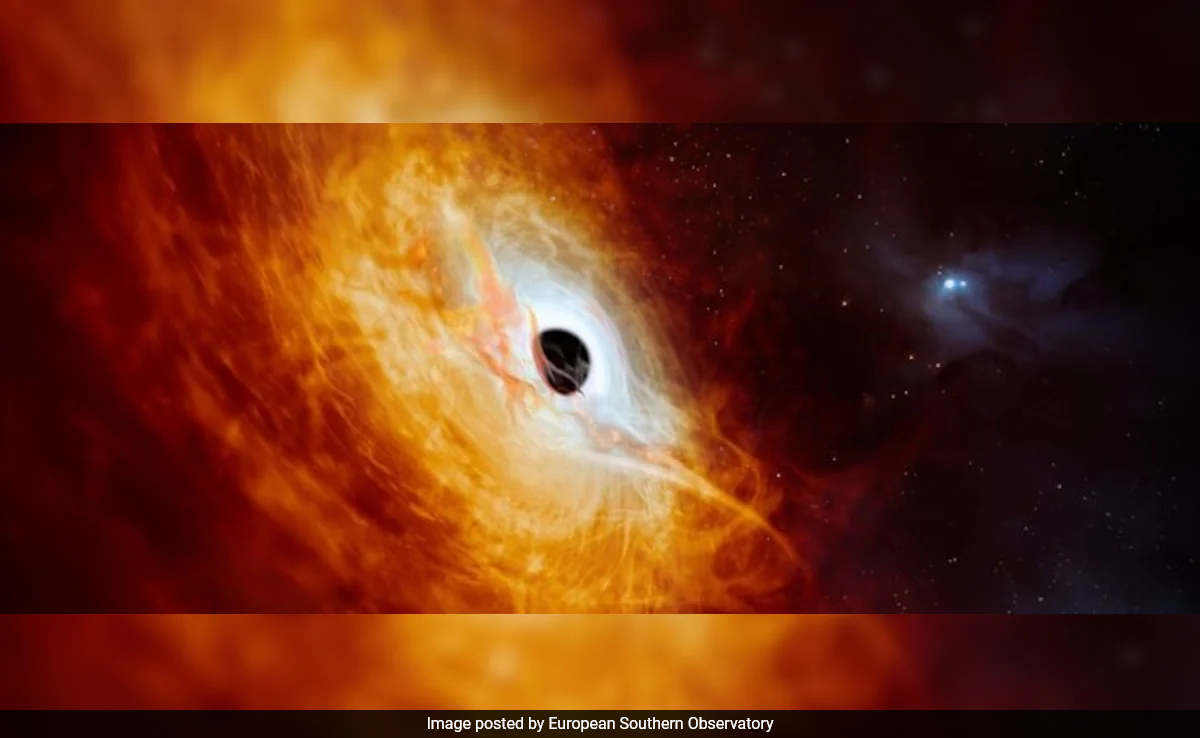
Astronomers Discover Object 500 Trillion Times Brighter Than The Sun
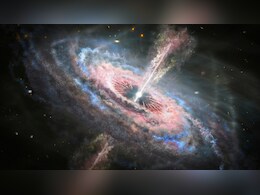
Quasars are the extremely bright cores of galaxies, powered by supermassive black holes at their centres.


-
Scientists Discover 77 Rare Red Quasars Hidden Behind Cosmic Dust
Scientists have discovered 77 rare red quasars hidden behind cosmic dust using NASA’s SPHEREx telescope. The findings support theories linking galaxy mergers to rapid black hole growth and galaxy evolution.
-
New Einstein Cross Reveals Surprising Galaxy Evolution
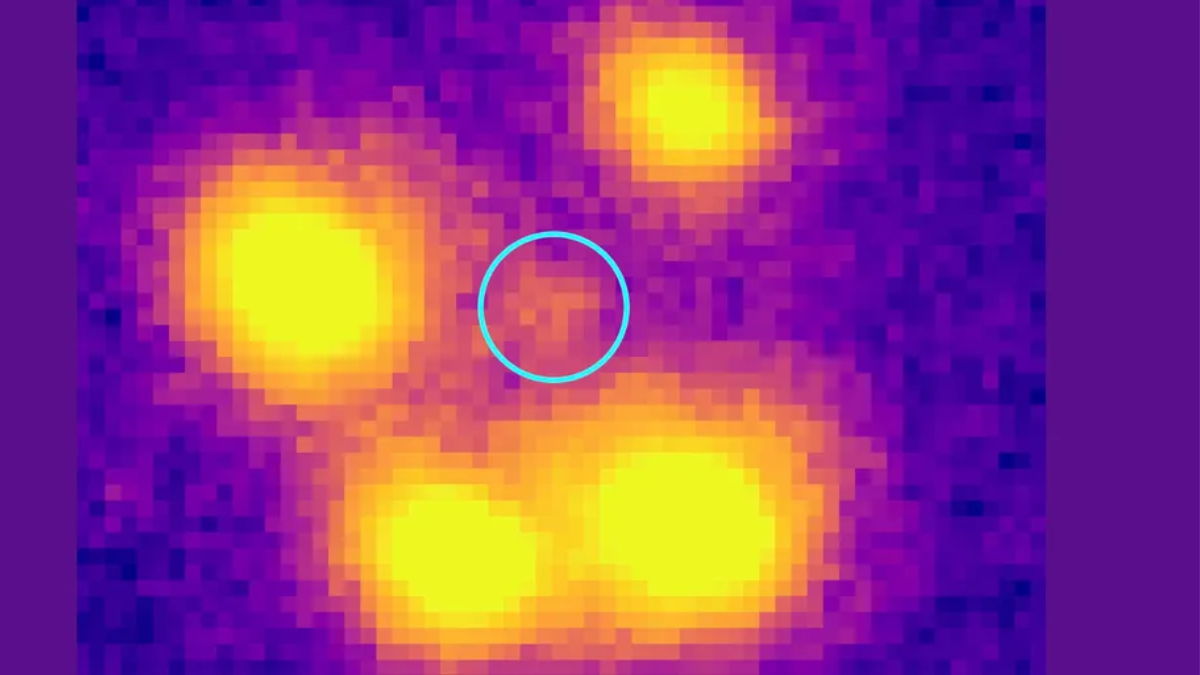
Astronomers discovered a rare Einstein Cross around galaxy J1453g, revealing a stellar structure similar to the Milky Way. The finding challenges current theories of how elliptical galaxies form and evolve.
-
Indian Team Finds 53 Massive Quasars Blasting Jets Millions of Light-Years Long
Astronomers in India have identified 53 previously unknown giant radio quasars powered by supermassive black holes, each releasing enormous plasma jets reaching up to 7.2 million light-years—nearly 50 times the Milky Way’s diameter. Using GMRT data, the team expanded the catalog of known giant quasars and offered valuable clues about how black ...
-
Supermassive Black Hole Burps Matter at Near-Light Speeds After Consuming Gas Too Fast
Astronomers observed a supermassive black hole expelling gas at nearly a third the speed of light after consuming matter too fast. This outflow could suppress star formation by heating and ejecting gas, revealing how black holes regulate galaxy evolution. The finding helps decode the feedback mechanisms of quasars and active galactic nuclei in shap...
-
NASA Chandra Spots Distant X-Ray Jet; Telescope Faces Major Budget Cuts
NASA’s Chandra X-ray Observatory has detected a massive X-ray jet from quasar J1610+1811, 11.6 billion light-years away. The jet travels at nearly the speed of light, illuminating black hole behavior during the universe’s early era. However, Chandra now faces potential defunding under NASA’s proposed budget. Astronomers warn that cutting Chan...
-
NASA’s Chandra Spots Unexpectedly Strong Jet from Distant Black Hole at Cosmic Noon
NASA’s Chandra telescope has spotted two powerful black hole jets from over 11.6 billion light-years away. Detected during the universe’s cosmic noon, these jets reveal rare high-speed behaviour boosted by Big Bang remnants. The findings, which factor in relativistic effects, shed new light on early black hole growth and will be published in Th...
-
Astronomers Find a 200,000-Light-Year Black Hole Jet in the Early Universe
Astronomers have identified the longest black hole jet observed in the early universe, stretching 200,000 light-years—twice the Milky Way’s width. Found in quasar J1601+3102, this jet was detected using the LOFAR telescope. Despite the black hole being 450 million times the Sun’s mass, it isn’t among the most massive. Scientists believe env...
-
Astronomers Discover 19 New Quasars Using DESI Legacy Surveys Data
Using data from the DESI Legacy Surveys photometry catalog, 19 new quasars were identified, including strongly-lensed, dual, and projected types. Observations were carried out on October 15–16, 2023, at California's Palomar Observatory using the P200/DBSP instrument. Among the findings are two lensed quasars, J0746+1344 and J2121-0826, which exhi...
-
Powerful Beam From Ancient Black Hole 12.9 Billion Light-Years Away Targets Earth
Supermassive black holes with powerful jets of high-energy particles, pointing directly at Earth are called blazars.
-
140 Trillion Oceans Of Water Found In Space Around 12 Billion Light-Years Away
This vast reservoir resides near a supermassive black hole, approximately 20 billion times more massive than our sun.
-
Hubble Captures Closest View of Quasar 3C 273, Revealing Mysterious Structures
The Hubble Space Telescope has provided an unprecedented view of quasar 3C 273, one of the brightest objects in the universe, unveiling mysterious features near its core. These include an L-shaped structure and blobs, likely smaller galaxies feeding the quasar’s black hole. The discovery also highlights a massive jet spanning 300,000 light-years ...
-
Hubble Offers Closest Look at Quasar 3C 273, Reveal Hidden Structures
NASA’s Hubble Space Telescope has captured unprecedented views of quasar 3C 273, located 2.5 billion light-years away. Using the STIS coronagraph, researchers uncovered unusual structures around the black hole, including an extragalactic jet and a mysterious L-shaped filament. The findings hint at galaxy interactions fuelling the quasar’s activ...
-
James Webb Space Telescope Spots Massive Black Hole With Half the Mass of Its Surrounding Galaxy
A groundbreaking discovery has been made with the identification of a remarkably massive black hole in the quasar ULAS J1120+0641. This black hole, with a mass of 1.4 billion solar masses, constitutes nearly half of the total mass of its host galaxy. Observations were made using the James Webb Space Telescope, which provided unprecedented detail in...
-
JWST Spots Isolated Supermassive Black Hole-Powered Quasars in the Early Universe
A team using the James Webb Space Telescope has discovered supermassive black hole-powered quasars in unexpectedly isolated environments. These lonely quasars, some of the earliest in the universe, present a mystery as they lack the dense surroundings that current theories suggest are needed for black hole growth. This discovery is pushing scientis...
-
Astronomers Discover Object 500 Trillion Times Brighter Than The Sun
Quasars are the extremely bright cores of galaxies, powered by supermassive black holes at their centres.

