



Milky Way Like Galaxy
-
{
- All
- News
-

NASA’s TESS Captures First Images of Rare Interstellar Comet 3I/ATLAS
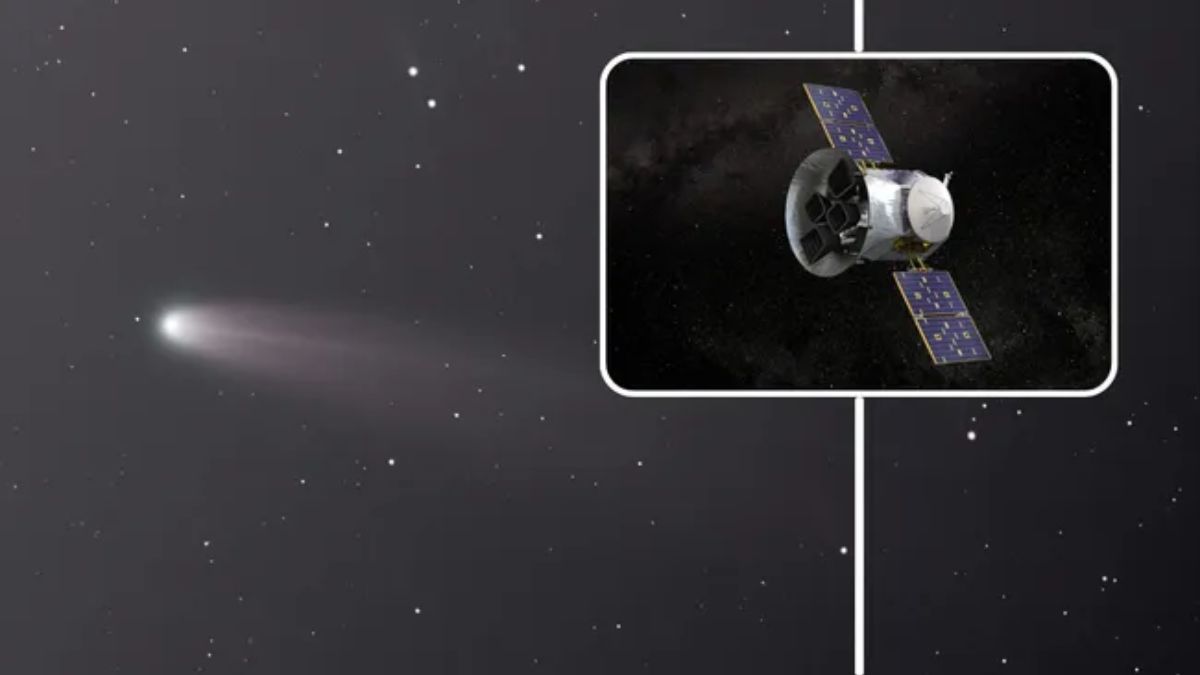
NASA’s Transiting Exoplanet Survey Satellite has captured rare images of interstellar comet 3I/ATLAS, only the third such object ever detected. Observations from January 2026 reveal the comet rotates every 15 hours and produces sunlight-driven jets, behaving much like Solar System comets. Scientists say studying 3I/ATLAS may unlock clues about th...
-
Astronomers Look to the Large Magellanic Cloud to Study How Stars Are Born
The Large Magellanic Cloud is a nearby dwarf galaxy glowing with star birth. Just 160,000 light-years away, it hosts vast nebulae like the Tarantula and historic events such as Supernova 1987A, offering astronomers a rare, close-up laboratory to study how stars form, evolve, and explode.
-
Extreme Star Factory: ALMA Detects Galaxy Y1 Forming Stars 180 Times Faster Than the Milky Way
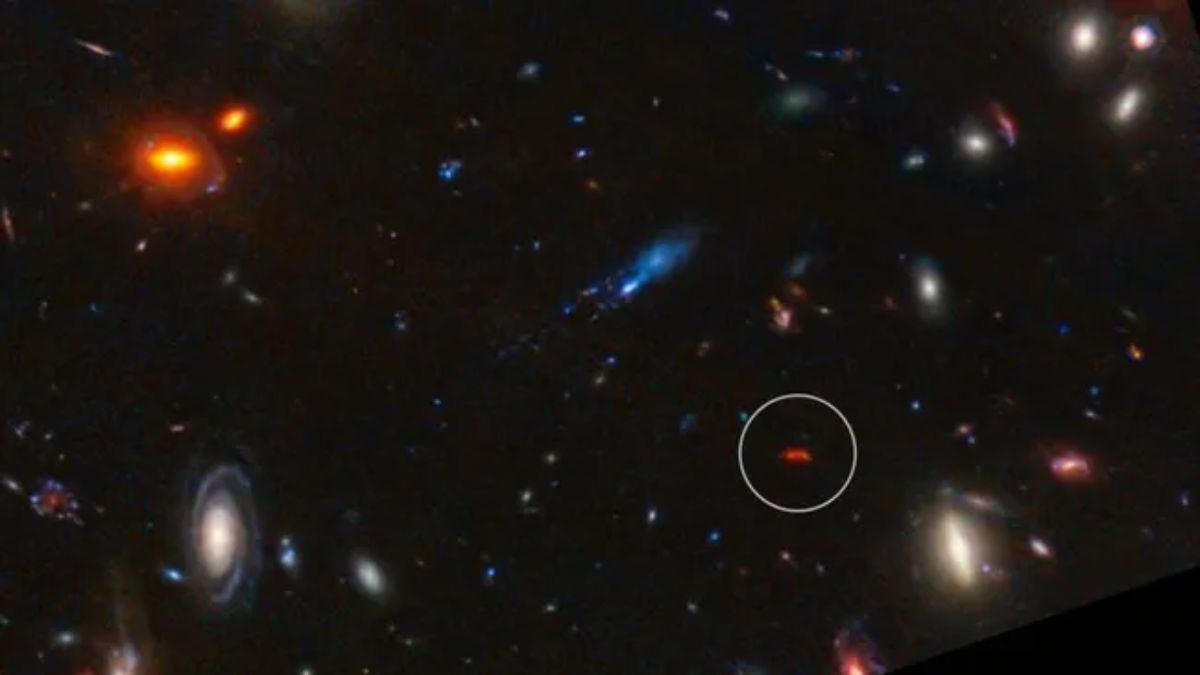
Using ALMA’s ultra-sensitive Band 9 observations, astronomers identified galaxy Y1 as an extreme star-forming system in the early universe. Producing stars at 180 solar masses per year, Y1 reveals how intense, short-lived starbursts helped shape young galaxies and may have been more common than previously believed.
-
Hubble Uncovers Multi-Age Stars in Ancient Cluster, Reshaping Galaxy Origins
A stunning new image from NASA’s Hubble Space Telescope reveals that ancient star cluster NGC 1786—located 160,000 light-years away in the Large Magellanic Cloud—hosts stars of varying ages. Once believed to contain a single generation of stars, NGC 1786 now appears to preserve a more complex stellar history. This multi-age discovery suggests...
-
Astronomers Spot Galaxy Shaped Like Milky Way But Is Far More Massive
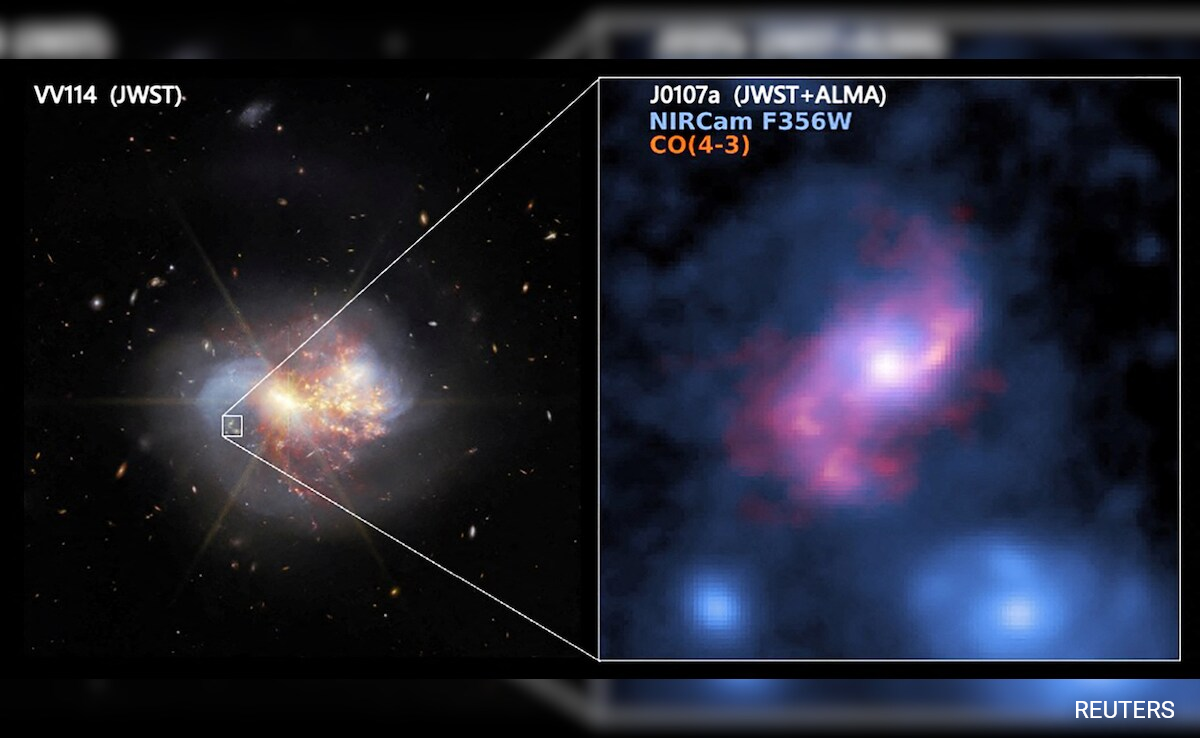
Astronomers have observed a galaxy dating to an earlier epoch in the universe's history that surprisingly is shaped much like our Milky Way but far more massive, offering new insight into galactic formation.
-
NASA's SPHEREx Mission to Map the Sky in 3D Set for February 2025 Launch
NASA's SPHEREx mission, set to launch in February 2025 on a SpaceX Falcon 9 rocket, will create a 3D map of the sky, examining hundreds of millions of galaxies to study the universe’s inflation phase. It will also explore the "collective glow" of distant galaxies and life-essential molecules like water and carbon dioxide in the Milky Way. The mis...
-
Hubble Telescope Reveals Milky Way Blowing Gas off LMC Galaxy in Close Encounter
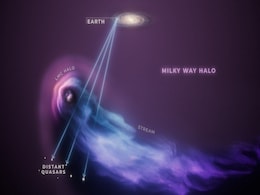
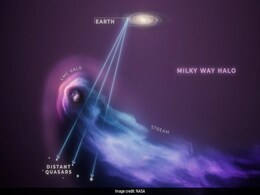
NASA’s Hubble Space Telescope has captured an extraordinary phenomenon as the Milky Way galaxy exerts ram pressure on the Large Magellanic Cloud (LMC), stripping away most of its gas halo. The interaction, which occurs as LMC passes near the Milky Way, has led to the loss of significant mass from the dwarf galaxy. Despite this, LMC retains enough...
-
NASA’s Hubble Reveals Impact of Milky Way’s Gravitational Force on Large Magellanic Cloud
NASA’s Hubble Space Telescope recently observed the Large Magellanic Cloud (LMC) interacting with the Milky Way’s halo. Researchers found that the LMC’s gas halo has been significantly reduced, likely due to ram-pressure stripping. Despite this, the LMC retains enough gas to continue star formation. Future studies will focus on exploring othe...
-
Milky Way Blasts Neighbouring Galaxy's Mass Like A 'Giant Hairdryer', Hubble Finds
NASA's Hubble Space Telescope has captured a stunning phenomenon happening in the outer reaches of the Milky Way galaxy.
-
Supermassive Black Hole at the Centre of the Milky Way Is Spinning Unexpectedly
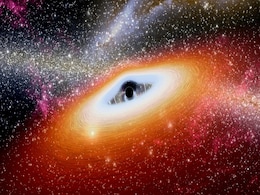
Sagittarius A* (pronounced Sagittarius A Star), the supermassive black hole at the centre of the Milky Way, is spinning in an unusual way, and scientists now believe they may know why. Based on new data from the Event Horizon Telescope, researchers suggest that this cosmic giant likely merged with another black hole billions of years ago. This colo...



-
NASA’s TESS Captures First Images of Rare Interstellar Comet 3I/ATLAS
NASA’s Transiting Exoplanet Survey Satellite has captured rare images of interstellar comet 3I/ATLAS, only the third such object ever detected. Observations from January 2026 reveal the comet rotates every 15 hours and produces sunlight-driven jets, behaving much like Solar System comets. Scientists say studying 3I/ATLAS may unlock clues about th...
-
Astronomers Look to the Large Magellanic Cloud to Study How Stars Are Born
The Large Magellanic Cloud is a nearby dwarf galaxy glowing with star birth. Just 160,000 light-years away, it hosts vast nebulae like the Tarantula and historic events such as Supernova 1987A, offering astronomers a rare, close-up laboratory to study how stars form, evolve, and explode.
-
Extreme Star Factory: ALMA Detects Galaxy Y1 Forming Stars 180 Times Faster Than the Milky Way
Using ALMA’s ultra-sensitive Band 9 observations, astronomers identified galaxy Y1 as an extreme star-forming system in the early universe. Producing stars at 180 solar masses per year, Y1 reveals how intense, short-lived starbursts helped shape young galaxies and may have been more common than previously believed.
-
Hubble Uncovers Multi-Age Stars in Ancient Cluster, Reshaping Galaxy Origins
A stunning new image from NASA’s Hubble Space Telescope reveals that ancient star cluster NGC 1786—located 160,000 light-years away in the Large Magellanic Cloud—hosts stars of varying ages. Once believed to contain a single generation of stars, NGC 1786 now appears to preserve a more complex stellar history. This multi-age discovery suggests...
-
Astronomers Spot Galaxy Shaped Like Milky Way But Is Far More Massive
Astronomers have observed a galaxy dating to an earlier epoch in the universe's history that surprisingly is shaped much like our Milky Way but far more massive, offering new insight into galactic formation.
-
NASA's SPHEREx Mission to Map the Sky in 3D Set for February 2025 Launch
NASA's SPHEREx mission, set to launch in February 2025 on a SpaceX Falcon 9 rocket, will create a 3D map of the sky, examining hundreds of millions of galaxies to study the universe’s inflation phase. It will also explore the "collective glow" of distant galaxies and life-essential molecules like water and carbon dioxide in the Milky Way. The mis...
-
Hubble Telescope Reveals Milky Way Blowing Gas off LMC Galaxy in Close Encounter
NASA’s Hubble Space Telescope has captured an extraordinary phenomenon as the Milky Way galaxy exerts ram pressure on the Large Magellanic Cloud (LMC), stripping away most of its gas halo. The interaction, which occurs as LMC passes near the Milky Way, has led to the loss of significant mass from the dwarf galaxy. Despite this, LMC retains enough...
-
NASA’s Hubble Reveals Impact of Milky Way’s Gravitational Force on Large Magellanic Cloud
NASA’s Hubble Space Telescope recently observed the Large Magellanic Cloud (LMC) interacting with the Milky Way’s halo. Researchers found that the LMC’s gas halo has been significantly reduced, likely due to ram-pressure stripping. Despite this, the LMC retains enough gas to continue star formation. Future studies will focus on exploring othe...
-
Milky Way Blasts Neighbouring Galaxy's Mass Like A 'Giant Hairdryer', Hubble Finds
NASA's Hubble Space Telescope has captured a stunning phenomenon happening in the outer reaches of the Milky Way galaxy.
-
Supermassive Black Hole at the Centre of the Milky Way Is Spinning Unexpectedly
Sagittarius A* (pronounced Sagittarius A Star), the supermassive black hole at the centre of the Milky Way, is spinning in an unusual way, and scientists now believe they may know why. Based on new data from the Event Horizon Telescope, researchers suggest that this cosmic giant likely merged with another black hole billions of years ago. This colo...

