



Measurement Of Distances
- All
- News
-

Astronomers Measure Mass and Distance of a Rogue Planet for the First Time in History
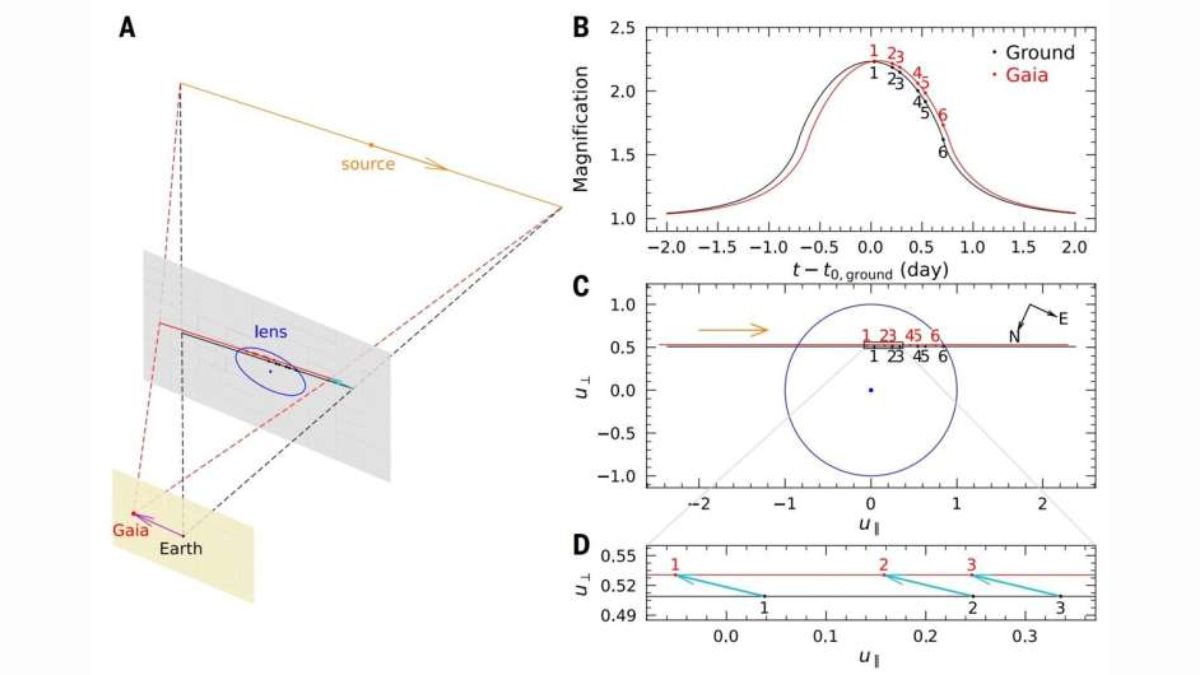
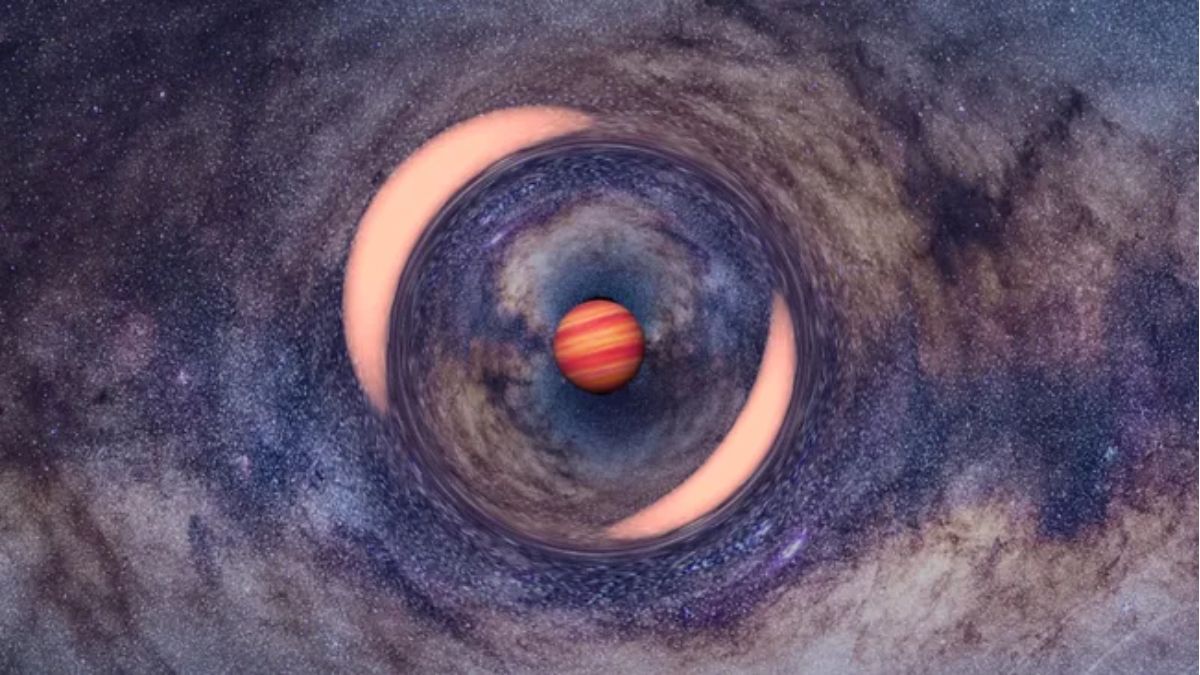
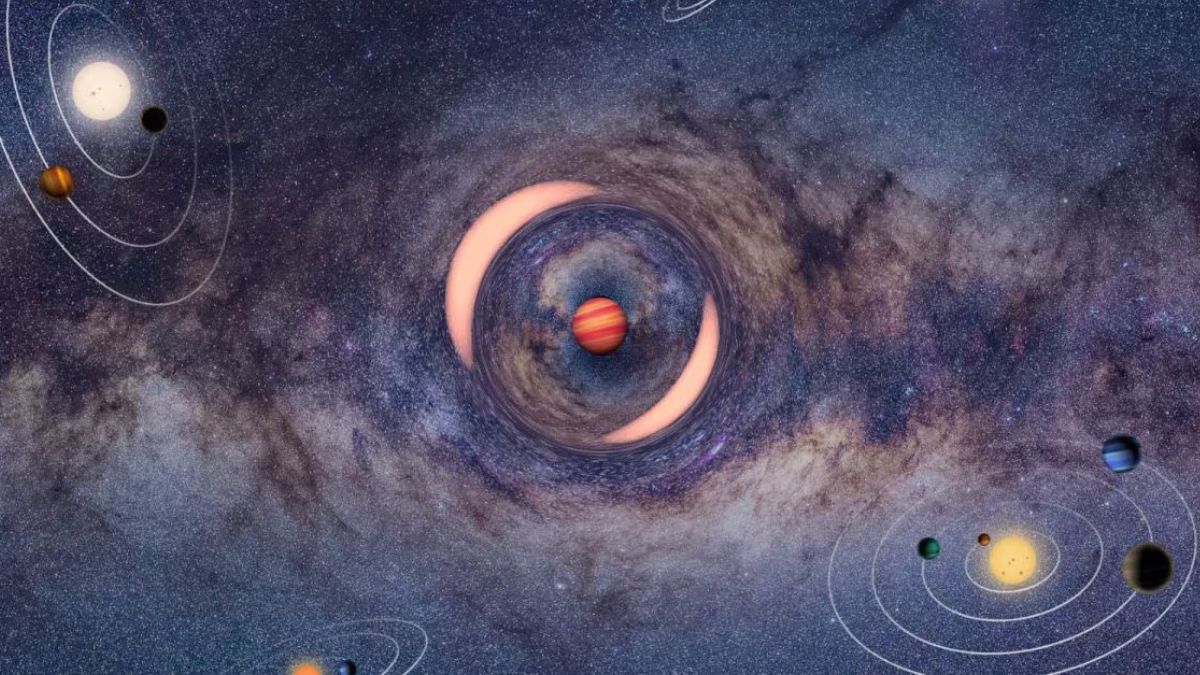
Astronomers have measured the mass and distance of a rogue planet for the first time. Using observations from Earth and the Gaia space telescope, the planet was found to be just under Saturn’s mass and about 10,000 light-years away. The study highlights how free-floating planets are ejected from star systems and improves understanding of planetar...
-
Astronomers Detect Rare Rogue Planet Drifting Alone 10,000 Light-Years from Earth
Astronomers have confirmed a rare rogue planet, drifting without a star nearly 10,000 light-years away. Using gravitational microlensing, their distance and mass were measured, suggesting that free-floating planets may be abundant across the Milky Way. Upcoming telescopes, including NASA’s Roman Space Telescope and China’s Earth 2.0 mission, ar...
-
Astronomers Successfully Weigh a Starless ‘Rogue Planet’ Drifting Through the Milky Way
Astronomers have precisely measured the mass of a rogue planet wandering through the Milky Way using a rare gravitational microlensing event. By combining observations from ground-based telescopes across three continents with data from ESA’s Gaia spacecraft, researchers determined the planet’s distance and found it to be about the mass of Satur...
-
Massive Asteroid As Big As An Airplane To Zoom Past Earth On July 4, Says NASA
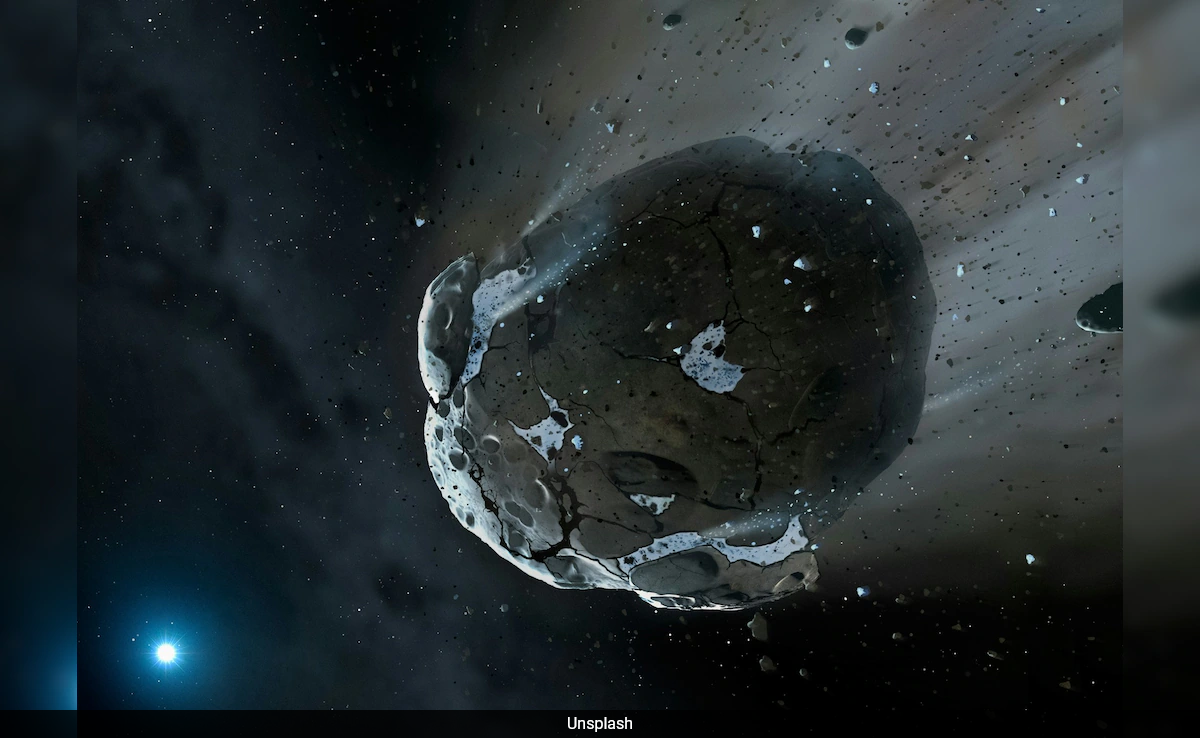
Measuring approximately 120 feet in width, the asteroid will fly by at a velocity of 31,204 km/h, maintaining a safe distance of 1,960,000 kilometres from our planet.
-
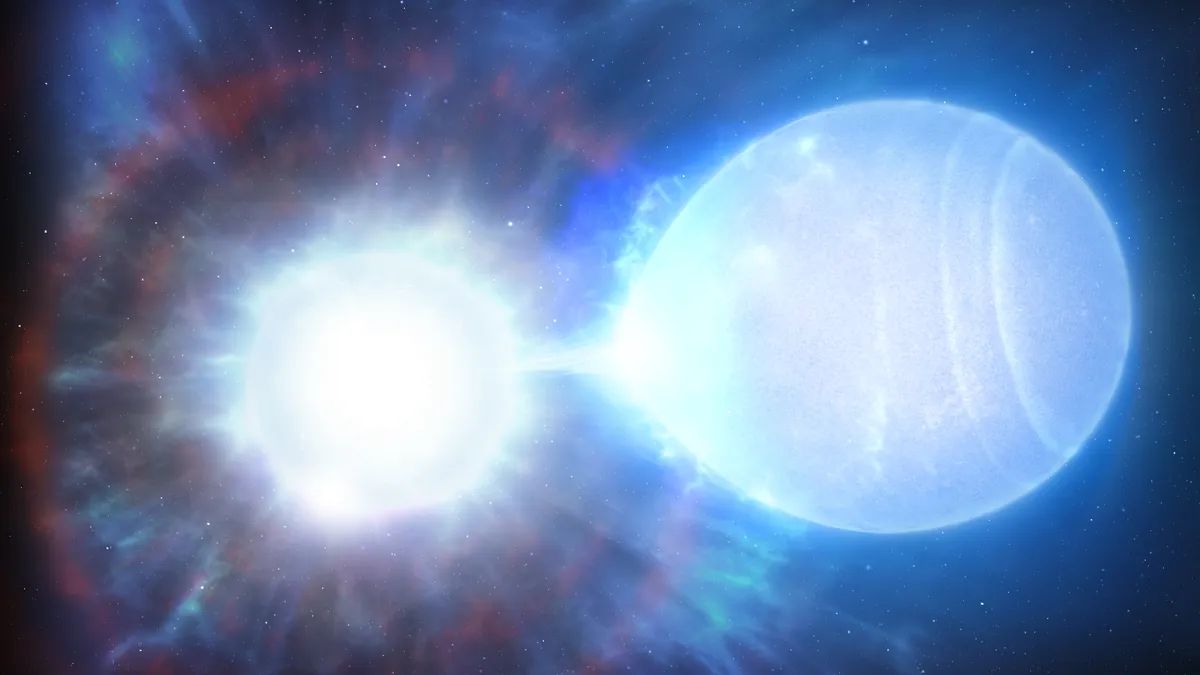
First Future Type 1a Supernova Detected: White Dwarf Pair to Collide in 23 Billion Years
Astronomers have discovered a pair of white dwarf stars located about 150 light-years from Earth that are on course to collide and produce a Type 1a supernova in approximately 23 billion years. This is the first such system identified near our region of the galaxy. With a combined mass of 1.56 solar masses, the stars are slowly spiralling toward ea...
-
Hubble Spots Distant Supernova in Gemini, Enhancing Cosmic Distance Studies
The NASA/ESA Hubble Space Telescope has captured a stunning image of SN 2022aajn, a Type Ia supernova in the constellation Gemini. Located 600 million light-years away, the explosion was first detected in November 2022. Type Ia supernovae serve as essential cosmic distance markers due to their predictable brightness. Hubble’s observations, part o...
-
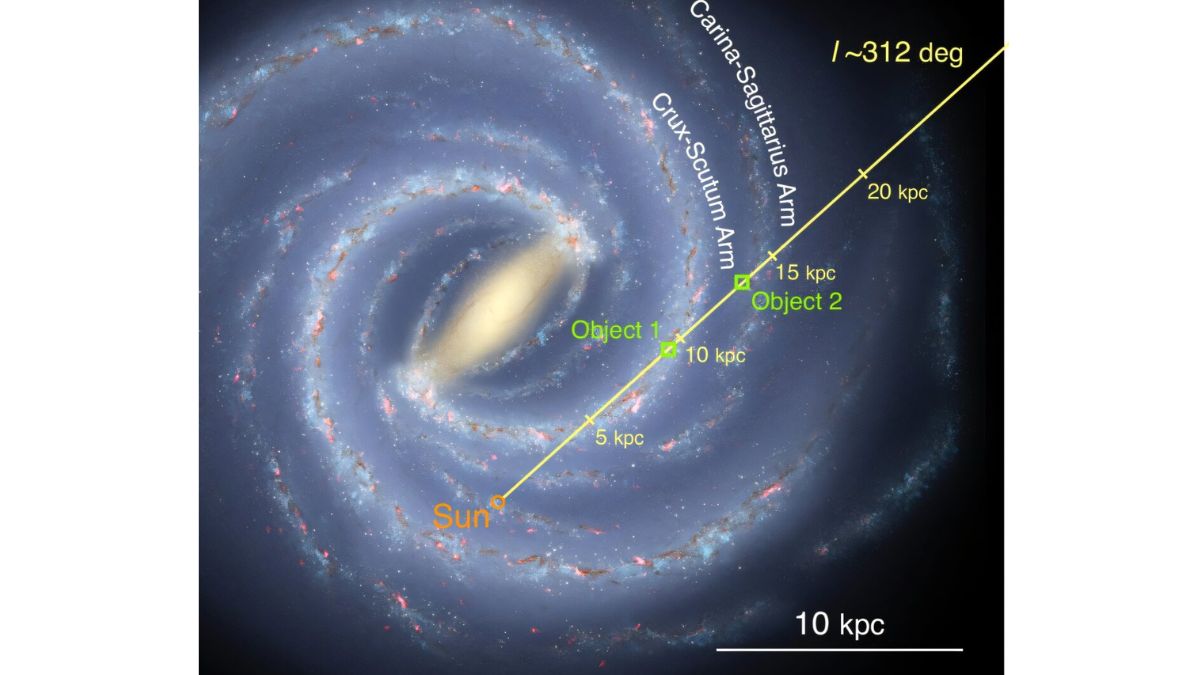
Mysterious Icy Objects Found in Milky Way Baffle Astronomers: Everything You Need to Know
Astronomers have identified mysterious icy objects in the outer Milky Way, raising questions about their nature. These structures, composed of ice and gas, are located in a region where star formation is rare. Despite early detections dating back to 2006-2011, recent observations using the AKARI space telescope and the ALMA array in Chile have prov...
-
Vera C. Rubin Observatory to Detect Millions of Exploding Stars
The Vera C. Rubin Observatory, set to begin its 10-year Legacy Survey of Space and Time (LSST) later this year, will track millions of Type Ia supernovae to advance our understanding of dark energy. These supernovae, resulting from white dwarf stars in binary systems, will be studied in detail to provide crucial data on the universe’s acceleratin...
-
Coma Cluster’s Distance Closer Than Predicted, Amplifying Hubble Tension Crisis
A new study led by Dan Scolnic and Adam Riess reveals that the Coma Cluster is 38 million light-years closer than predicted by standard cosmological models, intensifying the ongoing Hubble tension. This discrepancy, involving measurements of type Ia supernova explosions, challenges the universe's expansion rate as predicted by the Hubble–Lemaîtr...
-
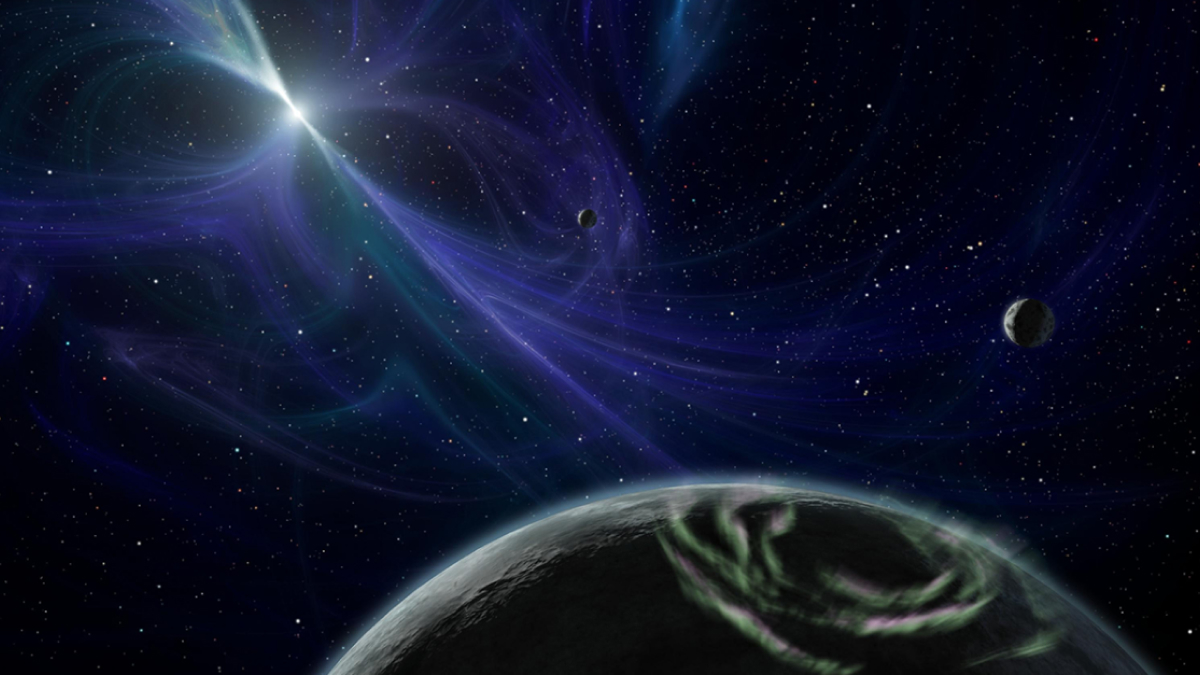
FAST Telescope Detects New Pulsar PSR J1922+37 in Open Cluster NGC 6791
Astronomers, using China's FAST telescope, have detected a new pulsar, PSR J1922+37, in the direction of the open cluster NGC 6791. This 1.92-second spin pulsar may become the first-ever identified within an open cluster, offering exciting opportunities for understanding stellar dynamics. Its position and dispersion measures closely align with the ...


-
Astronomers Measure Mass and Distance of a Rogue Planet for the First Time in History
Astronomers have measured the mass and distance of a rogue planet for the first time. Using observations from Earth and the Gaia space telescope, the planet was found to be just under Saturn’s mass and about 10,000 light-years away. The study highlights how free-floating planets are ejected from star systems and improves understanding of planetar...
-
Astronomers Detect Rare Rogue Planet Drifting Alone 10,000 Light-Years from Earth
Astronomers have confirmed a rare rogue planet, drifting without a star nearly 10,000 light-years away. Using gravitational microlensing, their distance and mass were measured, suggesting that free-floating planets may be abundant across the Milky Way. Upcoming telescopes, including NASA’s Roman Space Telescope and China’s Earth 2.0 mission, ar...
-
Astronomers Successfully Weigh a Starless ‘Rogue Planet’ Drifting Through the Milky Way
Astronomers have precisely measured the mass of a rogue planet wandering through the Milky Way using a rare gravitational microlensing event. By combining observations from ground-based telescopes across three continents with data from ESA’s Gaia spacecraft, researchers determined the planet’s distance and found it to be about the mass of Satur...
-
Massive Asteroid As Big As An Airplane To Zoom Past Earth On July 4, Says NASA
Measuring approximately 120 feet in width, the asteroid will fly by at a velocity of 31,204 km/h, maintaining a safe distance of 1,960,000 kilometres from our planet.
-
First Future Type 1a Supernova Detected: White Dwarf Pair to Collide in 23 Billion Years
Astronomers have discovered a pair of white dwarf stars located about 150 light-years from Earth that are on course to collide and produce a Type 1a supernova in approximately 23 billion years. This is the first such system identified near our region of the galaxy. With a combined mass of 1.56 solar masses, the stars are slowly spiralling toward ea...
-
Hubble Spots Distant Supernova in Gemini, Enhancing Cosmic Distance Studies
The NASA/ESA Hubble Space Telescope has captured a stunning image of SN 2022aajn, a Type Ia supernova in the constellation Gemini. Located 600 million light-years away, the explosion was first detected in November 2022. Type Ia supernovae serve as essential cosmic distance markers due to their predictable brightness. Hubble’s observations, part o...
-
Mysterious Icy Objects Found in Milky Way Baffle Astronomers: Everything You Need to Know
Astronomers have identified mysterious icy objects in the outer Milky Way, raising questions about their nature. These structures, composed of ice and gas, are located in a region where star formation is rare. Despite early detections dating back to 2006-2011, recent observations using the AKARI space telescope and the ALMA array in Chile have prov...
-
Vera C. Rubin Observatory to Detect Millions of Exploding Stars
The Vera C. Rubin Observatory, set to begin its 10-year Legacy Survey of Space and Time (LSST) later this year, will track millions of Type Ia supernovae to advance our understanding of dark energy. These supernovae, resulting from white dwarf stars in binary systems, will be studied in detail to provide crucial data on the universe’s acceleratin...
-
Coma Cluster’s Distance Closer Than Predicted, Amplifying Hubble Tension Crisis
A new study led by Dan Scolnic and Adam Riess reveals that the Coma Cluster is 38 million light-years closer than predicted by standard cosmological models, intensifying the ongoing Hubble tension. This discrepancy, involving measurements of type Ia supernova explosions, challenges the universe's expansion rate as predicted by the Hubble–Lemaîtr...
-
FAST Telescope Detects New Pulsar PSR J1922+37 in Open Cluster NGC 6791
Astronomers, using China's FAST telescope, have detected a new pulsar, PSR J1922+37, in the direction of the open cluster NGC 6791. This 1.92-second spin pulsar may become the first-ever identified within an open cluster, offering exciting opportunities for understanding stellar dynamics. Its position and dispersion measures closely align with the ...

