



Galaxy Clusters
-
{
- All
- News
-

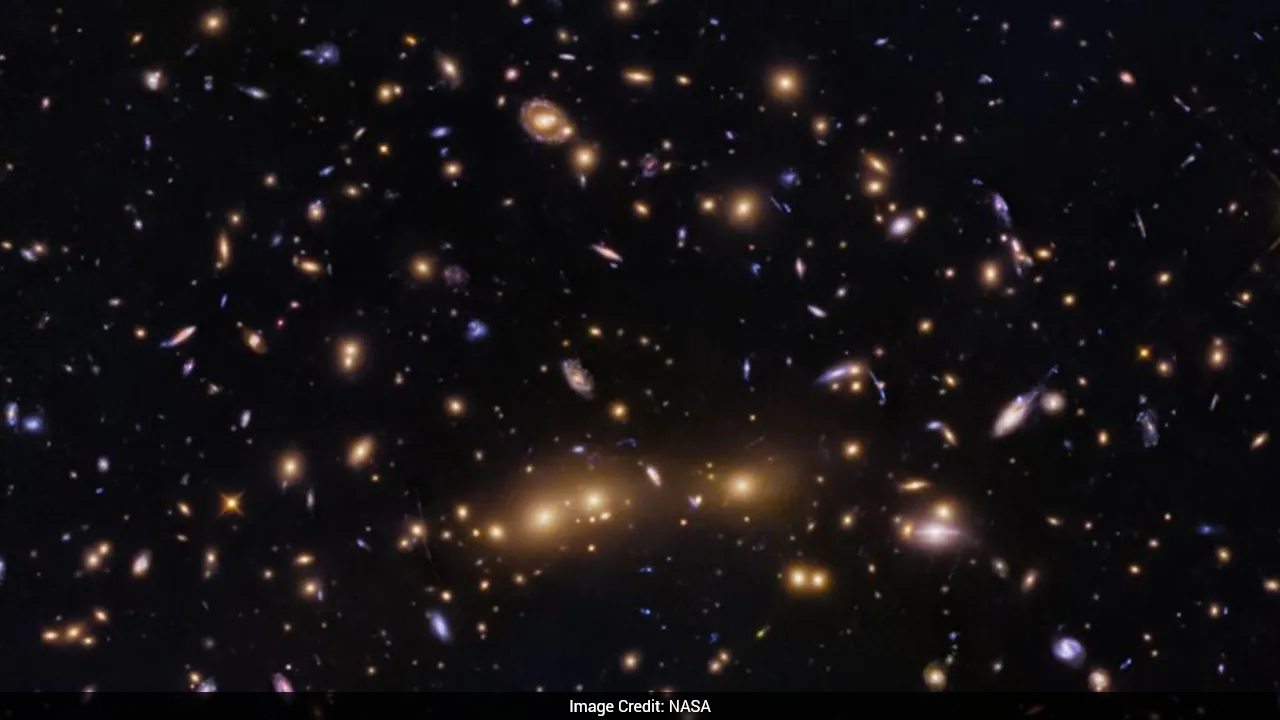
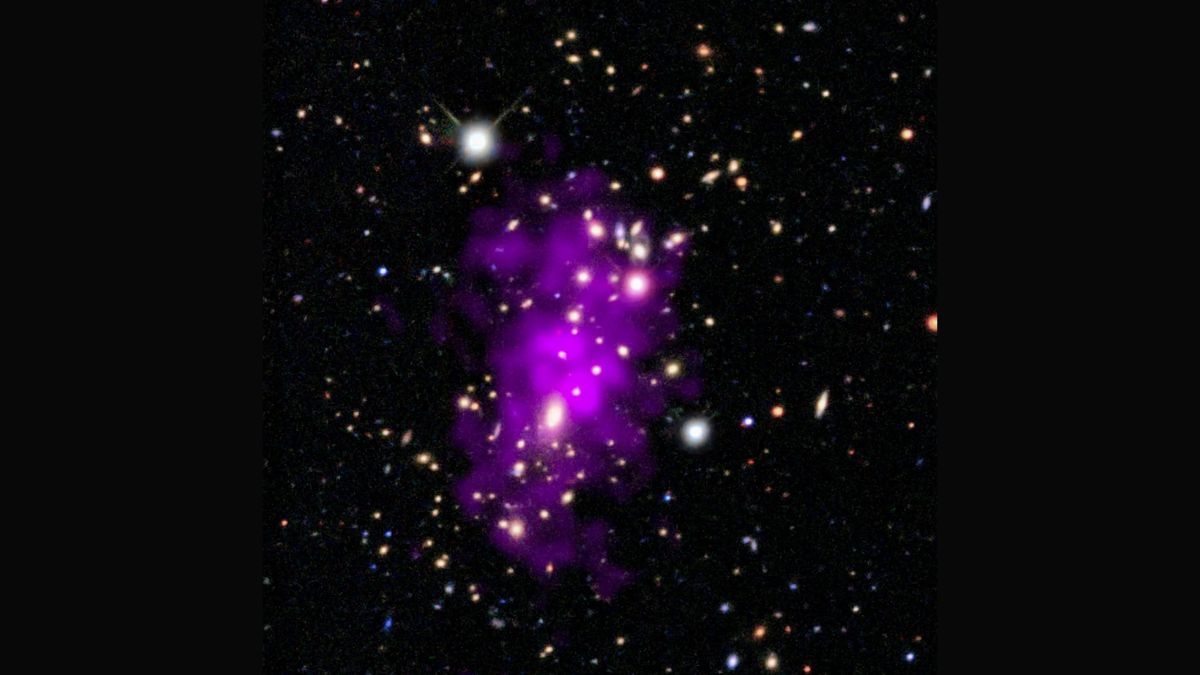
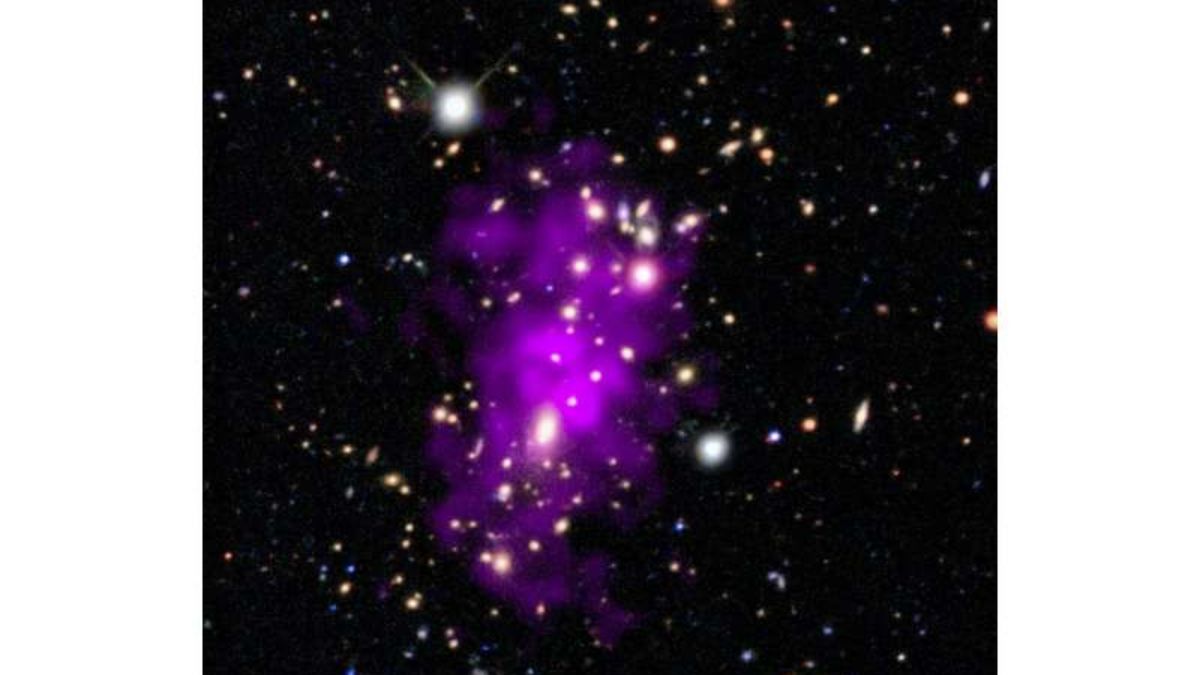
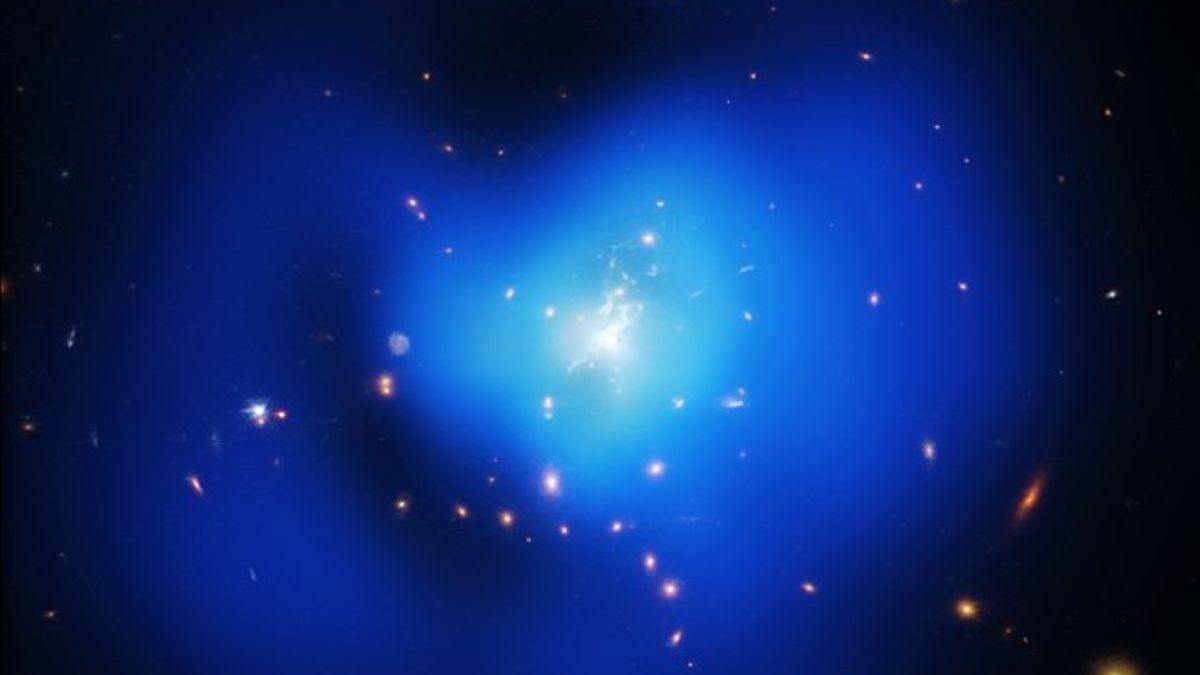
NASA Shares Image Of Merging Galaxy Clusters Helping Decode Dark Matter
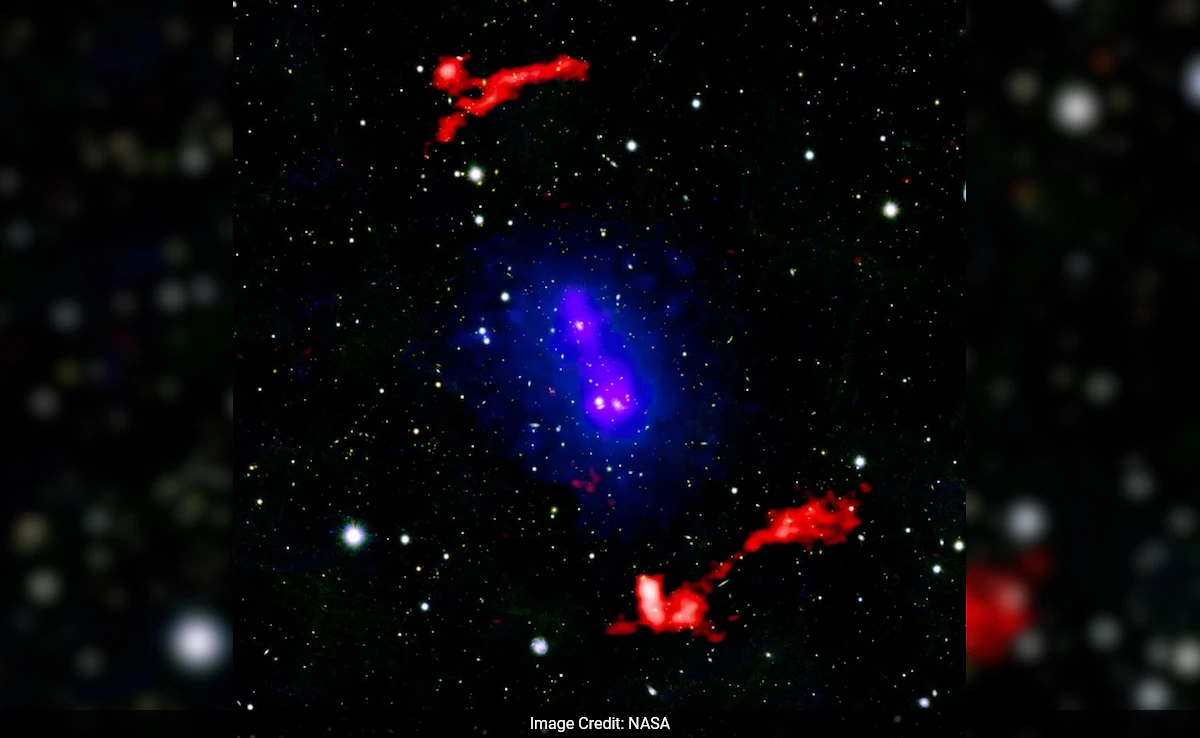
The cluster is very bright at X-ray wavelengths and is one of the most extensively studied galaxy clusters at X-ray and radio wavelengths.
-
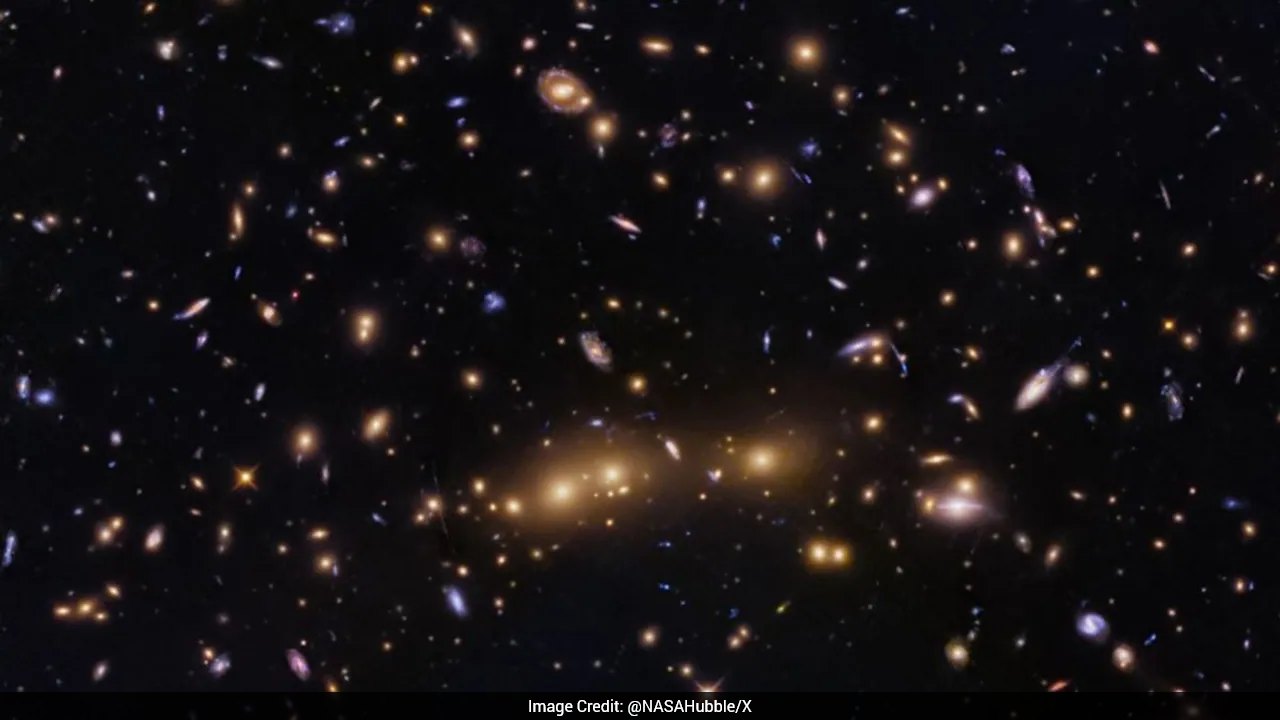
NASA's Hubble Telescope Captures Merging Galaxy Clusters In Space
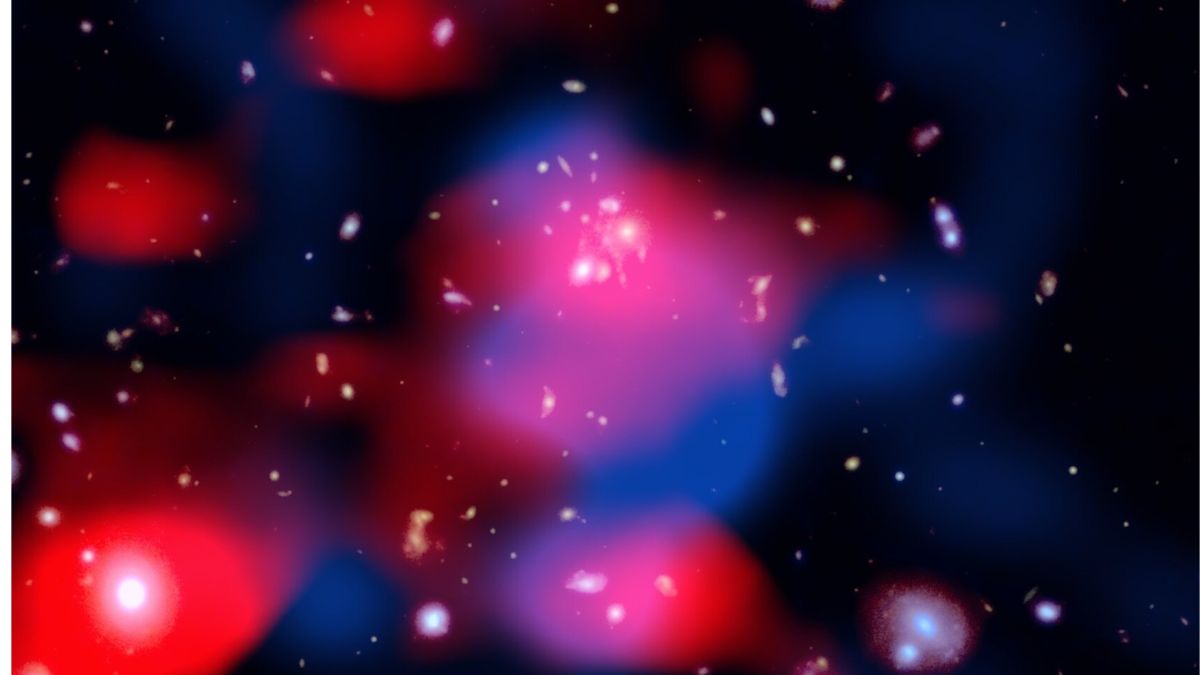
X-ray observations of the cluster revealed that it is made up of two galaxy clusters merging along our line of sight.
-
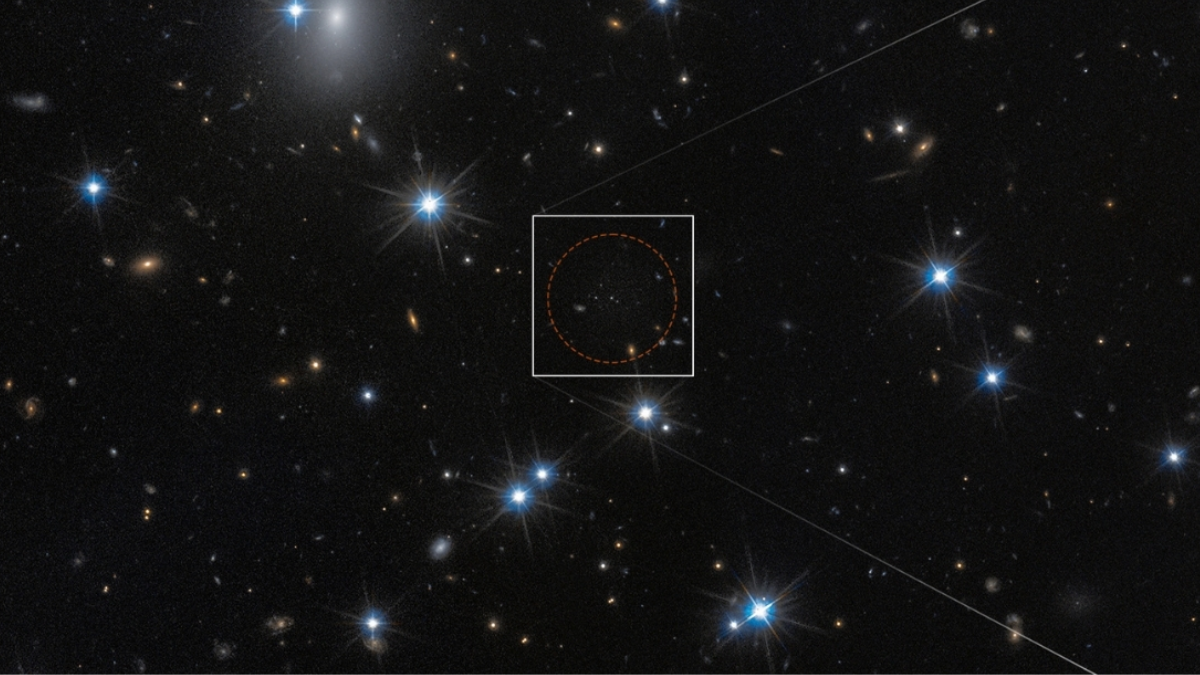
Astronomers Find ‘Impossible’ Galaxy ACDG-2 With Virtually No Stars and a Massive Dark Matter Core
Astronomers have identified CDG-2, a faint galaxy in the Perseus cluster that appears to be composed almost entirely of dark matter. Located 300 million light-years from Earth, it was discovered by tracking globular star clusters using data from Hubble, Euclid, and Subaru telescopes. Scientists estimate that about 99% of its total mass is dark matt...
-
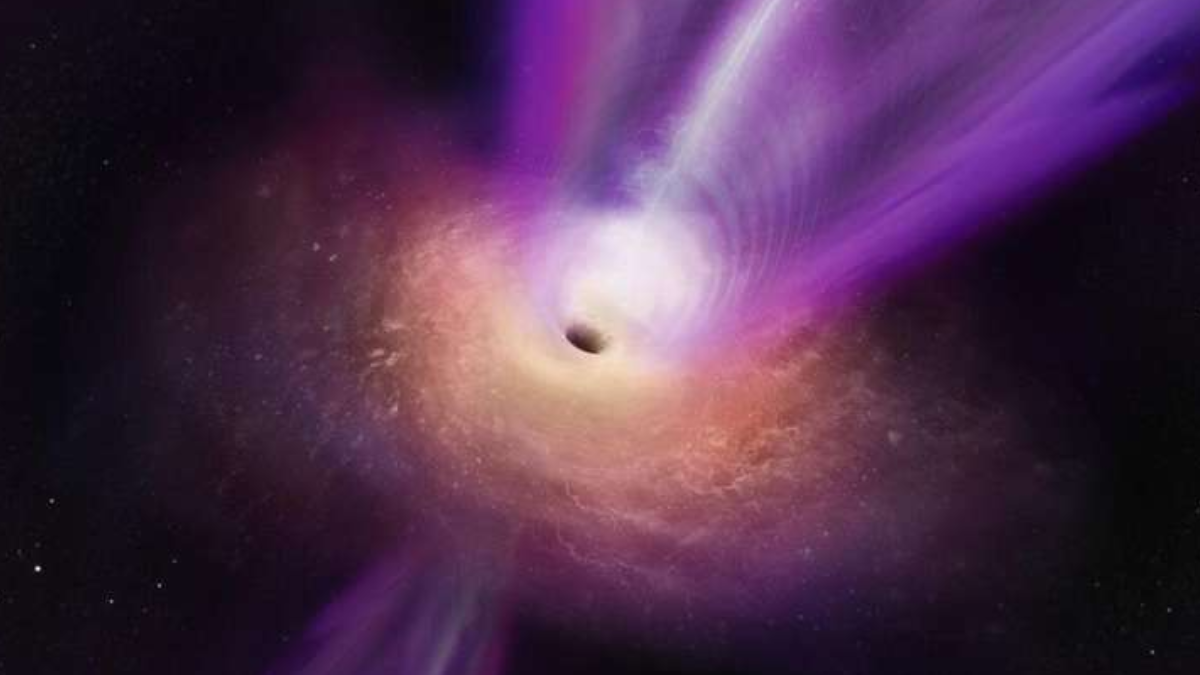
Astronomers Capture First Detailed View of Hot Gas Swirling Around Black Holes
Japan’s XRISM X-ray observatory has delivered the first detailed maps of hot gas swirling around supermassive black holes in the Virgo and Perseus galaxy clusters. The data reveal intense turbulence, like cosmic storms driven by black hole jets. This churning heats the gas, stopping it from cooling and collapsing into new stars, explaining why cl...
-
Astronomers Discover Shockingly Hot Young Galaxy Cluster That Defies Theory
Astronomers have identified an exceptionally hot galaxy cluster forming just 1.4 billion years after the Big Bang. Observations reveal gas temperatures far exceeding theoretical limits, suggesting an unexpectedly violent early formation. The discovery challenges standard models of galaxy cluster evolution and points to intense activity from starbur...
-
NASA Finds Most Distant Calm Galaxy Cluster Ever Seen in Early Universe
Astronomers using NASA’s Chandra X-ray Observatory have discovered SPT-CL J2215-3537, a massive galaxy cluster located 8.4 billion light-years away. Nicknamed the “Champagne Supernova” cluster, it is the most distant relaxed cluster ever observed, showing no signs of recent collisions. Its calm structure and active star formation challenge ex...
-
NASA’s Chandra Spots Champagne Cluster Formed by a Massive Galaxy Collision
Discovered on New Year’s Eve 2020, the Champagne Cluster is a striking pair of colliding galaxy clusters revealed through combined X-ray and optical observations. NASA’s Chandra X-ray Observatory shows superheated gas stretched and distorted, exposing a massive cosmic collision hidden from visible light alone. Studied by UC Davis astronomers, t...
-
NASA Uses 'X-arithmetic' to Show How Black Holes Shape Galaxy Clusters
NASA's Chandra telescope has used a novel "X-arithmetic" technique to analyse X-ray data from galaxy clusters, showing how supermassive black holes influence hot gas structures and offering new insights into cosmic evolution.
-
Chandra’s New X-Ray Mapping Exposes the Invisible Engines Powering Galaxy Clusters
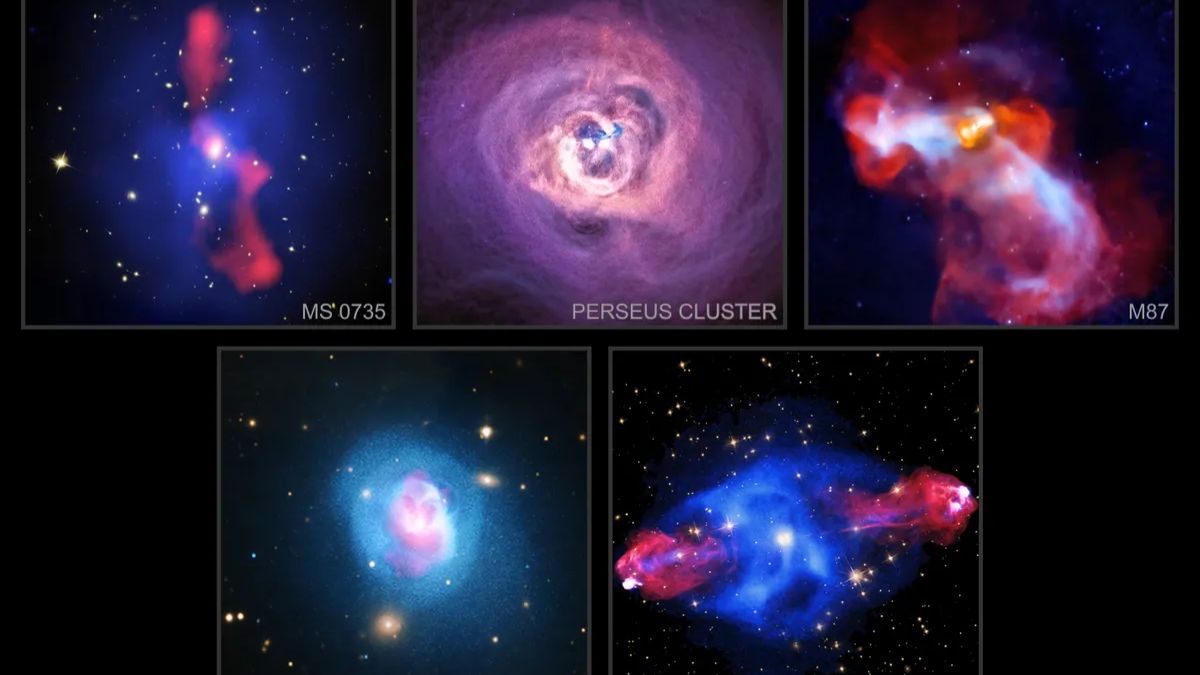
NASA’s Chandra X-ray Observatory has released stunning colour-coded galaxy cluster images that reveal shock waves, cooling gas, and cavities carved by supermassive black holes. By separating X-ray light into different energy bands, astronomers can now visualise hidden cosmic processes that shape the universe’s largest structures and control how...
-
Hubble Unveils Dark Matter Web in Stunning Abell 209 Galaxy Cluster Image
NASA/ESA’s Hubble Space Telescope has released a stunning new image of Abell 209, a massive galaxy cluster 2.8 billion light-years away in Cetus. The golden cluster houses over 100 galaxies, but beneath them lies an invisible web of hot gas and dark matter. Using gravitational lensing, Hubble reveals curved arcs of light from background galaxies,...
-
Most Distant Mini-Halo Discovered in Galaxy Cluster 10 Billion Light-Years Away
Astronomers have uncovered the most distant mini-halo ever detected, located around the galaxy cluster SpARCS1049, a staggering 10 billion light-years from Earth. Using the LOFAR radio telescope network, which spans eight European countries, researchers detected a faint, diffuse glow—evidence of a giant cloud of high-energy particles and magnetic...
-
Two Galaxy Clusters That Collided Previously Are All Set To Smash Again
Despite their enormous distance, the galaxy clusters are gravitationally bound and slowly turning back for another high-speed impact.
-
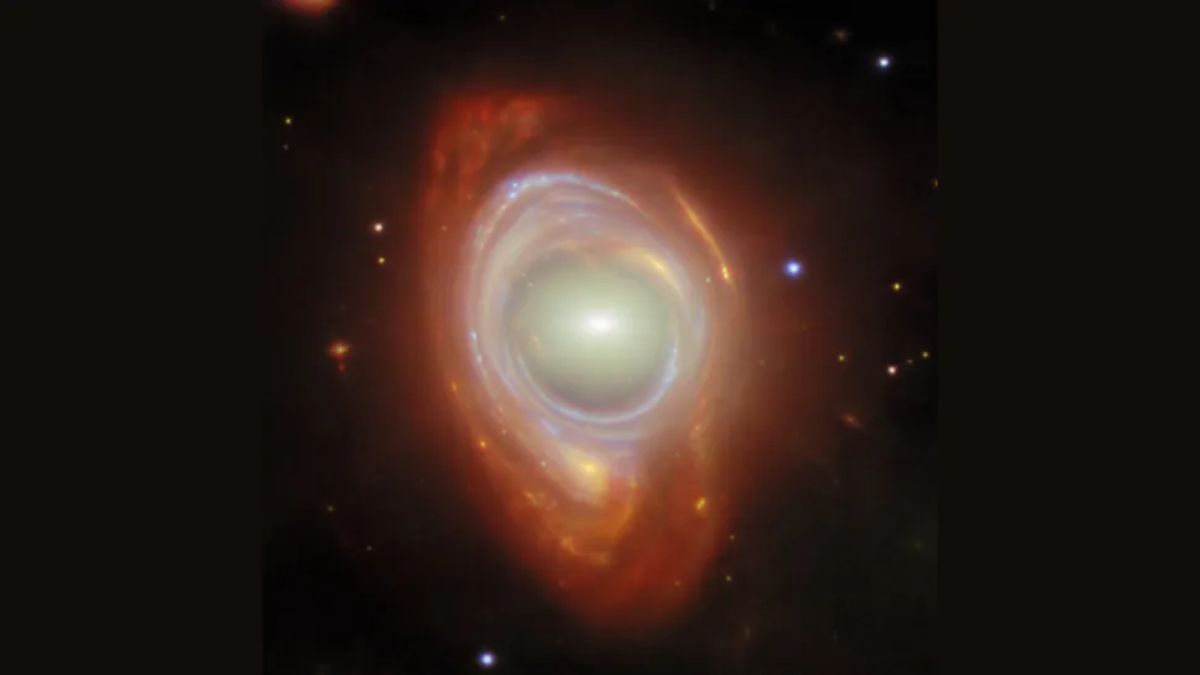
James Webb Space Telescope Reveals a Stunning Einstein Ring in Hydrus
A striking new image from the James Webb Space Telescope reveals an Einstein ring in the Hydrus constellation. The phenomenon occurs when a massive foreground galaxy bends light from a hidden background galaxy, forming a near-perfect ring. This effect, predicted by Einstein’s theory of general relativity, helps astronomers study galaxies from the...
-
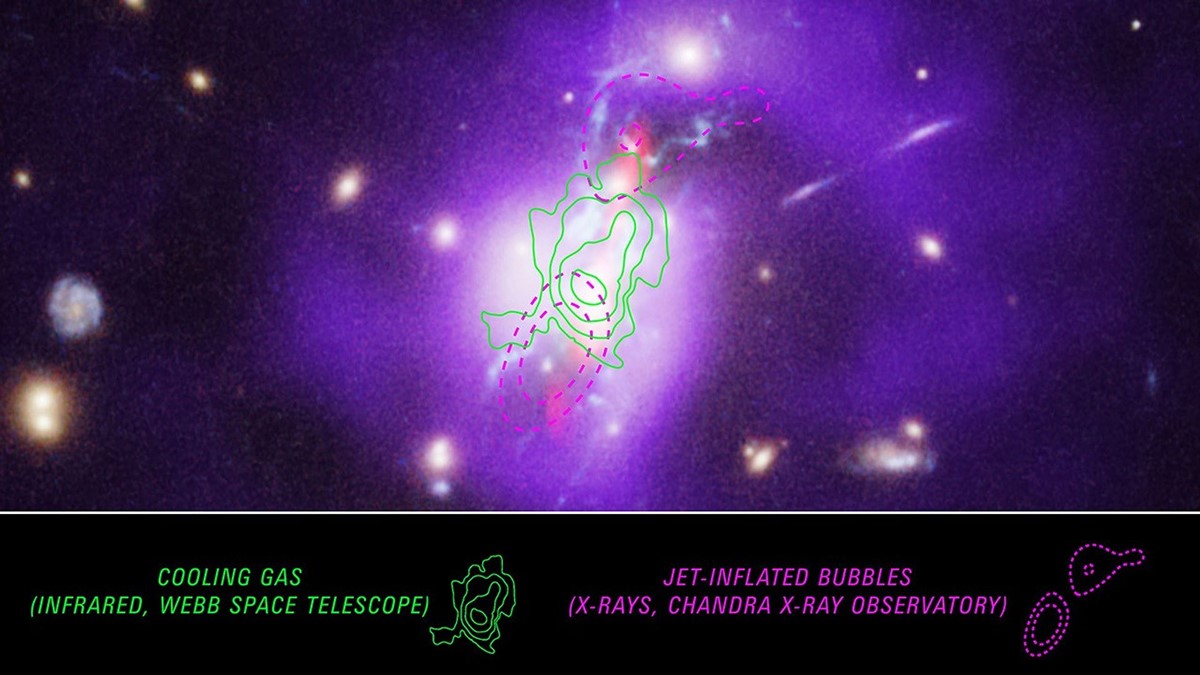
JWST Identifies Cooling Gas in Phoenix Cluster, Unlocking Star Formation Process
The James Webb Space Telescope has detected the missing cooling gas in the Phoenix Cluster, a galaxy cluster located 5.8 billion light-years away. Researchers used the Mid-Infrared Instrument (MIRI) to identify gas at around 540,000 degrees Fahrenheit trapped in cavities within the cluster. This discovery resolves a long-standing mystery of how sta...
-
Webb Telescope Unveils Hidden Process Behind Star Formation in Phoenix Cluster
NASA’s James Webb Space Telescope has uncovered the missing link in star formation within the Phoenix galaxy cluster. By mapping intermediate-temperature gas, researchers identified a crucial phase of cooling that was previously undetected. This discovery explains why the cluster’s supermassive black hole does not fully prevent star formation, ...
-
NASA Shares Image Of Merging Galaxy Clusters Helping Decode Dark Matter
The cluster is very bright at X-ray wavelengths and is one of the most extensively studied galaxy clusters at X-ray and radio wavelengths.
-
NASA's Hubble Telescope Captures Merging Galaxy Clusters In Space
X-ray observations of the cluster revealed that it is made up of two galaxy clusters merging along our line of sight.
-
Astronomers Find ‘Impossible’ Galaxy ACDG-2 With Virtually No Stars and a Massive Dark Matter Core
Astronomers have identified CDG-2, a faint galaxy in the Perseus cluster that appears to be composed almost entirely of dark matter. Located 300 million light-years from Earth, it was discovered by tracking globular star clusters using data from Hubble, Euclid, and Subaru telescopes. Scientists estimate that about 99% of its total mass is dark matt...
-
Astronomers Capture First Detailed View of Hot Gas Swirling Around Black Holes
Japan’s XRISM X-ray observatory has delivered the first detailed maps of hot gas swirling around supermassive black holes in the Virgo and Perseus galaxy clusters. The data reveal intense turbulence, like cosmic storms driven by black hole jets. This churning heats the gas, stopping it from cooling and collapsing into new stars, explaining why cl...
-
Astronomers Discover Shockingly Hot Young Galaxy Cluster That Defies Theory
Astronomers have identified an exceptionally hot galaxy cluster forming just 1.4 billion years after the Big Bang. Observations reveal gas temperatures far exceeding theoretical limits, suggesting an unexpectedly violent early formation. The discovery challenges standard models of galaxy cluster evolution and points to intense activity from starbur...
-
NASA Finds Most Distant Calm Galaxy Cluster Ever Seen in Early Universe
Astronomers using NASA’s Chandra X-ray Observatory have discovered SPT-CL J2215-3537, a massive galaxy cluster located 8.4 billion light-years away. Nicknamed the “Champagne Supernova” cluster, it is the most distant relaxed cluster ever observed, showing no signs of recent collisions. Its calm structure and active star formation challenge ex...
-
NASA’s Chandra Spots Champagne Cluster Formed by a Massive Galaxy Collision
Discovered on New Year’s Eve 2020, the Champagne Cluster is a striking pair of colliding galaxy clusters revealed through combined X-ray and optical observations. NASA’s Chandra X-ray Observatory shows superheated gas stretched and distorted, exposing a massive cosmic collision hidden from visible light alone. Studied by UC Davis astronomers, t...
-
NASA Uses 'X-arithmetic' to Show How Black Holes Shape Galaxy Clusters
NASA's Chandra telescope has used a novel "X-arithmetic" technique to analyse X-ray data from galaxy clusters, showing how supermassive black holes influence hot gas structures and offering new insights into cosmic evolution.
-
Chandra’s New X-Ray Mapping Exposes the Invisible Engines Powering Galaxy Clusters
NASA’s Chandra X-ray Observatory has released stunning colour-coded galaxy cluster images that reveal shock waves, cooling gas, and cavities carved by supermassive black holes. By separating X-ray light into different energy bands, astronomers can now visualise hidden cosmic processes that shape the universe’s largest structures and control how...
-
Hubble Unveils Dark Matter Web in Stunning Abell 209 Galaxy Cluster Image
NASA/ESA’s Hubble Space Telescope has released a stunning new image of Abell 209, a massive galaxy cluster 2.8 billion light-years away in Cetus. The golden cluster houses over 100 galaxies, but beneath them lies an invisible web of hot gas and dark matter. Using gravitational lensing, Hubble reveals curved arcs of light from background galaxies,...
-
Most Distant Mini-Halo Discovered in Galaxy Cluster 10 Billion Light-Years Away
Astronomers have uncovered the most distant mini-halo ever detected, located around the galaxy cluster SpARCS1049, a staggering 10 billion light-years from Earth. Using the LOFAR radio telescope network, which spans eight European countries, researchers detected a faint, diffuse glow—evidence of a giant cloud of high-energy particles and magnetic...
-
Two Galaxy Clusters That Collided Previously Are All Set To Smash Again
Despite their enormous distance, the galaxy clusters are gravitationally bound and slowly turning back for another high-speed impact.
-
James Webb Space Telescope Reveals a Stunning Einstein Ring in Hydrus
A striking new image from the James Webb Space Telescope reveals an Einstein ring in the Hydrus constellation. The phenomenon occurs when a massive foreground galaxy bends light from a hidden background galaxy, forming a near-perfect ring. This effect, predicted by Einstein’s theory of general relativity, helps astronomers study galaxies from the...
-
JWST Identifies Cooling Gas in Phoenix Cluster, Unlocking Star Formation Process
The James Webb Space Telescope has detected the missing cooling gas in the Phoenix Cluster, a galaxy cluster located 5.8 billion light-years away. Researchers used the Mid-Infrared Instrument (MIRI) to identify gas at around 540,000 degrees Fahrenheit trapped in cavities within the cluster. This discovery resolves a long-standing mystery of how sta...
-
Webb Telescope Unveils Hidden Process Behind Star Formation in Phoenix Cluster
NASA’s James Webb Space Telescope has uncovered the missing link in star formation within the Phoenix galaxy cluster. By mapping intermediate-temperature gas, researchers identified a crucial phase of cooling that was previously undetected. This discovery explains why the cluster’s supermassive black hole does not fully prevent star formation, ...

