



Earth Evolution
-
{
- All
- News
- Videos
-

Scientists Uncover "Ghost Genes" That Predate The Dawn Of Life
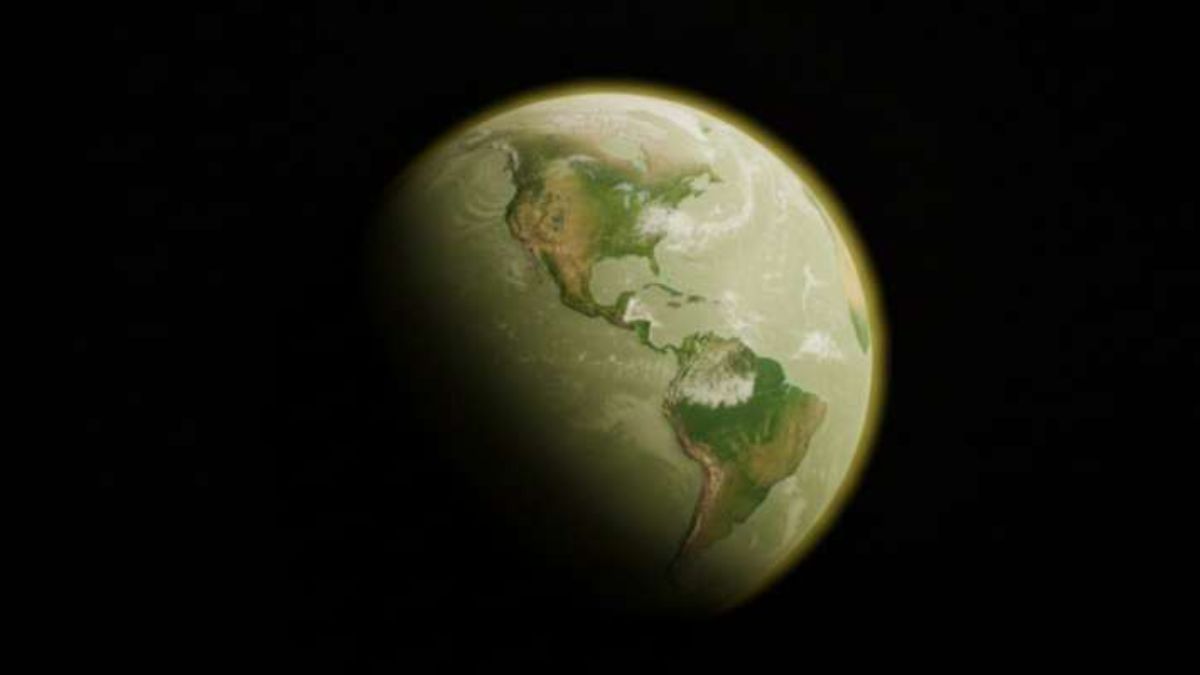
New research into "universal paralog" genes reveals that the Last Universal Common Ancestor (LUCA) was not the first spark of life, but a successor that inherited complex genetic tools from an even older, "pre-LUCA" ecological system.
-
Sinking Calcium Carbonate Locked Away Greenhouse Gases, Reveals New Study
Scientists have solved a 66-million-year climate mystery, explaining how Earth cooled from a tropical greenhouse to an ice-capped world. New research reveals ocean calcium levels dropped by more than half, reshaping marine chemistry. As calcium declined, oceans locked away more carbon dioxide, lowering atmospheric CO2. The study links deep-Earth pr...
-
NASA’s SPHEREx Telescope Delivers First Full-Sky Map, Unlocking Cosmic Secrets
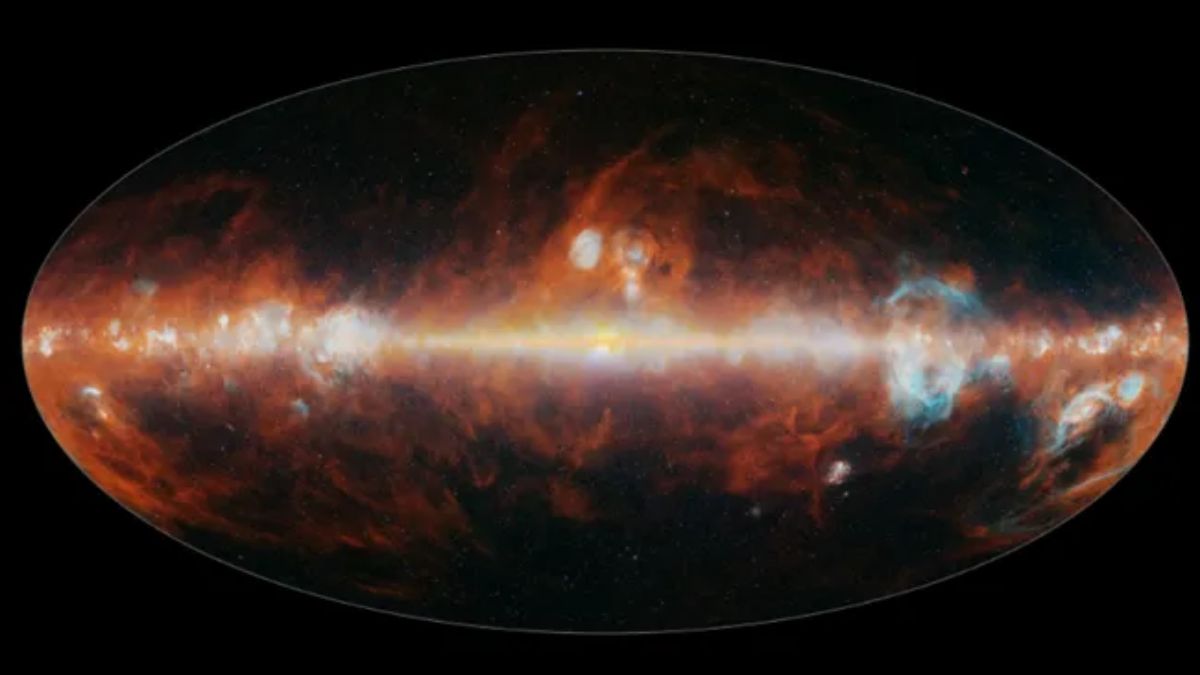
NASA’s SPHEREx telescope has completed its first all-sky map, revealing hundreds of millions of galaxies and providing data to study the universe’s origin, evolution, and distribution of life-essential elements across cosmic history.
-
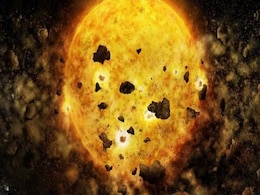
Planet-Eating Stars Offer a Glimpse Into Earth’s Fate as the Sun Nears Its Final Stages
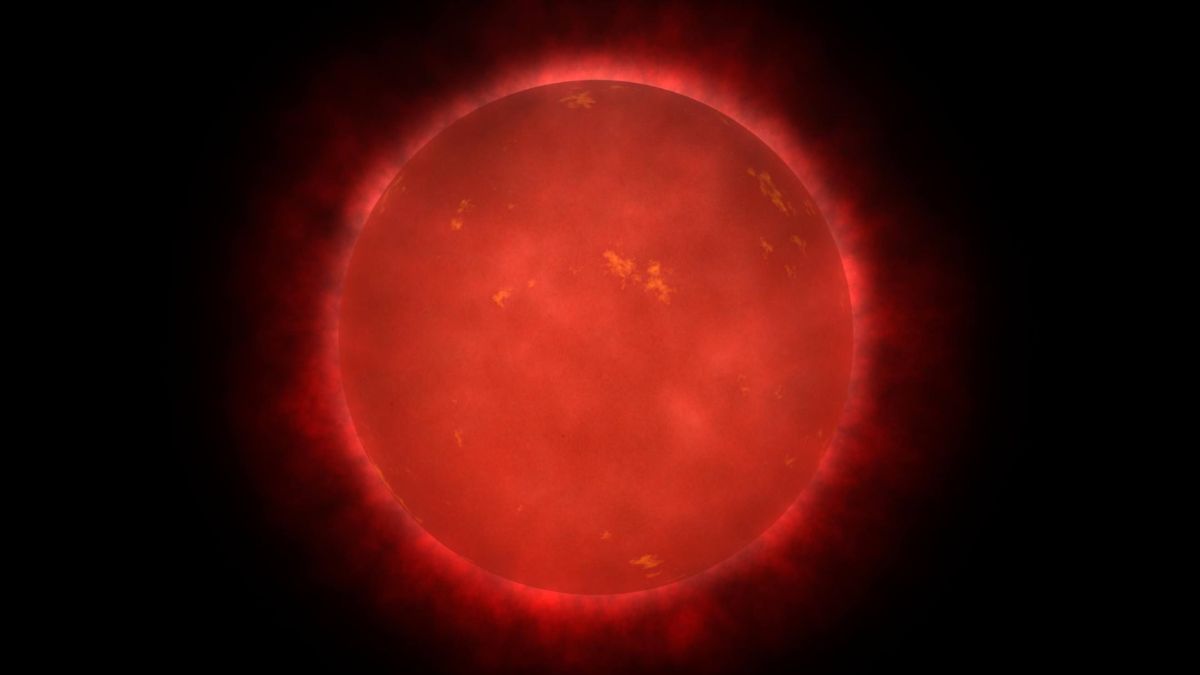
Astronomers studying aging Sun-like stars have found strong evidence that stars consume their closest planets as they evolve. Using data from NASA’s TESS mission, researchers observed fewer planets around older stars, suggesting worlds are destroyed over time. The findings offer a realistic preview of Earth’s fate billions of years from now.
-
NASA Missions Uncover a Diverse Galaxy of Super-Earths, Raising New Questions About Planetary Evolution
Super-Earths are among the most common planets in the galaxy, yet none exist in our solar system. Larger than Earth but smaller than Neptune, they range from ocean-covered worlds to scorched, atmosphere-less rocks. Some orbit within habitable zones, making them prime candidates for life. NASA’s Kepler and TESS missions, along with upcoming telesc...
-
Doomed Exoplanet TOI-2109b Spirals Toward Its Star with Three Possible Fates
The gas giant TOI-2109b, over five times Jupiter’s mass, is spiraling closer to its star in a rare planetary death spiral. With a 16-hour orbit and blistering heat, the exoplanet could either plunge into its host star, be torn apart by tidal forces, or evolve into a rocky super-Earth through photoevaporation. NASA’s TESS and ESA’s Cheops data...
-
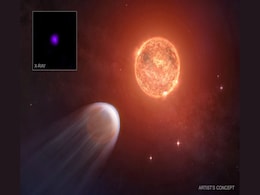
Chandra Spots Distant Baby Planet Losing Its Atmosphere Under Intense X-ray Assault
NASA’s Chandra X-ray Observatory has captured a rare glimpse of TOI 1227 b, a young, Jupiter-sized exoplanet losing its atmosphere under intense stellar radiation. Just 8 million years old, the planet is shrinking rapidly as X-rays strip away its mass. Scientists warn it may become a barren rocky core in about a billion years.
-
Young Exoplanet Spotted Shedding Atmosphere Under Stellar Radiation
NASA’s Chandra X-ray Observatory and Hubble Space Telescope have captured a dramatic cosmic event: a baby exoplanet, TOI 1227 b, is being stripped of its atmosphere by powerful X-rays from its host star. Only 8 million years old and orbiting a red dwarf, this Jupiter-sized planet is losing gas at a rate equal to Earth’s entire atmosphere every ...
-
Crystalline Ice Discovered in Space: New Study Reveals Hidden Order in Cosmic Ice
A groundbreaking study from University College London and the University of Cambridge reveals that water ice in space, long believed to be completely amorphous due to extreme cold, may actually contain up to 25% crystalline structure. Simulations and X-ray diffraction experiments confirm the presence of nanocrystals in so-called low-density amorpho...
-
Oldest Rock On Earth Confirmed To Be Over 4 Billion Years Old
Earth formed about 4.6 billion years ago, during the geological eon known as the Hadean. The name "Hadean" comes from the Greek god of the underworld, reflecting the extreme heat that likely characterized the planet at the time.




-
Scientists Uncover "Ghost Genes" That Predate The Dawn Of Life
New research into "universal paralog" genes reveals that the Last Universal Common Ancestor (LUCA) was not the first spark of life, but a successor that inherited complex genetic tools from an even older, "pre-LUCA" ecological system.
-
Sinking Calcium Carbonate Locked Away Greenhouse Gases, Reveals New Study
Scientists have solved a 66-million-year climate mystery, explaining how Earth cooled from a tropical greenhouse to an ice-capped world. New research reveals ocean calcium levels dropped by more than half, reshaping marine chemistry. As calcium declined, oceans locked away more carbon dioxide, lowering atmospheric CO2. The study links deep-Earth pr...
-
NASA’s SPHEREx Telescope Delivers First Full-Sky Map, Unlocking Cosmic Secrets
NASA’s SPHEREx telescope has completed its first all-sky map, revealing hundreds of millions of galaxies and providing data to study the universe’s origin, evolution, and distribution of life-essential elements across cosmic history.
-
Planet-Eating Stars Offer a Glimpse Into Earth’s Fate as the Sun Nears Its Final Stages
Astronomers studying aging Sun-like stars have found strong evidence that stars consume their closest planets as they evolve. Using data from NASA’s TESS mission, researchers observed fewer planets around older stars, suggesting worlds are destroyed over time. The findings offer a realistic preview of Earth’s fate billions of years from now.
-
NASA Missions Uncover a Diverse Galaxy of Super-Earths, Raising New Questions About Planetary Evolution
Super-Earths are among the most common planets in the galaxy, yet none exist in our solar system. Larger than Earth but smaller than Neptune, they range from ocean-covered worlds to scorched, atmosphere-less rocks. Some orbit within habitable zones, making them prime candidates for life. NASA’s Kepler and TESS missions, along with upcoming telesc...
-
Doomed Exoplanet TOI-2109b Spirals Toward Its Star with Three Possible Fates
The gas giant TOI-2109b, over five times Jupiter’s mass, is spiraling closer to its star in a rare planetary death spiral. With a 16-hour orbit and blistering heat, the exoplanet could either plunge into its host star, be torn apart by tidal forces, or evolve into a rocky super-Earth through photoevaporation. NASA’s TESS and ESA’s Cheops data...
-
Chandra Spots Distant Baby Planet Losing Its Atmosphere Under Intense X-ray Assault
NASA’s Chandra X-ray Observatory has captured a rare glimpse of TOI 1227 b, a young, Jupiter-sized exoplanet losing its atmosphere under intense stellar radiation. Just 8 million years old, the planet is shrinking rapidly as X-rays strip away its mass. Scientists warn it may become a barren rocky core in about a billion years.
-
Young Exoplanet Spotted Shedding Atmosphere Under Stellar Radiation
NASA’s Chandra X-ray Observatory and Hubble Space Telescope have captured a dramatic cosmic event: a baby exoplanet, TOI 1227 b, is being stripped of its atmosphere by powerful X-rays from its host star. Only 8 million years old and orbiting a red dwarf, this Jupiter-sized planet is losing gas at a rate equal to Earth’s entire atmosphere every ...
-
Crystalline Ice Discovered in Space: New Study Reveals Hidden Order in Cosmic Ice
A groundbreaking study from University College London and the University of Cambridge reveals that water ice in space, long believed to be completely amorphous due to extreme cold, may actually contain up to 25% crystalline structure. Simulations and X-ray diffraction experiments confirm the presence of nanocrystals in so-called low-density amorpho...
-
Oldest Rock On Earth Confirmed To Be Over 4 Billion Years Old
Earth formed about 4.6 billion years ago, during the geological eon known as the Hadean. The name "Hadean" comes from the Greek god of the underworld, reflecting the extreme heat that likely characterized the planet at the time.

