



Data Science Universities
- All
- News
- Videos
- Web Stories
-

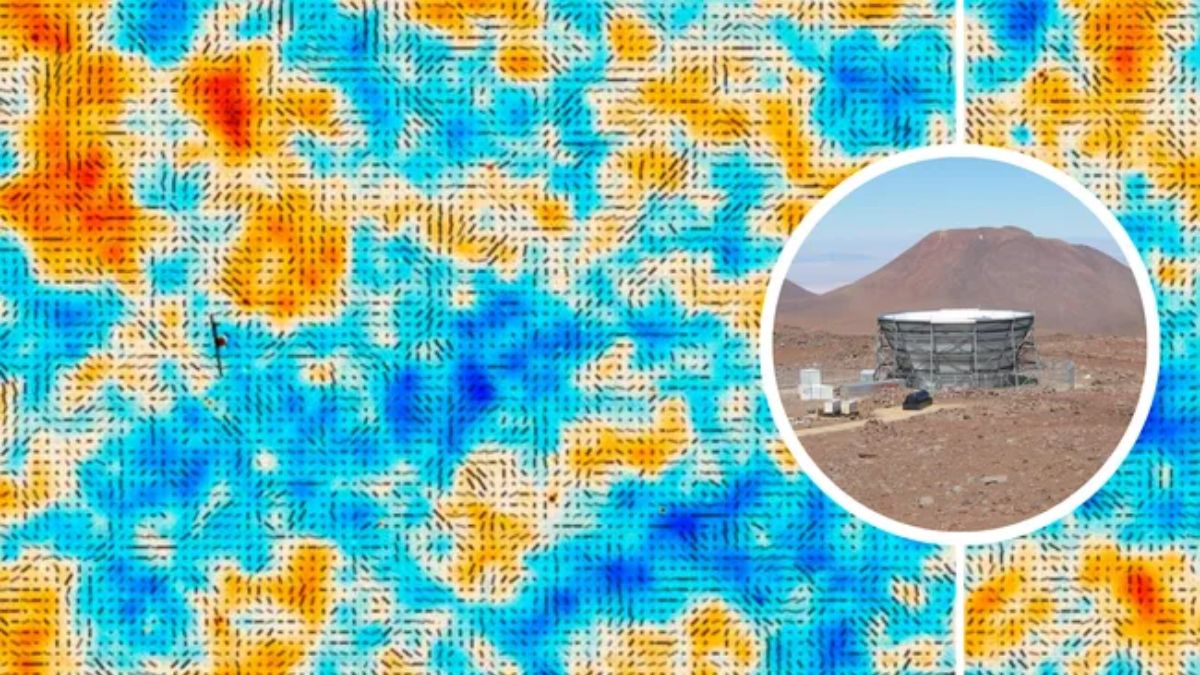
New Telescope Data Deepens the Mystery of How Fast the Universe Is Expanding
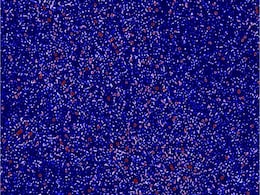
The Atacama Cosmology Telescope’s final polarisation maps reinforce the long-standing Hubble tension, confirming a slower early-universe expansion rate similar to Planck’s findings. By ruling out several proposed fixes, the new data intensifies the mystery and suggests current cosmological models may be missing key physics.
-
Daily Exercise In Midlife May Cut Dementia Risk By Nearly Half, Study Finds
Data from over 4,300 individuals showed significant brain health benefits from staying active, especially between the ages of 45 and 88.
-
Scientists May Have Caught The First Real Glimpse Of Dark Matter, Universe's Most Elusive Ingredient
The new study led by Prof Tomonori Totani of the University of Tokyo analysed Fermi telescope observations of the Milky Way's centre - the region where dark matter is expected to be densest.
-
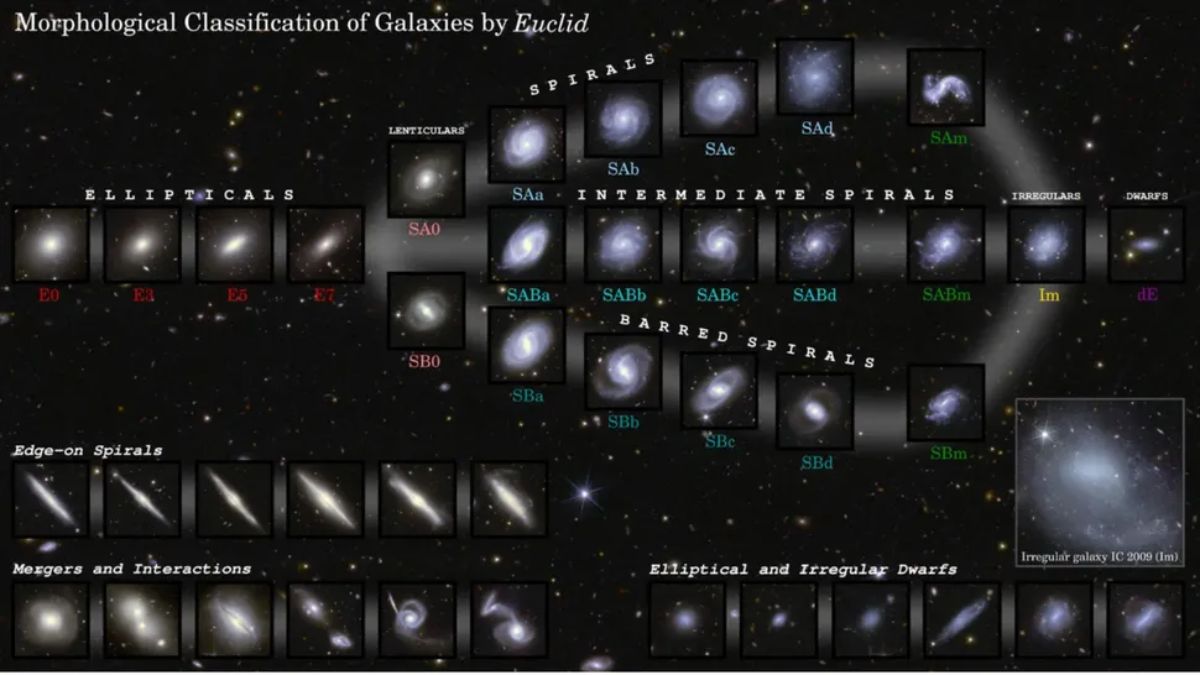
ESA’s Euclid Telescope Charts Over a Million Galaxies in Landmark First Data
ESA’s Euclid space telescope has captured about 1.2 million galaxies in its first year, providing one of the most detailed wide-field surveys of the universe ever made. Covering distances up to 10 billion light-years, Euclid’s clear, expansive imaging is helping astronomers study galaxy shapes, mergers, dwarf galaxy populations, and the role of...
-
Is the Universe Slowing Down? Astronomers Detect Signs of Fading Dark Energy
Astronomers from Yonsei University and DESI data analyses indicate dark energy, long believed constant, may be weakening. Corrected supernova results hint that cosmic acceleration is slowing—a possible “cosmic slowdown.” If true, this could help resolve the Hubble tension and redefine how the universe’s expansion and ultimate fate are under...
-
How Hot Was the Universe 7 Billion Years Ago? Scientists Now Have an Answer
Japanese astronomers using ALMA data have found the universe was about twice as hot 7 billion years ago, with a temperature of 5.13 K compared to today’s 2.7 K. The finding aligns perfectly with Big Bang predictions that the Universe cools as it expands, providing the most precise mid-epoch measurement yet and reinforcing confidence in standard c...
-
Keio University Team Measures Ancient Cosmic Temperature, Confirming Big Bang Prediction
Using ALMA, Keio University scientists measured a 5.13 K cosmic background temperature from 7 billion years ago—matching Big Bang predictions of universal cooling. This precise reading, based on quasar absorption data, is the most accurate at that epoch and offers strong confirmation of how the Universe’s temperature decreases over time.
-
Ghostly Neutrinos May Hold the Answer to Why Matter Exists in Our Universe
In a breakthrough study, scientists merged data from Japan’s T2K and the U.S. NOvA neutrino experiments to explore why matter exists in the universe. The findings improve measurements of neutrino behavior and may help reveal whether these particles break symmetry with antimatter, offering vital clues to how the universe survived after the Big Ban...
-
Tsinghua Scientists Create Light-Powered AI Chip Running at 12.5 GHz
Researchers at Tsinghua University have created the world’s fastest optical AI chip, the OFE², which processes data using light at 12.5 GHz. The chip performs pattern-recognition tasks efficiently and consumes far less energy than traditional processors, promising a new generation of sustainable and ultrafast artificial intelligence.
-
Fungi-Based Tech? Scientists Use Shiitake Mushrooms To Create Functional Computer Memory
The fungal memristor's performance rivals silicon-based chips, offering a potentially low-cost, scalable, and eco-friendly alternative.
-
James Webb Telescope Uncovers the Turbulent Birth of the First Galaxies
Using JWST data, astronomers analyzed more than 250 galaxies from the universe’s first 1.5 billion years and found most were chaotic, with gas swirling in all directions. Only a few showed early signs of ordered rotation. The findings reveal how intense star formation and gravitational turbulence gave way to stability, transforming the early univ...
-
Scientists Create Most Detailed Radio Map of Early Universe Using MWA
Scientists using the Murchison Widefield Array in Australia analyzed nine years of radio data to study the elusive 21-cm hydrogen signal from the universe’s dark ages. Their findings suggest early black holes and stars had already heated cosmic gas, marking the first observational evidence of this warming phase.
-
Leading AI Expert Song-Chun Zhu Relocates To China Amid US-China Tech Rivalry: "I Have To Do It"
The Chinese government's heavy investment in AI, coupled with its strategic goal to lead the global AI race by 2030, offered him unparalleled resources.
-
Diamond 'Super-Earth' May Not Be Quite as Precious as Once Thought, Study Finds
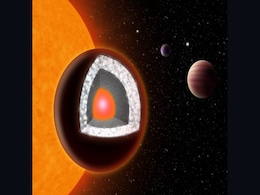
New research challenges the idea that 55 Cancri e, once dubbed a “diamond planet”, is rich in carbon. Re-analysing telescope data, scientists concluded that the host star has a lot more oxygen than originally believed, making the possibility that its planet formed with a carbon-dominant atmosphere less likely.
-
India’s PRATUSH Computer Could Detect Signals From the Universe’s First Stars: Report
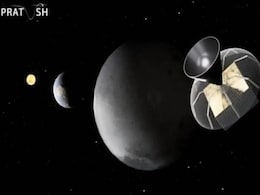
RRI’s PRATUSH—a credit-card-sized computer payload—will detect faint radio signals from hydrogen to study the “Cosmic Dawn”. Designed for deployment on the Moon’s far side, the system offers noise-free, efficient data handling using an SBC and FPGA combo. If successful, it could help determine when the first stars formed and expand our ...






-
New Telescope Data Deepens the Mystery of How Fast the Universe Is Expanding
The Atacama Cosmology Telescope’s final polarisation maps reinforce the long-standing Hubble tension, confirming a slower early-universe expansion rate similar to Planck’s findings. By ruling out several proposed fixes, the new data intensifies the mystery and suggests current cosmological models may be missing key physics.
-
Daily Exercise In Midlife May Cut Dementia Risk By Nearly Half, Study Finds
Data from over 4,300 individuals showed significant brain health benefits from staying active, especially between the ages of 45 and 88.
-
Scientists May Have Caught The First Real Glimpse Of Dark Matter, Universe's Most Elusive Ingredient
The new study led by Prof Tomonori Totani of the University of Tokyo analysed Fermi telescope observations of the Milky Way's centre - the region where dark matter is expected to be densest.
-
ESA’s Euclid Telescope Charts Over a Million Galaxies in Landmark First Data
ESA’s Euclid space telescope has captured about 1.2 million galaxies in its first year, providing one of the most detailed wide-field surveys of the universe ever made. Covering distances up to 10 billion light-years, Euclid’s clear, expansive imaging is helping astronomers study galaxy shapes, mergers, dwarf galaxy populations, and the role of...
-
Is the Universe Slowing Down? Astronomers Detect Signs of Fading Dark Energy
Astronomers from Yonsei University and DESI data analyses indicate dark energy, long believed constant, may be weakening. Corrected supernova results hint that cosmic acceleration is slowing—a possible “cosmic slowdown.” If true, this could help resolve the Hubble tension and redefine how the universe’s expansion and ultimate fate are under...
-
How Hot Was the Universe 7 Billion Years Ago? Scientists Now Have an Answer
Japanese astronomers using ALMA data have found the universe was about twice as hot 7 billion years ago, with a temperature of 5.13 K compared to today’s 2.7 K. The finding aligns perfectly with Big Bang predictions that the Universe cools as it expands, providing the most precise mid-epoch measurement yet and reinforcing confidence in standard c...
-
Keio University Team Measures Ancient Cosmic Temperature, Confirming Big Bang Prediction
Using ALMA, Keio University scientists measured a 5.13 K cosmic background temperature from 7 billion years ago—matching Big Bang predictions of universal cooling. This precise reading, based on quasar absorption data, is the most accurate at that epoch and offers strong confirmation of how the Universe’s temperature decreases over time.
-
Ghostly Neutrinos May Hold the Answer to Why Matter Exists in Our Universe
In a breakthrough study, scientists merged data from Japan’s T2K and the U.S. NOvA neutrino experiments to explore why matter exists in the universe. The findings improve measurements of neutrino behavior and may help reveal whether these particles break symmetry with antimatter, offering vital clues to how the universe survived after the Big Ban...
-
Tsinghua Scientists Create Light-Powered AI Chip Running at 12.5 GHz
Researchers at Tsinghua University have created the world’s fastest optical AI chip, the OFE², which processes data using light at 12.5 GHz. The chip performs pattern-recognition tasks efficiently and consumes far less energy than traditional processors, promising a new generation of sustainable and ultrafast artificial intelligence.
-
Fungi-Based Tech? Scientists Use Shiitake Mushrooms To Create Functional Computer Memory
The fungal memristor's performance rivals silicon-based chips, offering a potentially low-cost, scalable, and eco-friendly alternative.
-
James Webb Telescope Uncovers the Turbulent Birth of the First Galaxies
Using JWST data, astronomers analyzed more than 250 galaxies from the universe’s first 1.5 billion years and found most were chaotic, with gas swirling in all directions. Only a few showed early signs of ordered rotation. The findings reveal how intense star formation and gravitational turbulence gave way to stability, transforming the early univ...
-
Scientists Create Most Detailed Radio Map of Early Universe Using MWA
Scientists using the Murchison Widefield Array in Australia analyzed nine years of radio data to study the elusive 21-cm hydrogen signal from the universe’s dark ages. Their findings suggest early black holes and stars had already heated cosmic gas, marking the first observational evidence of this warming phase.
-
Leading AI Expert Song-Chun Zhu Relocates To China Amid US-China Tech Rivalry: "I Have To Do It"
The Chinese government's heavy investment in AI, coupled with its strategic goal to lead the global AI race by 2030, offered him unparalleled resources.
-
Diamond 'Super-Earth' May Not Be Quite as Precious as Once Thought, Study Finds
New research challenges the idea that 55 Cancri e, once dubbed a “diamond planet”, is rich in carbon. Re-analysing telescope data, scientists concluded that the host star has a lot more oxygen than originally believed, making the possibility that its planet formed with a carbon-dominant atmosphere less likely.
-
India’s PRATUSH Computer Could Detect Signals From the Universe’s First Stars: Report
RRI’s PRATUSH—a credit-card-sized computer payload—will detect faint radio signals from hydrogen to study the “Cosmic Dawn”. Designed for deployment on the Moon’s far side, the system offers noise-free, efficient data handling using an SBC and FPGA combo. If successful, it could help determine when the first stars formed and expand our ...

