



Cosmic
-
{
- All
- News
- Videos
- Web Stories
-

Earth Is In Firing Line Of A New Type Of Object: Here's All About Microblazar
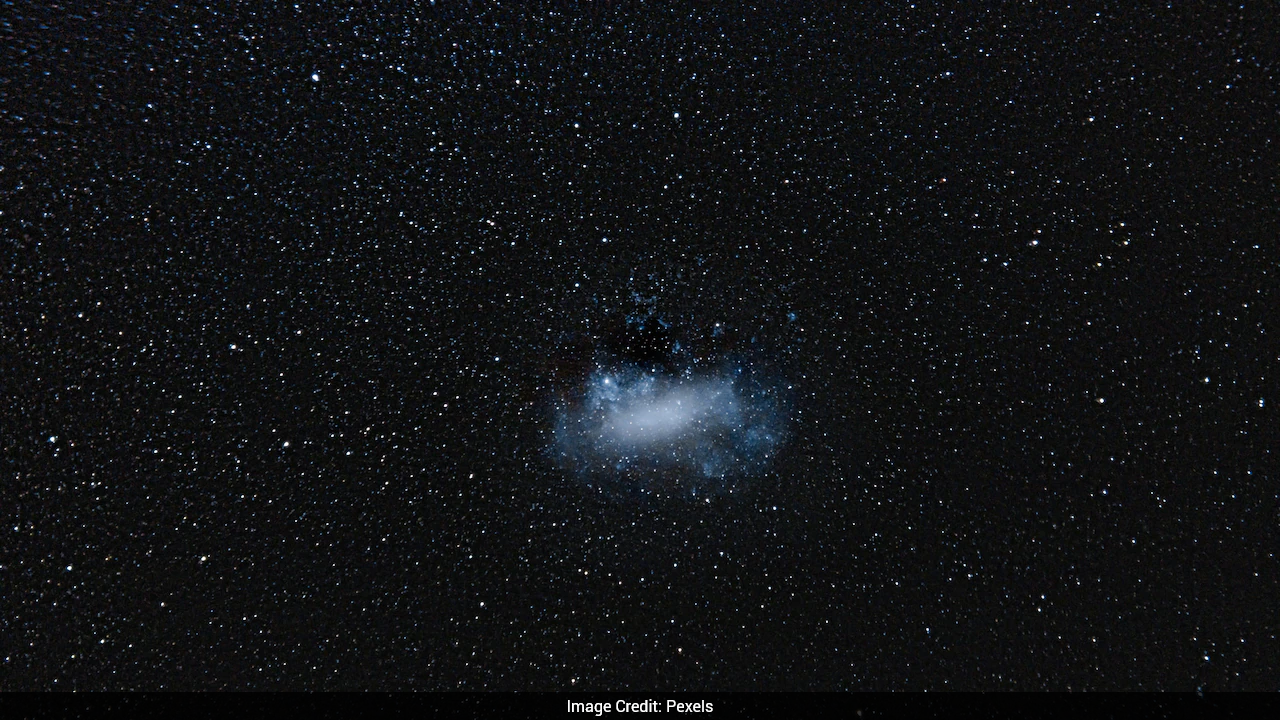
The system attracting attention as microblazar is called IRAS 18293-0941. It is estimated to be around 12,000 light years from Earth.
-
Nobel Physics 2026: How Antarctica's Ice Became A Window To The Universe
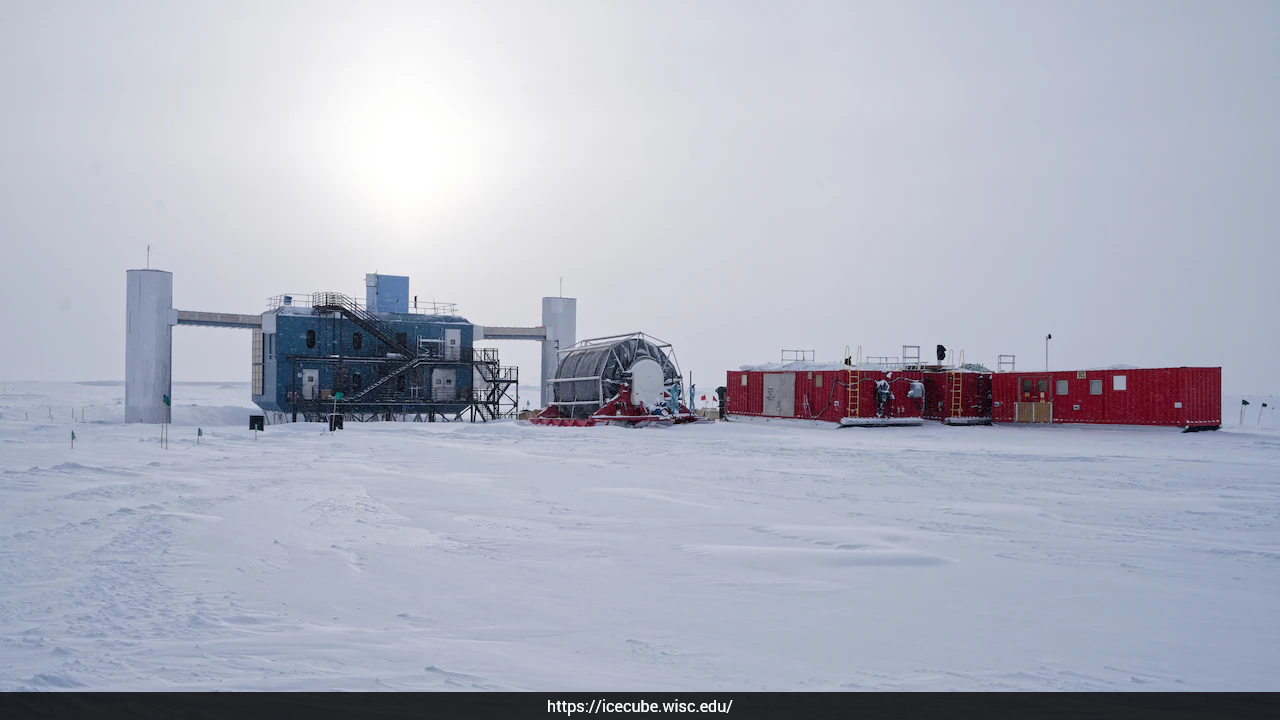
Francis Halzen has won the 2026 Nobel Prize in Physics for his pioneering contributions to the IceCube Neutrino Observatory and the discovery of high-energy neutrinos from cosmic sources.
-
Pilots And Flight Attendants Face Higher Risk Of Radiation-Linked Cancer Deaths: Study
Researchers say repeated exposure to cosmic radiation at high altitude may be an important occupational health concern and have called for consideration of stronger radiation protections for aircrew.
-
Amazon Great Freedom Sale 2026: Best Deals on Gaming Headsets Under Rs. 10,000 From Razer, HyperX and More
Amazon Great Freedom Sale 2026 is offering various gaming headphones under Rs. 10,000 at discounted prices. For reference, you can get the Razer Barracuda X at a relatively low price of Rs. 7,999, instead of its listed price of Rs. 14,999, resulting in a discount of about Rs. 7,000. Similarly, the HyperX Cloud III wireless headphones can be purchas...
-
NASA Shares Image Of 'Exclamation Mark' In Space, Reveals What It Is
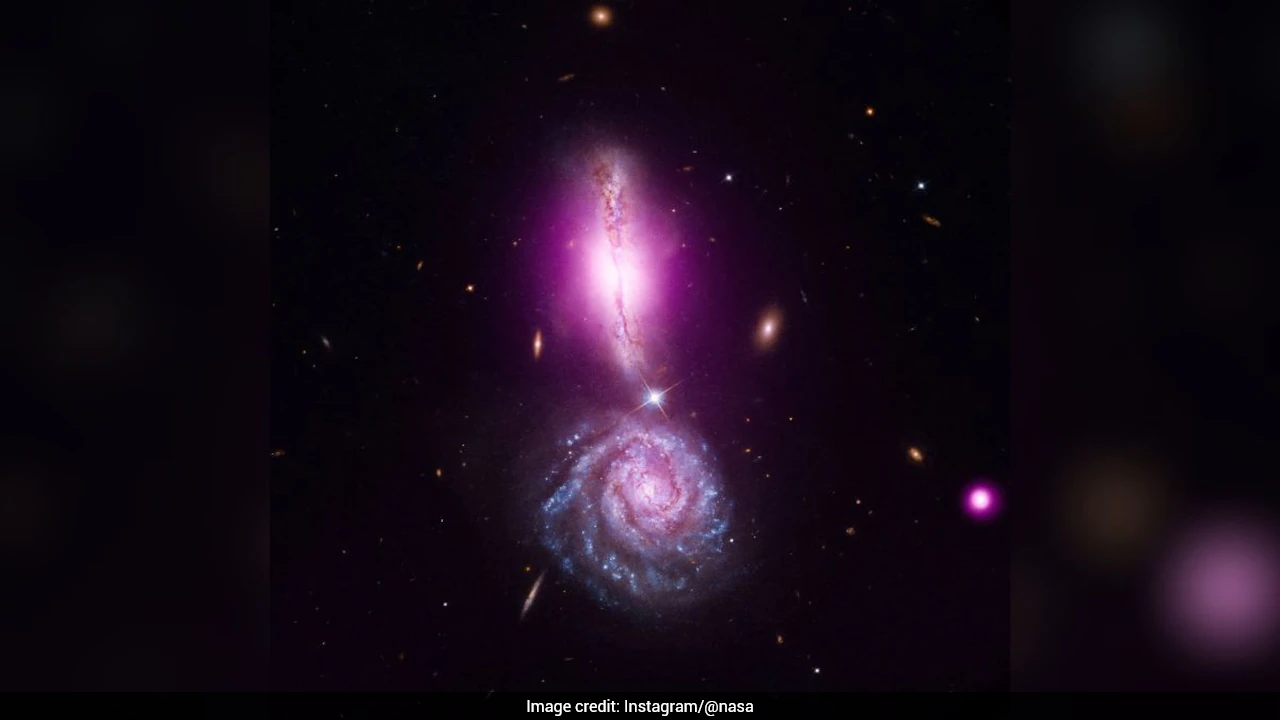
With the help of data, scientists can look through cosmic dust to better understand how galaxies transform during such collisions.
-
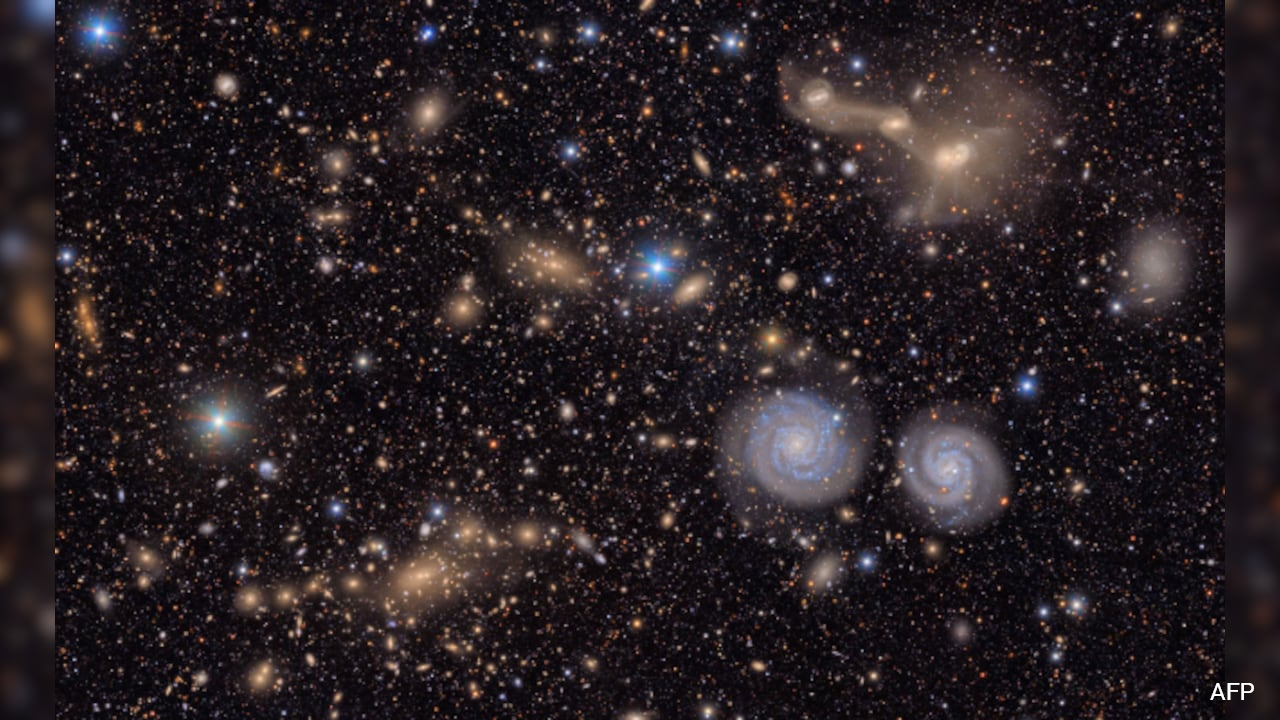
World's Largest Digital Camera Shows Vast Cosmic Landscape With 500,000 Galaxies
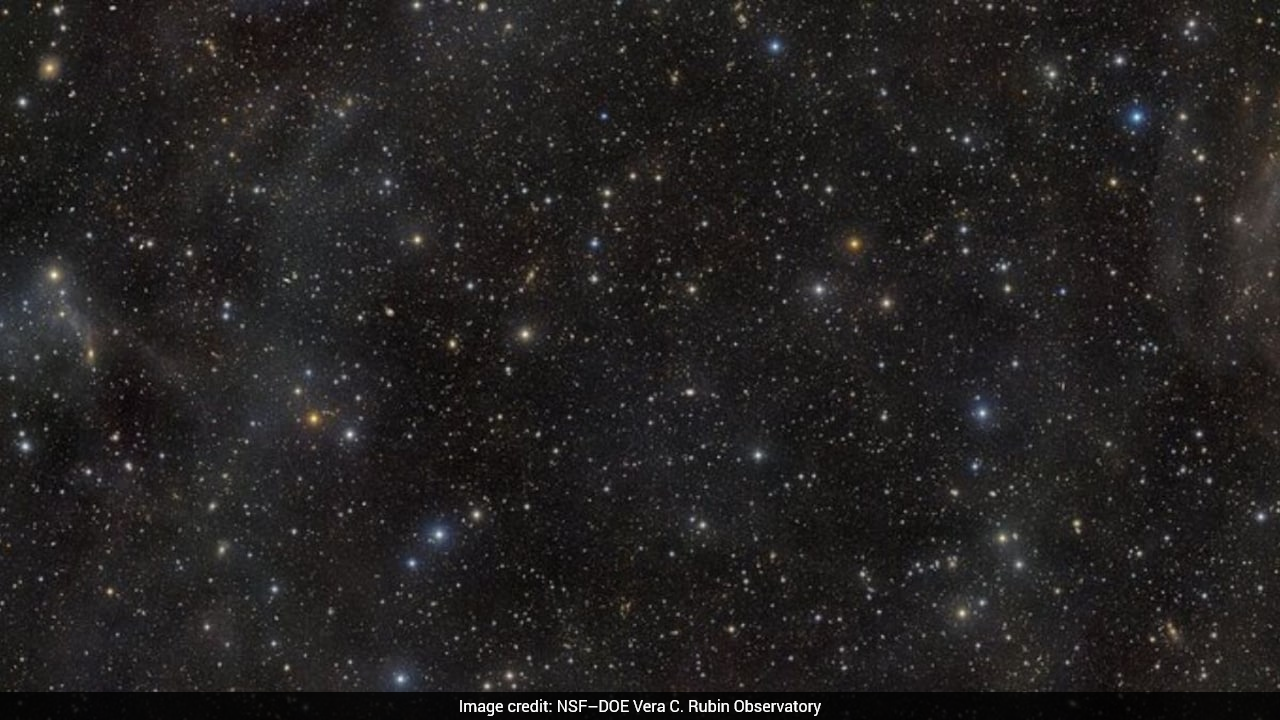
This stunning milestone is part of the observatory's flagship project, the 10-year Legacy Survey of Space and Time (LSST).
-
Bengaluru Startup Turns 'Diamond In The Sky' Nursery Rhyme Into Reality
The diamond, called Cosmic Bloom, is a lotus shaped creation conceived by entrepreneur and National Institute of Design (NID) trained jewellery designer Sanjana T., founder of Cosmos Diamonds, Bengaluru.
-
World's Largest Digital Camera Captures Unseen Corners Of Universe
Researchers hope observations will help them take a better census of the universe, mapping billions of stars in the Milky Way and billions more galaxies beyond it.
-
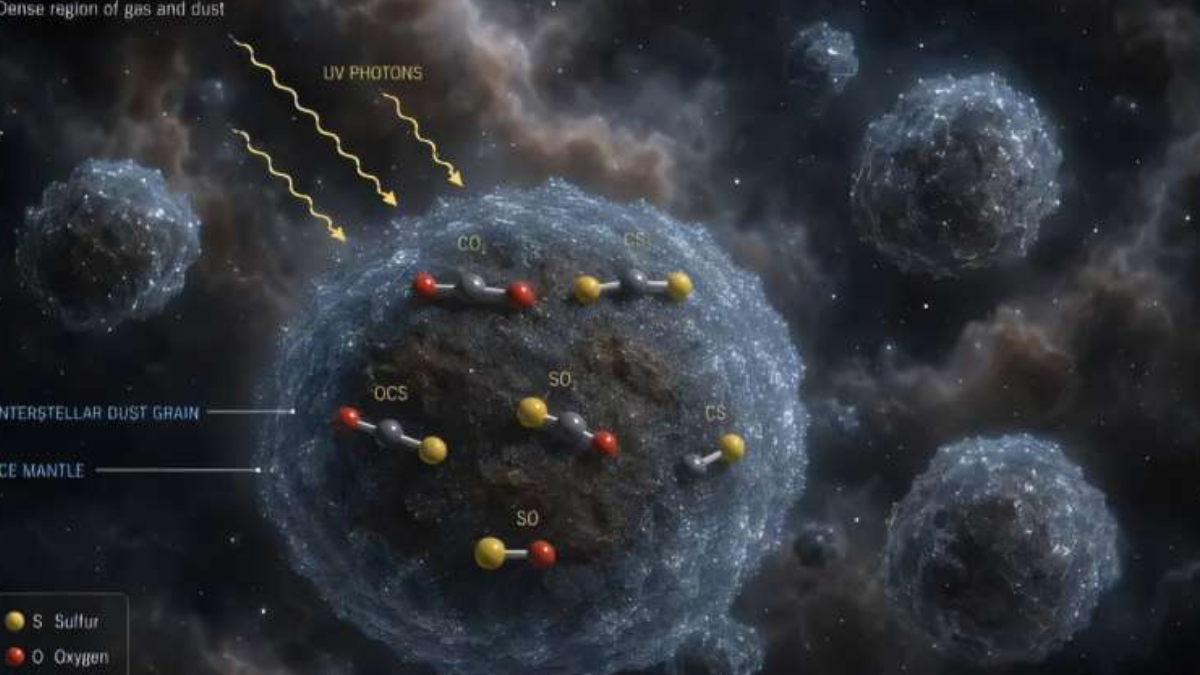
Scientists May Have Solved the Missing Sulfur Mystery in Star-Forming Clouds
A new simulation suggests sulfur in star-forming clouds may be locked inside icy dust grains through previously overlooked chemical reactions. The findings offer fresh clues to a decades-old cosmic mystery and could improve our understanding of life's essential ingredients in space.
-
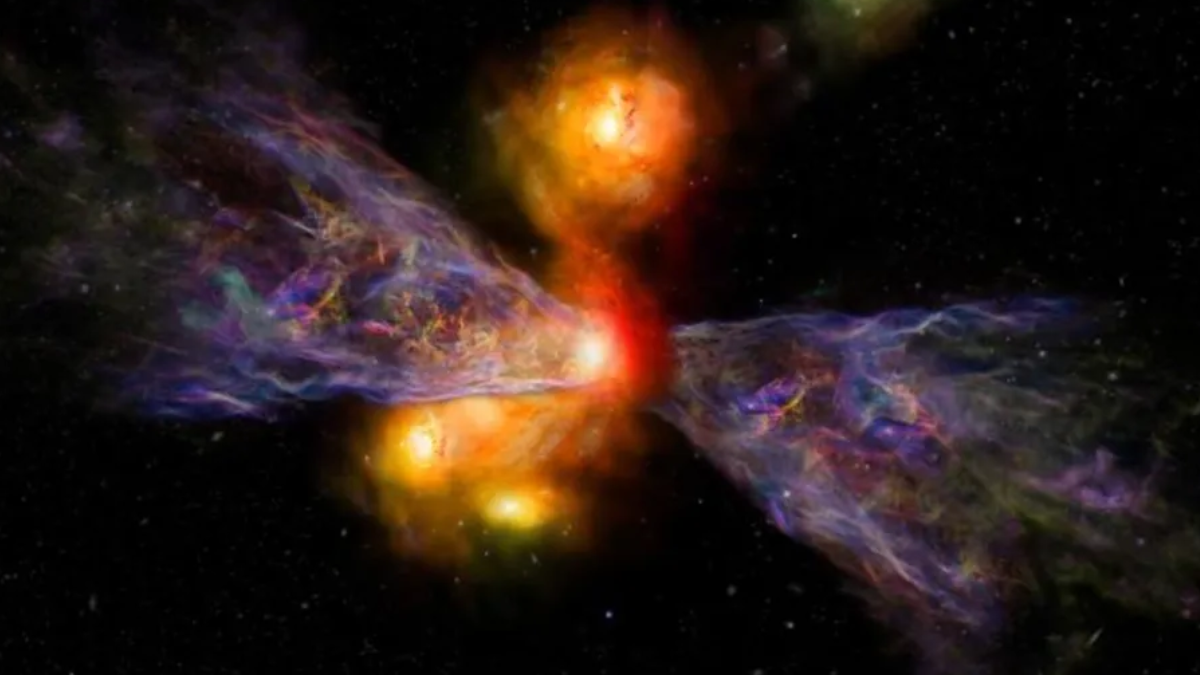
Astronomers Discover Why Massive Galaxies Died Early in the Universe
Astronomers have discovered a powerful galactic wind in the merging galaxy system CRISTAL-02. The outflow is removing star-forming gas faster than it can be replenished, providing the first direct evidence for a mechanism that may have shut down star formation in massive early galaxies.
-
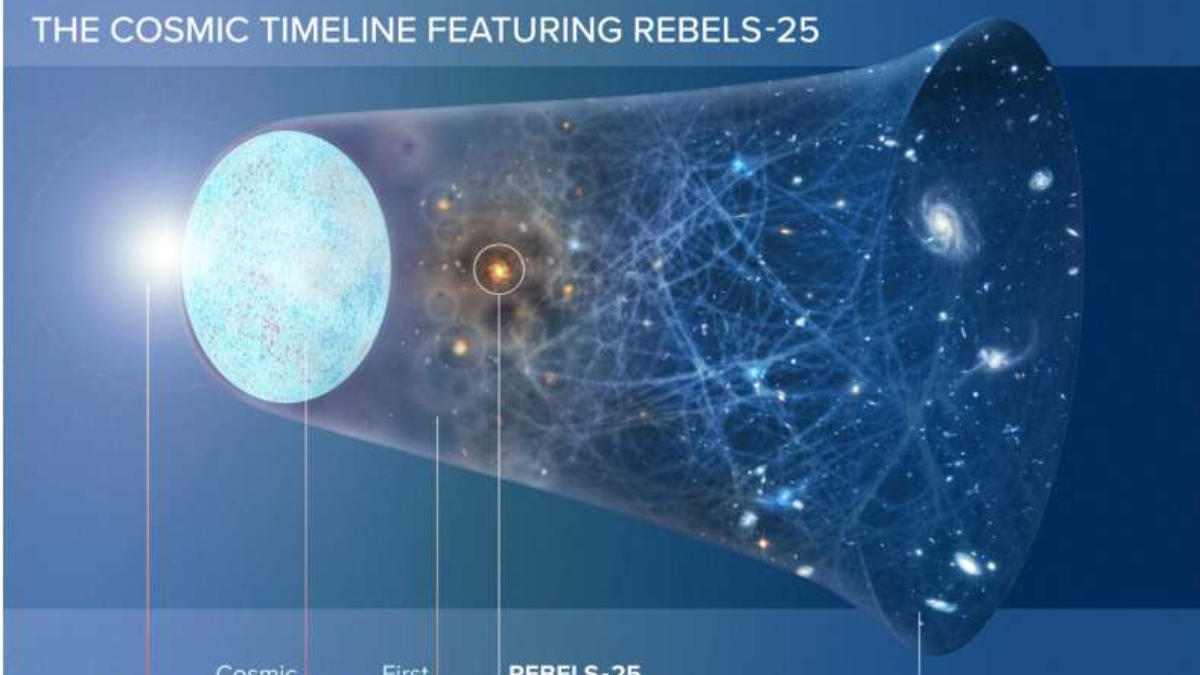
Astronomers Detect Star-Forming Fuel in a Galaxy 13 Billion Light-Years Away
Using ALMA and the Very Large Array, astronomers directly detected a massive reservoir of molecular gas in REBELS-25, a galaxy from just 700 million years after the Big Bang. The finding provides the clearest evidence yet that some early galaxies were already loaded with the fuel needed for rapid star formation.
-
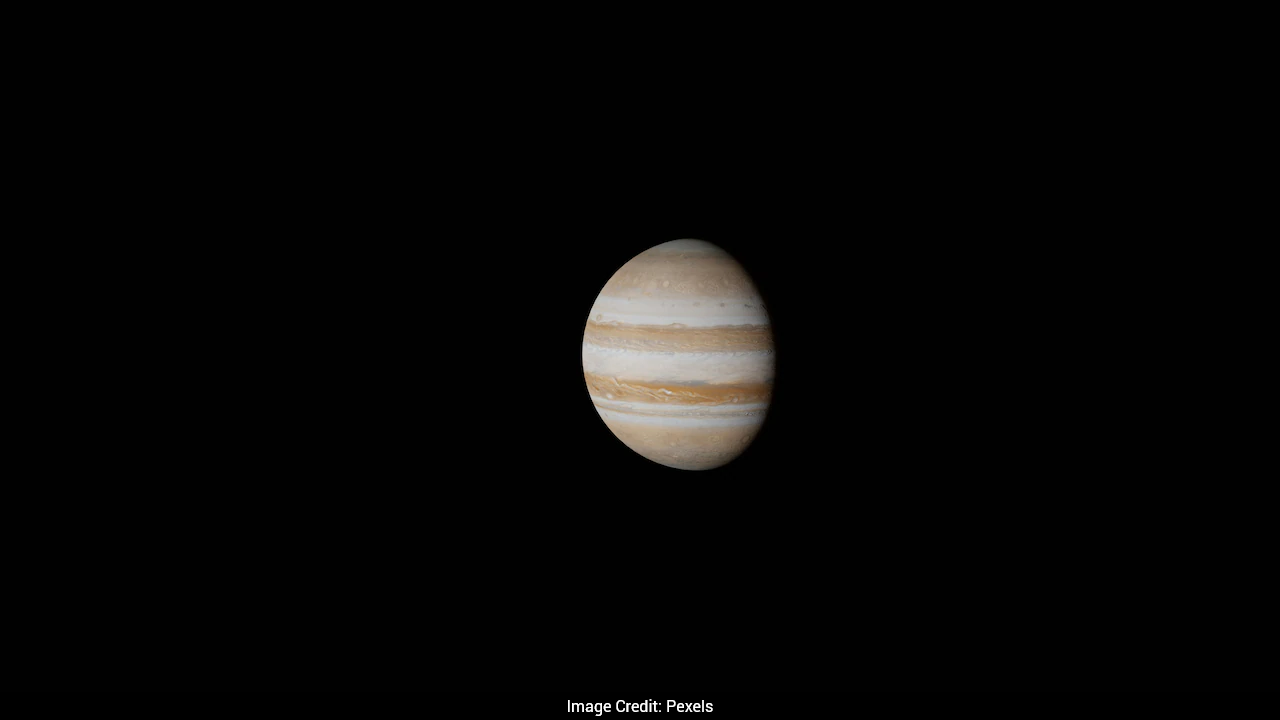
NASA Spots Near-Light-Speed Particles Around Jupiter, Offering Clues To Cosmic Ray Origins
New observations from Jupiter have now provided direct confirmation of the process.
-
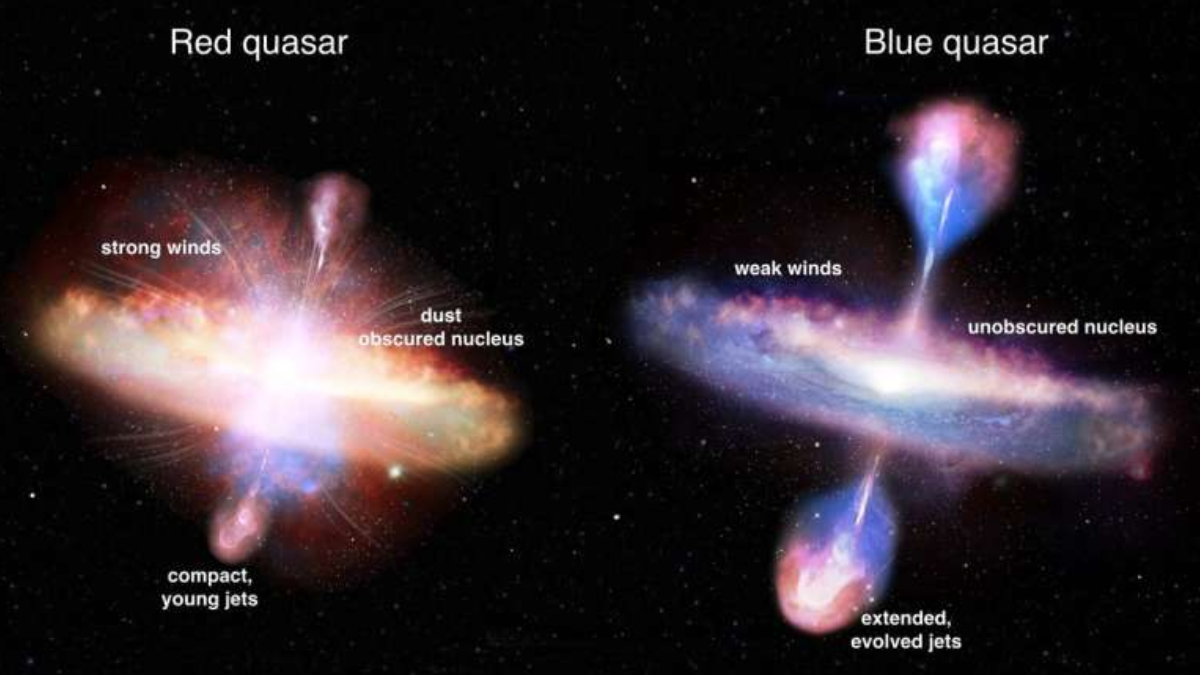
Scientists Discover 77 Rare Red Quasars Hidden Behind Cosmic Dust
Scientists have discovered 77 rare red quasars hidden behind cosmic dust using NASA’s SPHEREx telescope. The findings support theories linking galaxy mergers to rapid black hole growth and galaxy evolution.
-
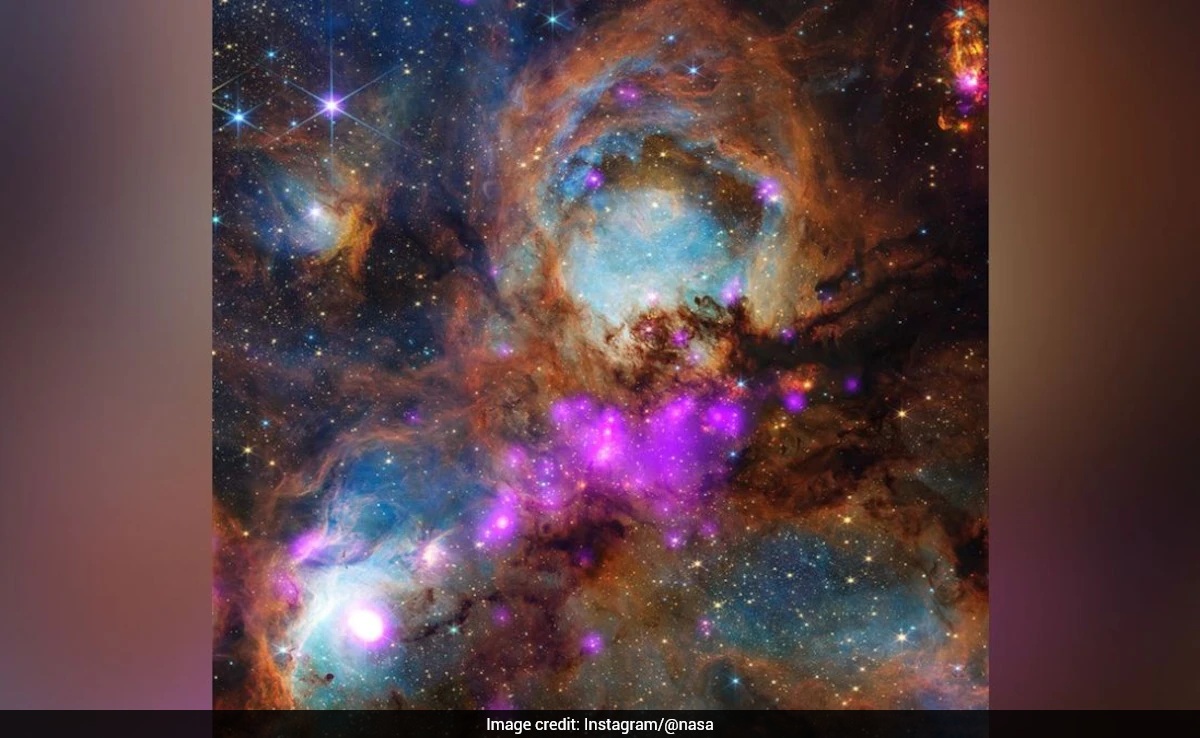
Cosmic Collab Of Two Space Telescopes Shows Cat's Paw Nebula In Stunning Detail: "A-Meow-Zing"
The Cat's Paw Nebula, also catalogued as NGC 6334 and sometimes called the Bear Claw Nebula
-
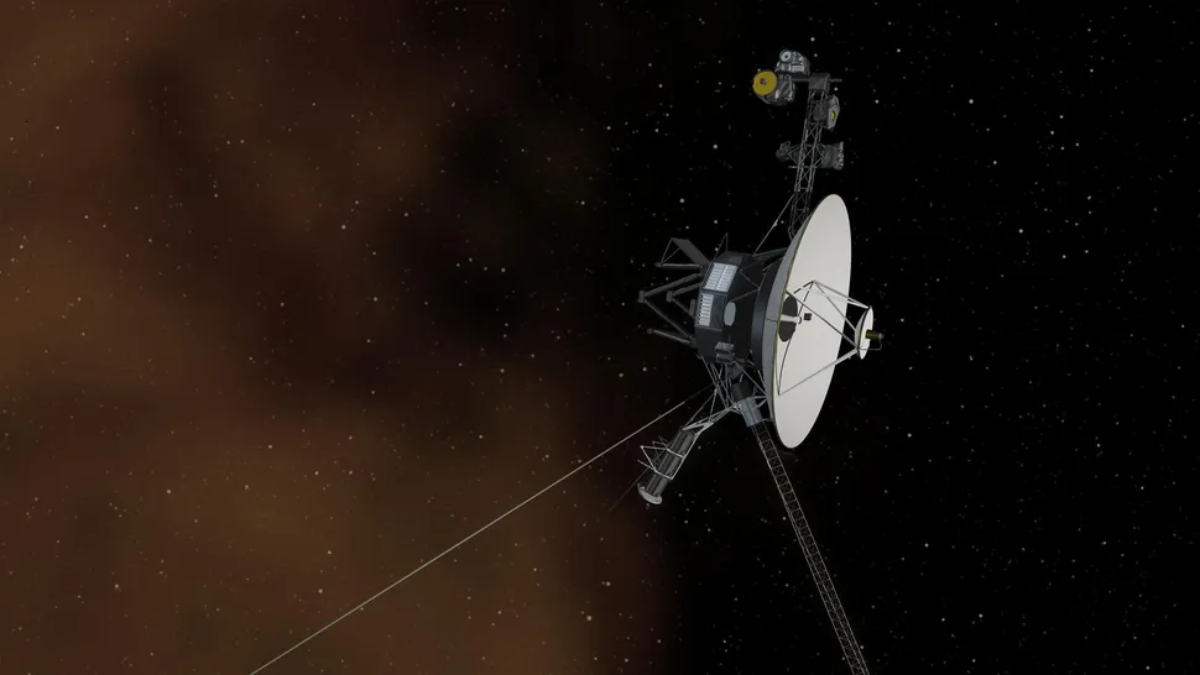
NASA Shuts Down Voyager 1 Instrument to Extend Mission Life in Deep Space
NASA has shut down an instrument on Voyager 1 to conserve power, extending its mission in interstellar space as it continues to send valuable data back to Earth.












-
Earth Is In Firing Line Of A New Type Of Object: Here's All About Microblazar
The system attracting attention as microblazar is called IRAS 18293-0941. It is estimated to be around 12,000 light years from Earth.
-
Nobel Physics 2026: How Antarctica's Ice Became A Window To The Universe
Francis Halzen has won the 2026 Nobel Prize in Physics for his pioneering contributions to the IceCube Neutrino Observatory and the discovery of high-energy neutrinos from cosmic sources.
-
Pilots And Flight Attendants Face Higher Risk Of Radiation-Linked Cancer Deaths: Study
Researchers say repeated exposure to cosmic radiation at high altitude may be an important occupational health concern and have called for consideration of stronger radiation protections for aircrew.
-
Amazon Great Freedom Sale 2026: Best Deals on Gaming Headsets Under Rs. 10,000 From Razer, HyperX and More
Amazon Great Freedom Sale 2026 is offering various gaming headphones under Rs. 10,000 at discounted prices. For reference, you can get the Razer Barracuda X at a relatively low price of Rs. 7,999, instead of its listed price of Rs. 14,999, resulting in a discount of about Rs. 7,000. Similarly, the HyperX Cloud III wireless headphones can be purchas...
-
NASA Shares Image Of 'Exclamation Mark' In Space, Reveals What It Is
With the help of data, scientists can look through cosmic dust to better understand how galaxies transform during such collisions.
-
World's Largest Digital Camera Shows Vast Cosmic Landscape With 500,000 Galaxies
This stunning milestone is part of the observatory's flagship project, the 10-year Legacy Survey of Space and Time (LSST).
-
Bengaluru Startup Turns 'Diamond In The Sky' Nursery Rhyme Into Reality
The diamond, called Cosmic Bloom, is a lotus shaped creation conceived by entrepreneur and National Institute of Design (NID) trained jewellery designer Sanjana T., founder of Cosmos Diamonds, Bengaluru.
-
World's Largest Digital Camera Captures Unseen Corners Of Universe
Researchers hope observations will help them take a better census of the universe, mapping billions of stars in the Milky Way and billions more galaxies beyond it.
-
Scientists May Have Solved the Missing Sulfur Mystery in Star-Forming Clouds
A new simulation suggests sulfur in star-forming clouds may be locked inside icy dust grains through previously overlooked chemical reactions. The findings offer fresh clues to a decades-old cosmic mystery and could improve our understanding of life's essential ingredients in space.
-
Astronomers Discover Why Massive Galaxies Died Early in the Universe
Astronomers have discovered a powerful galactic wind in the merging galaxy system CRISTAL-02. The outflow is removing star-forming gas faster than it can be replenished, providing the first direct evidence for a mechanism that may have shut down star formation in massive early galaxies.
-
Astronomers Detect Star-Forming Fuel in a Galaxy 13 Billion Light-Years Away
Using ALMA and the Very Large Array, astronomers directly detected a massive reservoir of molecular gas in REBELS-25, a galaxy from just 700 million years after the Big Bang. The finding provides the clearest evidence yet that some early galaxies were already loaded with the fuel needed for rapid star formation.
-
NASA Spots Near-Light-Speed Particles Around Jupiter, Offering Clues To Cosmic Ray Origins
New observations from Jupiter have now provided direct confirmation of the process.
-
Scientists Discover 77 Rare Red Quasars Hidden Behind Cosmic Dust
Scientists have discovered 77 rare red quasars hidden behind cosmic dust using NASA’s SPHEREx telescope. The findings support theories linking galaxy mergers to rapid black hole growth and galaxy evolution.
-
Cosmic Collab Of Two Space Telescopes Shows Cat's Paw Nebula In Stunning Detail: "A-Meow-Zing"
The Cat's Paw Nebula, also catalogued as NGC 6334 and sometimes called the Bear Claw Nebula
-
NASA Shuts Down Voyager 1 Instrument to Extend Mission Life in Deep Space
NASA has shut down an instrument on Voyager 1 to conserve power, extending its mission in interstellar space as it continues to send valuable data back to Earth.

