





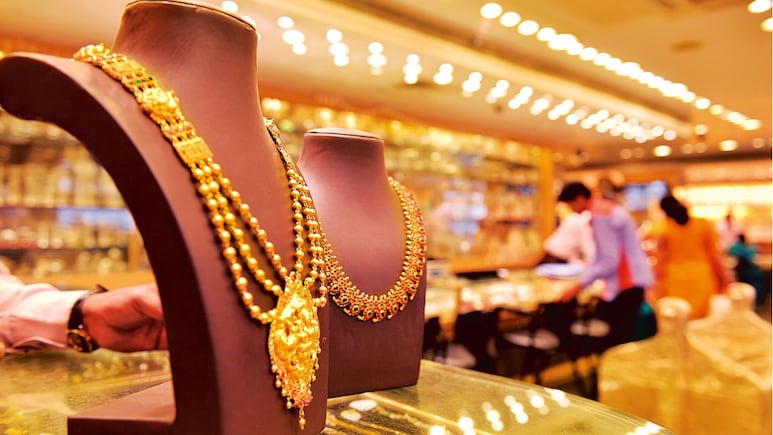
For years, gold exchange occupied a fairly narrow space in India's jewellery market - useful for some consumers, unfamiliar or even mistrusted by many others.
That appears to be changing.
Between rising gold prices, growing conversations around India's gold import dependence, and greater consumer demand for transparency, gold exchange is increasingly moving from a niche retail service into mainstream discussion.
The shift reflects a larger economic reality.
India remains heavily dependent on gold imports, with nearly all domestic demand met through imported supply. According to SBI Research, India's gold imports rose over 24% from $57.9 billion in FY25 to a record $72.4 billion in FY26. At a time of pressure on foreign exchange reserves and elevated gold rates, the import of gold in India is attracting renewed scrutiny.
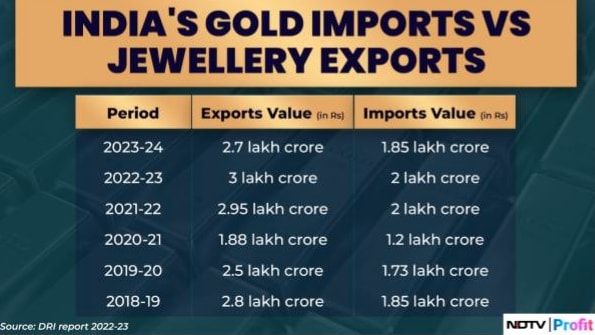
At the same time, researchers estimate that Indian households already hold close to 25,000 tonnes of gold.
This contradiction - importing large amounts of gold while substantial quantities already sit inside Indian homes - is beginning to influence consumer behaviour
Across organised jewellery retail, more consumers are looking at old jewellery not simply as dormant sentimental assets, but as existing value that can be upgraded, redesigned or reused through gold exchange.
This has also led to a noticeable shift in how organised jewellers are approaching exchange.
Several players have expanded or strengthened their gold exchange propositions, focusing on process transparency, valuation clarity and wider acceptance norms.
Among the more visible examples has been Tanishq's "Your Old Gold. India's New Strength" initiative featuring Sachin Tendulkar. Launched months before gold imports became a larger national discussion point, the initiative framed gold exchange not only as a consumer benefit but also as a more responsible way of participating in India's gold economy.
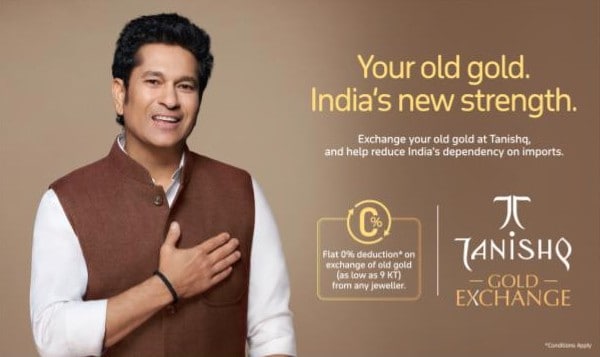
The scale suggests rising acceptance. According to company figures, more than 36 lakh Indians have exchanged old gold through Tanishq over the years, while over 14,000 kilograms of gold was brought back into circulation through its exchange programme in the last year alone.
But adoption of gold exchange has historically depended on one crucial factor: trust.
Consumers have long voiced concerns around purity assessment, valuation differences, hidden deductions and the treatment of jewellery purchased from other jewellers.
This is where organised exchange models have increasingly tried to differentiate themselves. At Tanishq stores, for example, the customer's gold remains in their sight throughout the exchange process. Weighing, purity testing, valuation and melting take place in front of the customer's eyes. Purity is assessed through Karatmeters, gold and stone weights are measured separately, and the process extends to gold purchased from any jeweller, even without bills. The company says its exchange rate is the same as the prevailing buying rates, with no hidden deductions.
Beyond individual transactions, the growing relevance of gold exchange may point toward something larger.
India's future gold story may not depend only on how much gold the country imports - but increasingly, on how confidently consumers and organised players learn to unlock the gold that is already sitting inside Indian homes.
Track Latest News Live on NDTV.com and get news updates from India and around the world

