





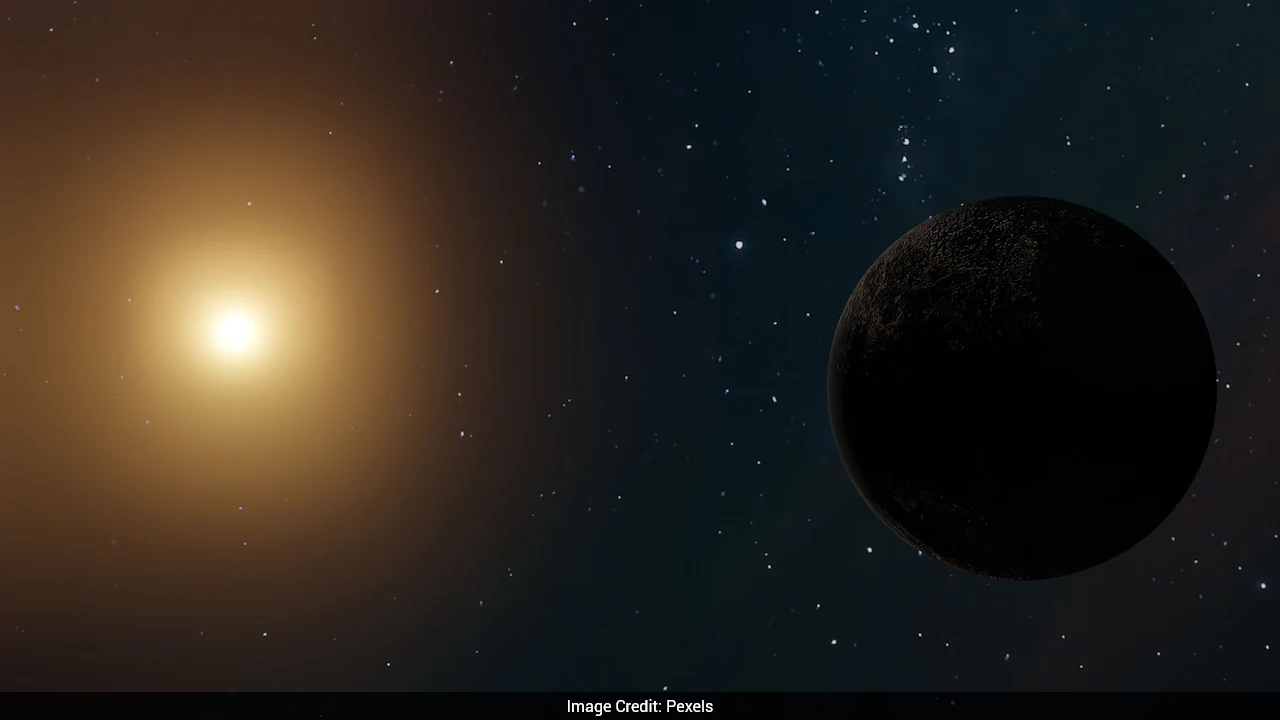
- Scientists found signs of an atmosphere on planet LHS 1140b, 49 light-years away
- LHS 1140b is a super-Earth in the habitable zone, possibly with rocky composition
- Helium escaping from LHS 1140b was detected using the Magellan Clay telescope in 2024
Scientists have found promising signs that a planet located 49 light-years from Earth could have an atmosphere, raising hopes that it may be suitable for life. However, researchers say more observations are needed to confirm the discovery, reported CNN.
The planet, called LHS 1140b, is about five times the mass of Earth and is classified as a "super-Earth." It orbits its star in the "Goldilocks zone," also known as the habitable zone, where temperatures are not too hot or too cold for liquid water to exist.
The findings were published in the Journal Science. Lead author Collin Cherubim said the planet appears to be mostly rocky based on its mass and radius measurements. He said this suggests it may have an iron core, a silicate mantle, and a low-density component that is likely made up of water and, as researchers now know, an atmosphere.
Astronomers have discovered more than 6,200 exoplanets since the first ones were found in the 1990s. If confirmed, LHS 1140b would become the first rocky planet in the habitable zone of another star where an atmosphere has been detected.
Cherubim said there is currently no evidence of life or a life-supporting atmosphere on LHS 1140b, but he believes it is a strong candidate in the search for signs of life beyond our solar system. He said it is mostly rocky, has the right temperature for liquid water on its surface, and appears to have an atmosphere, which are the three main conditions scientists look for.
To search for the atmosphere, Cherubim developed a model based on the idea that many planets form with hydrogen- and helium-rich atmospheres. As some planets become rocky, they lose most of their hydrogen but can retain helium. Using this model, he identified LHS 1140b as a likely candidate.
In September 2024, using the Magellan Clay telescope at Las Campanas Observatory in Chile, Cherubim detected helium escaping from the planet. He said LHS 1140b appears to have lost its hydrogen while retaining helium, which is now slowly escaping into space.
Cherubim said helium alone is unlikely to support life, but scientists hope other gases, such as oxygen, may also be present. He added that no other atmospheric molecules have been detected yet, but he remains optimistic and believes future observations may find them.
LHS 1140b orbits a red dwarf star, which is smaller and cooler than the Sun, making it easier for astronomers to study the atmospheres of nearby planets.
However, Cherubim said red dwarfs also produce strong X-rays and ultraviolet radiation that can strip away planetary atmospheres. He added that confirming an atmosphere around a rocky planet orbiting a red dwarf would be an important discovery, although more research is needed to determine whether LHS 1140b is unique or the first of many such planets.
Track Latest News Live on NDTV.com and get news updates from India and around the world

