





- Meteorite crashed through New Jersey home roof on July 16, 2024, at high speed
- Homeowner preserved fragments with gloves and foil, preventing contamination
- Meteorite traced to asteroid belt between Mars and Jupiter using video footage
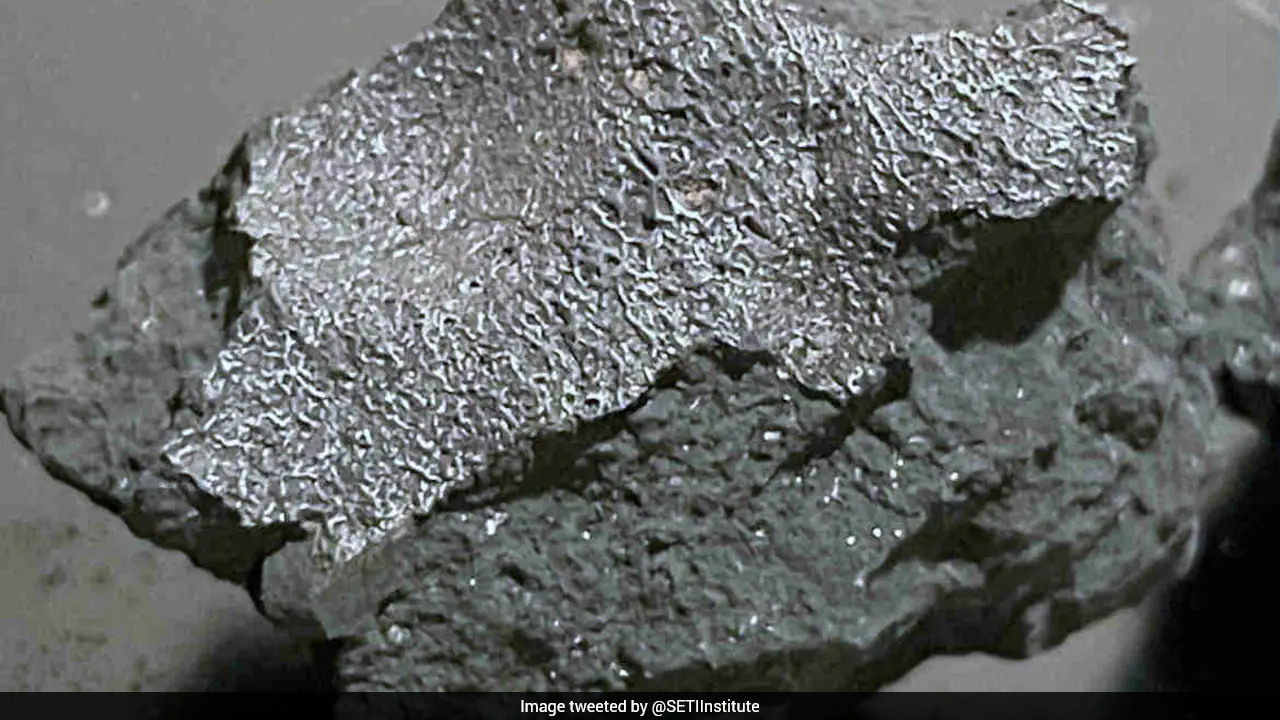
A meteorite that crashed through the roof of a New Jersey home contains the chemistry of alien life, according to scientists. The space rock entered Earth's atmosphere on July 16, 2024, streaking over New York City at nearly 32,000 mph and producing a powerful sonic boom before a two-pound fragment punched through the roof of a home in Hillsborough, New Jersey, the SETI Institute reported.
Rather than handling the meteorite directly, the homeowner carefully collected the fragments using disposable gloves and wrapped them in aluminium foil before sealing them in glass jars. That quick response prevented significant contamination, allowing researchers to study what they describe as one of the most pristine meteorite samples of its kind ever recovered.
"I was at home at the time, heard a loud crash and found a hole in the ceiling of the master bedroom. I smelled a strong sulphur-like odour and saw many black fragments along with debris and black dust that covered my bed, carpet and surrounding areas," the owner of the home said.
Scientists also reconstructed the meteor's path using footage from surveillance and doorbell cameras, enabling them to trace its origin to the asteroid belt between Mars and Jupiter.
Rare Meteorite Holds Clues to Early Solar System
A forensic analysis revealed that the meteorite is a rare CM-type carbonaceous chondrite, an ancient class of meteorites that formed during the early days of the solar system. These rocks are rich in carbon, hydrated minerals and organic compounds, making them valuable records of the conditions that existed more than 4.5 billion years ago.
"A forensic study of the fragments revealed that they contained preserved bits from near the surface of a primitive asteroid, where it experienced concentrated salty fluids—a process not previously known from this type of protoplanetary world. Thanks to the homeowner's quick reaction, these are the most pristine CM1/2 meteorites we know of," said lead author and meteor astronomer Peter Jenniskens of the SETI Institute and NASA's Ames Research Center in California's Silicon Valley.
The team also detected organic carbon and an exceptionally diverse collection of amino acids - the molecules that form the building blocks of proteins.
According to researchers, the meteorite contains hundreds of amino acids, most of which do not occur naturally on Earth.
"We detected a complex suite of amino acids, the fundamental building blocks of proteins, in water extracts of the Hillsborough meteorite. Most of the amino acids detected in Hillsborough are rare or nonexistent in life on Earth, so they are truly extraterrestrial in origin," said study co-author Dr Danny Glavin.
Scientists believe the findings will improve understanding of how primitive asteroids evolved and could help answer whether asteroids delivered the chemical ingredients that eventually made life on Earth possible.
Track Latest News Live on NDTV.com and get news updates from India and around the world

