





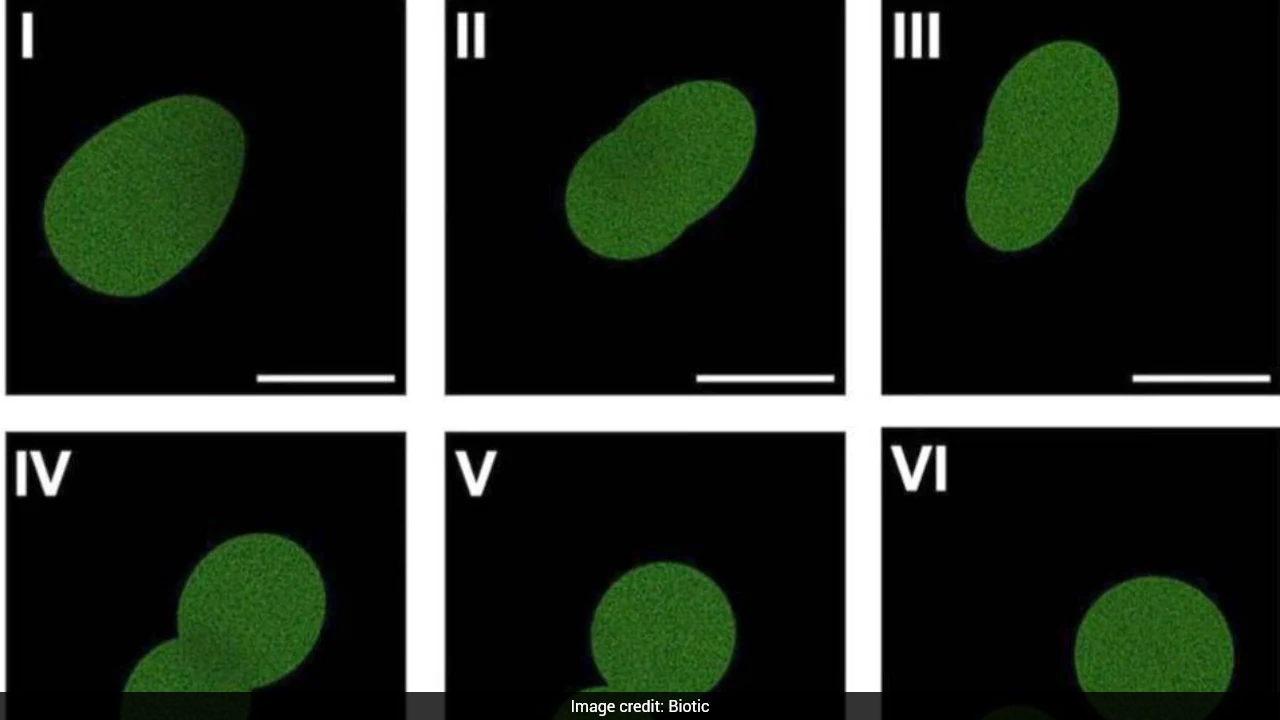
- Scientists created SpudCell, a living cell running entirely on synthetic DNA for the first time
- SpudCell's genome is streamlined with 90 kbp across seven DNA plasmids, enabling modular programming
- The cell consumes nutrients via liposome fusion, injecting molecular fuel into its interior
For the first time, scientists have said that they have created a living cell from scratch that runs entirely on man-made DNA, marking a major milestone in synthetic biology. Dubbed "SpudCell," this microscopic creation marks a radical shift in how we can draw the border between chemistry and biology.
Led by synthetic biologist Kate Adamala and her team at the University of Minnesota, the project succeeded in packing an intricate mix of non-living molecules into an artificial membrane. What happened next surprised the scientific community: the inert mixture began behaving like a living organism.
"This is the most fascinating and important thing I've ever done in my work, and the realization that it's actually happening was rather slow to sink in," Kate Adamala, who is a synthetic biologist and, co-lead on the project, told ScienceAlert.
"We've replicated in chemistry what only used to be possible in biology: the complete set of behaviors of a cell. It proves that the most fundamental functions of life, like growth and replication, do not need a mysterious magical spark."
Also read | Puppy Rescued After 5 Days Under Venezuela Rubble, Its Reaction Wins Hearts Online
The achievement by the scientists from the University of Minnesota attempts to open new doors for medicine, energy and basic science. Although the research is yet to be formally published and hasn't been peer reviewed, the details were shared on Biotic, a website of a new nonprofit bioengineering institution.
Describing SpudCell as "an incredibly wimpy organism that right now basically does nothing other than to eat and occasionally make a daughter cell", Adamala said she will submit the research for publication soon.
"I was very happy, relieved, and a bit suspicious because I'm always double- and triple-checking results," she told the media outlet. "By the time all the controls and their controls and additional controls were done, it wasn't a surprise anymore."
Also read | Restored Photo Helps Chinese Woman, 93, 'Reunite' With Husband After 70 Years
While a human genome spans roughly 3 billion base pairs, SpudCell operates on a highly streamlined 90-kilobase-pair (kbp) genome. Instead of a massive, single-coiled chromosome, its genetic data is neatly organised across seven separate DNA plasmids.
This modular architecture allows scientists to "program" individual cellular behaviours independently, much like uploading specific apps to a smartphone.
As per the details shared by the researchers, they modified specialised proteins embedded in its outer lipid membrane to feed the cell. The cell is surrounded by tiny nutrient-filled bubbles called liposomes. When these bubbles bump into SpudCell, the membranes fuse together, seamlessly injecting a fresh supply of molecular fuel into the cell's interior.
When it comes to division, SpudCell relies on a clever mechanical trick in the absence of an internal cytoskeleton. The researchers programmed the cell to produce specialised, swarming proteins.
As these proteins multiply, they crowd together on the inner surface of the membrane, creating intense physical pressure. Eventually, this mechanical stress forces the cell membrane to pinch and split into two separate entities.
Track Latest News Live on NDTV.com and get news updates from India and around the world

