





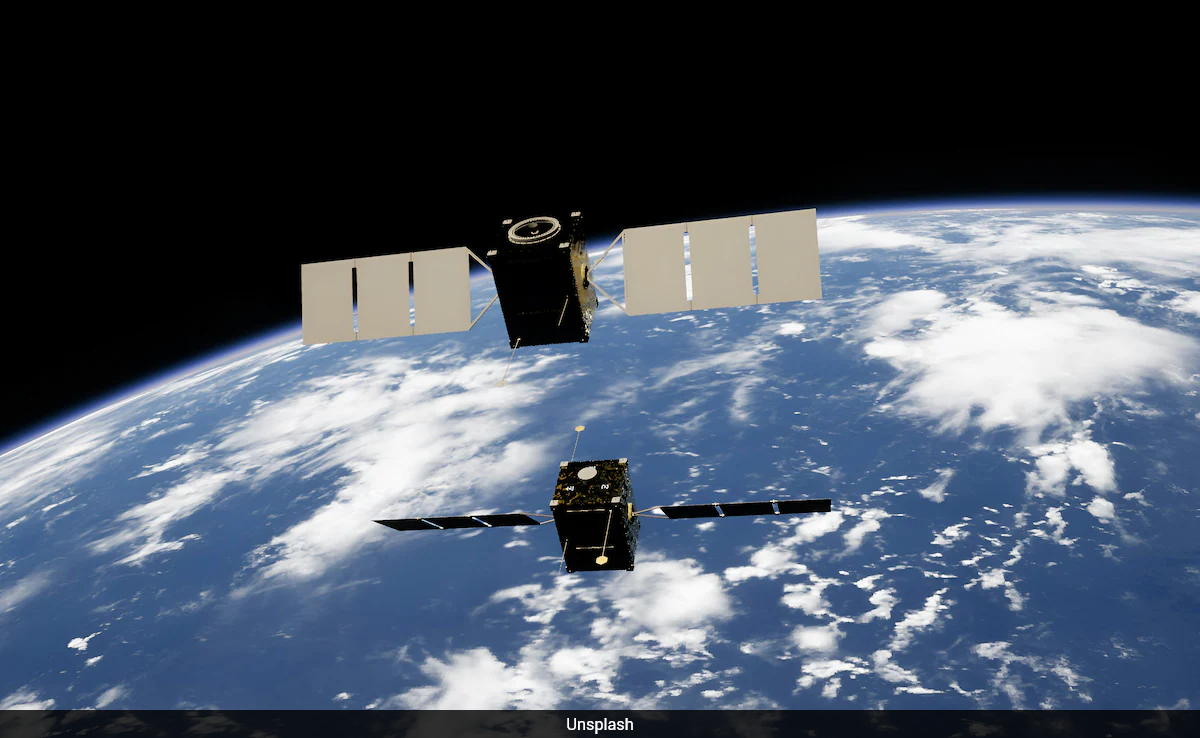
A new scientific study has raised serious concerns about the vulnerability of satellites in low earth orbit (LEO), warning that a powerful solar storm could trigger a catastrophic chain of collisions within about 3 days if satellite control systems fail. LEO, home to tens of thousands of satellites, has become increasingly crowded as constellations from companies like SpaceX's Starlink expand rapidly, heightening the risk of collisions and space debris.
Researchers describe the current orbital environment as a fragile "house of cards," where individual satellites must constantly perform collision-avoidance maneuvers to prevent impact with other objects. If a major geomagnetic event, such as a coronal mass ejection from the Sun, disrupted these systems, calculations indicate it could take as little as 2.8 days for a catastrophic event to occur.
Key Details:
- Current Risk: Solar maximum increases coronal mass ejections, interfering with satellite control.
- Impact: 2.8 days to chaos if operators lose control; 30% risk even with 24-hour disruption.
- History: The 1859 Carrington Event caused global telegraph chaos; today's tech faces continent-wide blackouts.
The resulting cascade of impacts, known as the Kessler Syndrome, could produce vast amounts of debris, rendering parts of LEO unusable and threatening satellite-dependent infrastructure on Earth. This includes communications networks, navigation systems such as GPS, weather monitoring, and scientific satellites that underpin daily life.
Space agencies and researchers are increasingly focused on space traffic management and debris mitigation to protect the orbital environment. The European Space Agency's 2025 report highlights that the number of tracked orbital objects has grown sharply, with risks rising accordingly.
Although recent solar storms haven't caused major disruptions, history shows their potential danger. The 1859 Carrington Event, the strongest recorded, disrupted telegraphs across Europe and North America. Experts warn that a similar storm today could trigger massive electrical blackouts, crippling modern infrastructure and taking weeks or more to recover.
Although such a disaster remains theoretical, scientists emphasize the need for more robust monitoring, coordination among satellite operators, and improved readiness for solar weather impacts.
Track Latest News Live on NDTV.com and get news updates from India and around the world

