





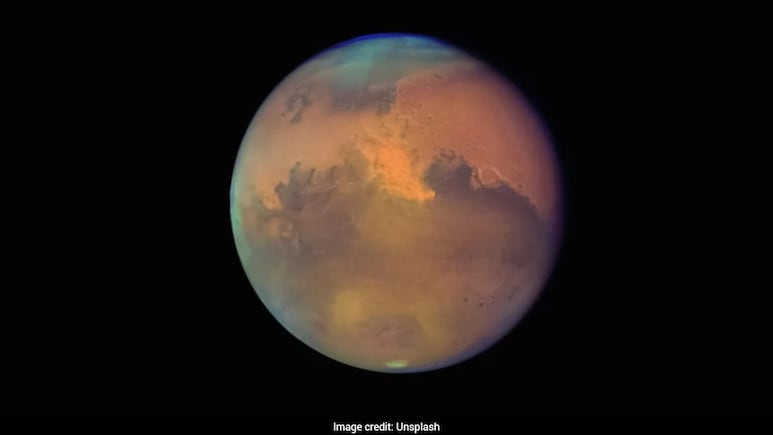
A team of Chinese researchers has made a groundbreaking discovery on Mars, identifying eight caves in the Hebrus Valles region that may have been shaped by water. These potential karst caves are the first of their kind found on another planet. Unlike previously known Martian caves formed by volcanic activity, these new formations appear to result from the chemical dissolution of soluble rocks, reported the Daily Galaxy.
This discovery adds a new dimension to the geoscience of Mars and opens up new possibilities for the search for life outside Earth. These caves, formed long ago, may preserve biological traces, making them important targets for future exploration missions.
The study, published on October 30, 2025, in The Astrophysical Journal Letters, used data from NASA satellites, including the now-retired Mars Global Surveyor. Eight craters discovered in the northwestern part of Hibras Valles appear to have distinct characteristics from previously known lava tubes.
Cave Characteristics
Each opening is round and deep, but lacks the high rims or surrounding debris typically seen in impact craters. Researchers identified these openings as skylights, which are collapse structures that open to underground voids.
What makes these caves unique is the type of surrounding rock. Data from NASA's Thermal Emission Spectrometer (TES) revealed the presence of carbonates and sulfates.
Researchers concluded that these structures were likely formed by underground water flow dissolving soluble bedrock-a common characteristic of karst topography on Earth, but never before documented on Mars.
Possibility Of Life On Mars
If life ever existed on Mars, it would have needed protection from the planet's harsh surface conditions, such as intense solar radiation, dust storms, and extreme temperature fluctuations.
According to EarthSky, researchers believe these caves may have once been a safe haven for microorganisms, provided water and the necessary chemical elements were present. Karst caves would have provided a stable and safe micro environment, protecting signs of life from being destroyed on the surface.
Track Latest News Live on NDTV.com and get news updates from India and around the world

