





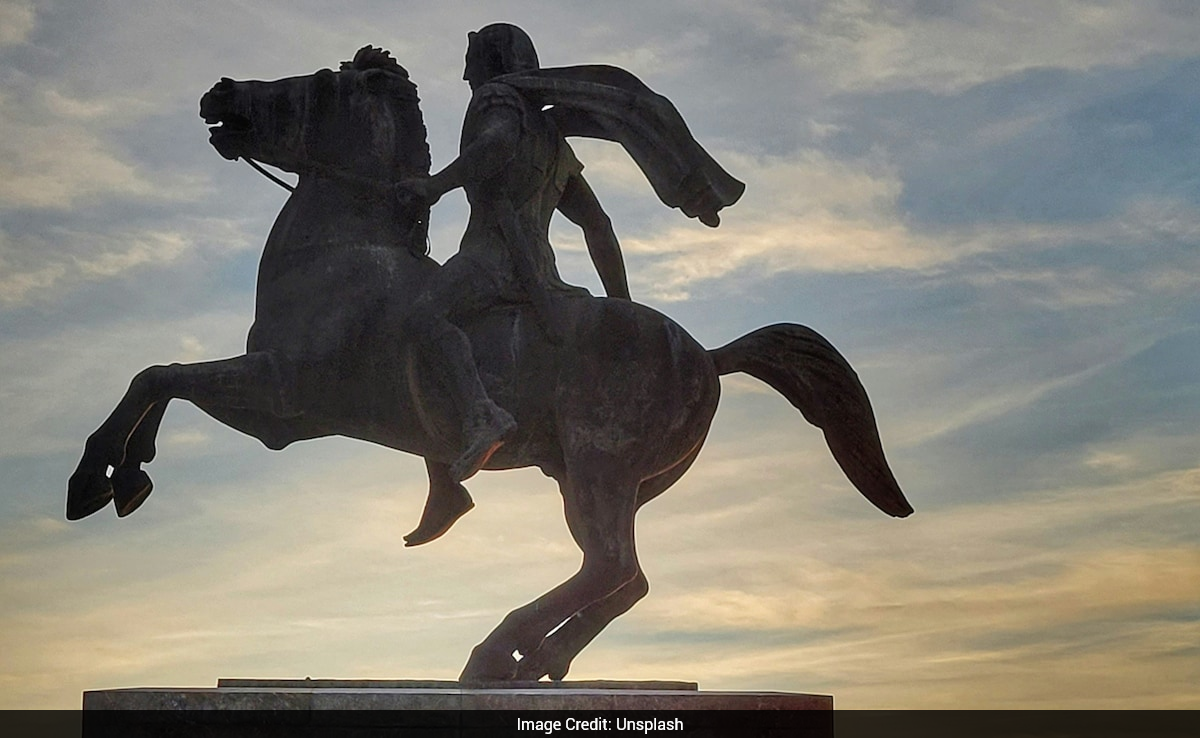
- Archaeologists confirmed the location of Alexandria on the Tigris near the Persian Gulf in Iraq
- The city was founded by Alexander the Great in the 4th century BC as a major trade port
- Researchers used drone imagery and geophysical scans to map the city's fortifications and layout
Archaeologists have confirmed the location of a long-lost ancient city believed to have been founded by Alexander the Great. The city, which once served as an important trade hub, had remained hidden for centuries before researchers recently mapped its remains. Known as Alexandria on the Tigris, this ancient settlement is located near the Persian Gulf in southern Iraq. It was founded in the fourth century BC as a port city, connecting trade routes between India, Mesopotamia, and the Mediterranean, reported NyPost.
According to historical records, the city's importance gradually declined after the third century AD. This was primarily due to the shifting course of the Tigris River, which affected its role as a port and trading centre.
Over the past few years, researchers have mapped the city's fortification walls, street structures, and major city blocks using drone imagery and high-quality geophysical scans.
Archaeologists have been studying the site since the 2010s. At that time, ISIS held sway over some areas of Iraq, but the full extent of this ancient city has only recently become clear.
According to a January 28 press release issued by the University of Konstanz in Germany, researchers were only permitted to conduct a superficial survey of the site, and this work was carried out under the supervision of soldiers or police officers.
During the survey, researchers discovered remains of a temple complex, workshops with furnaces and kilns, and the city's port and canal system.
According to Stephen R Hauser, a professor of archaeology at the University of Konstanz, the city was affected by floods several times over the centuries, yet its structures remained remarkably well preserved.
Hauser explained that, like Alexandria in Egypt, this city on the Tigris was also built at a crucial confluence of river and sea routes. According to him, at that time, southern Mesopotamia desperately needed a new port to enhance trade with India.
Hauser stated that historical sources indicate that Alexander the Great himself selected the site in 324 BC. This information is based on accounts by the Roman writer Pliny the Elder, who provided accounts based on older sources.
Alexander the Great, the Macedonian ruler who conquered the Persian Empire, was impressed by the site's strategic riverside location.
According to Hauser, he was astonished by the city's size. Spanning approximately 2.5 square miles, the city was significantly larger than any other ancient settlement. He stated that the city blocks were enormous, even larger than major capitals of the time, such as Seleucia on the Tigris and Alexandria on the Nile.
He also stated that the geophysical evidence from the site is extremely clear. He stated that the quality of the data is impressive, and the buildings are in better preservation than expected. The researchers identified remnants of walls just below the surface, providing positive results for the geophysical investigation.
Challenging Excavation Conditions
According to Hauser, the research project was initiated in 2016 under the leadership of British archaeologists Jane Moon, Robert Killick, and Stuart Campbell, who laid the foundation for this work.
He explained that excavation in this area has been difficult, as summer temperatures often exceed 120 degrees Fahrenheit. Furthermore, the area is also affected by air pollution.
Track Latest News Live on NDTV.com and get news updates from India and around the world

