






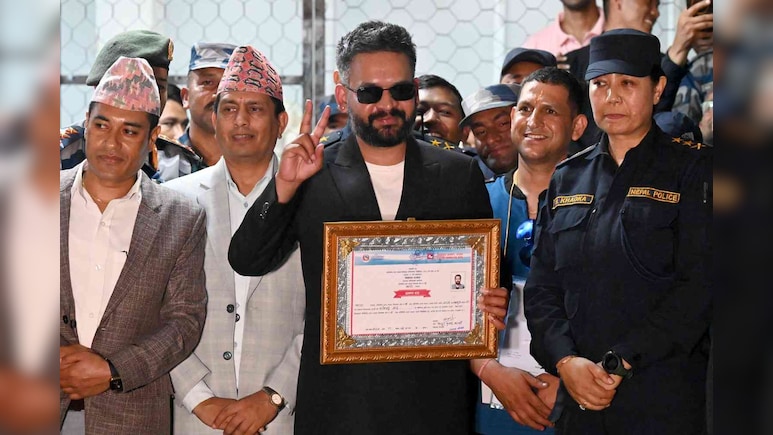
Not just former Kathmandu mayor Balendra Shah, or his Rastriya Swatantra Party (RSP) colleague former TV show host Rabi Lamichhane, Nepal's post Gen Z protest election has seen all kinds of candidates, a lot of them political novices, representing diverse backgrounds.
From rapper-turned-politician to social activist viral on social media, promoter of education and scientific inventions to the hard-working mayor of a small town, Nepal election has them all.
With the RSP on the verge of creating history with a near-clean sweep, rapper-mayor Balen Shah is all set to become Nepal's new prime minister.
But Balen Shah is not the only unusual face in this election. Meet some of the other interesting ones:
Ashika Tamang, 33, RSP
Ashika Tamang is a well-known name in Nepal, thanks to her viral videos. In recent years, she's shown herself in action in her videos calling out men peeing at public places, or folks throwing garbage at river banks. She became popular after her videos with social messages went viral on social media platforms like Facebook Reels, Instagram and TikTok. At times, the "Nepali Angelina Jolie" also faced the wrath of Nepal Police and the law of land for allegedly failing to honour public decency.
The former nurse-cum-actress is endearingly called Didi (sister) for her social work and campaign against corruption and wrong-doing. She won many hearts and minds during last year's Gen Z revolt after collecting funds to help protesters injured or dead during the violent protests. Prior to election, she courted some controversy as she spent some time in Germany working as a staff nurse.
She has won the parliamentary seat from Dhading-1 as an RSP candidate, securing an impressive 39,000- plus votes, and beating old-time political heavyweights like Rajendra Pandey of the Communist Party of Nepal - Unified Marxist Leninist (CPN-UML).
Mahabir Pun, 71, Independent
Mahabir Pun is a well-known Nepali scientist and an activist. He founded Nepal Wireless Networking Project in the 2000s which helped connect western Nepal's remote mountain villages and schools to the worldwide web. Until last summer, he was busy touring Nepali towns and villages, selling his autobiography to raise funds for various social work projects, including the National Invention Centre that he founded in 2012.
Prior to that, he was engaged in community development initiatives such as setting up self-sustainable, community-run schools and projects like yak and rabbit farming to support rural education. In 2007, he was honoured with the Ramon Magsaysay Award.
Later, he earned an honorary doctorate from University of Nebraska, US, from where he had completed his Bachelor's and Master's degrees decades earlier. Despite the distinctions he achieved, he continued to live an austere life, serving Nepali communities.
After last September's GenZ protest, he was appointed Minister for Education, Science and Technology in the interim government, but he quit in January to fight the election. This week, he won the House of Representatives election from Myagdi-1 with nearly 23,000 votes, defeating his rival by a huge margin.
Harka Sampang Rai, 43, Shram Sanskriti Party (SSP)
Harka Sampang Rai is a famous face in Nepali political and social media landscape. Son of a British Gurkha soldier, he holds a Bachelor's degree and worked as an English teacher before turning into a social activist.
He shot to fame after campaigning alone on the streets prior to winning the 2022 local election, becoming the mayor of Dharan city in eastern Nepal. But he himself went to the fields to labour hard, carry rocks and dig a channel to ensure smooth water supply to Dharan.
Soon after the GenZ protest, he arrived in Kathmandu as a prime ministerial or ministerial hopeful only to return home disappointed. Not to be outdone, he quit as a mayor a few months later and founded a new political party called Shram Sanskriti Party (SSP), with soil in hands as election symbol. He won from Sunsari-1 constituency securing over 35,000 votes. Several of his SSP colleagues are leading across eastern Nepal.
Sudan Gurung, 36, RSP
Sudan Gurung came out of the blue during GenZ protest when he portrayed himself as a Gen Z leader. He was often seen piling pressure on top Nepali officials, including Prime Minister Sushila Karki, with various demands put forth by so-called Gen Z groups. But he landed in controversy after reports indicated that the social organisation that he founded and ran, called Hami Nepal, had received funds from US sources.
Hami Nepal engaged in work related to disaster relief and emergency response, particularly after the 2015 earthquake that devastated large parts of central Nepal. Born in the Himalayan village of Chum-Nubri in the shadows of Mount Manaslu in Gorkha in western Nepal, he worked as an event manager when he was younger. He is believed to have switched to social service after he lost his child in the earthquake.
In January, he lobbied before the RSP chair Rabi Lamichhane and Kathmandu mayor Balendra Shah and nudged them to unify ahead of the polls. When that worked, the new political force in Nepal was born. Contesting from Gorkha-1 as an RSP candidate, Gurung is surging ahead in the vote count and is expected to beat his closest rival from Nepali Congress.
Jagadish Kharel, 43
Jagadish Kharel was one of Nepal's well-known TV show hosts - just like the RSP chair Rabi Lamichhane, famed for his tough questions on Image TV. But all that changed after he was picked as the Communication and Information Technology as well as the spokesperson of the Sushila Karki government in September 2025. But he quit a few months later after he decided to stand in the election as an RSP candidate.
Although born and raised in Dolakha district in eastern Nepal he contested election from Lalitpur-2, south of Kathmandu, and secured a landslide victory, winning nearly 40,000 votes, defeating his closest rival from the Nepali Congress by a huge margin.
Ranju Neupane, 30, RSP
She was seen in her electoral battleground in Kathmandu-1 with her new-born baby. She had started off early on, at the age of 17 when she joined a party called Bibeksheel Nepali Party. Later, at the age of 21, she fought Kathmandu's mayoral election. Although she finished third, she won accolades.
She joined the RSP only recently. But she registered a landslide victory, securing 15,000-plus votes, beating her closest rival from the Nepali Congress by a big margin. Her victory assumes special significance because it was the first to be officially declared out of the 165 constituencies, bringing smiles on the faces of the RSP leaders and supporters.
Amresh Kumar Singh, 55
Amresh Kumar Singh (PhD) became viral across social media in 2024 when he abruptly took off his shirt and started giving his angry rant. Reason? The House Speaker had denied the then Independent MP from the southern Madhesh region some time to speak, but he continued to protest against that and went on to speak, raising many eyebrows inside the chamber.
Prior to that, the Jawaharlal University educated leader was with the Nepali Congress, Nepal's oldest political party. With an NC ticket, he had gone on to win two consecutive terms. But this year, months after he joined the RSP, he faced a formidable electoral challenge in his home constituency in Sarlahi-4. It came from his old party colleague and the current Nepali Congress President Gagan Thapa.
Yet Singh prevailed. In the end, he beat Thapa - who was advocating for a "reformed Nepali Congress" in light of the post Gen Z political upheaval - by a big margin of nearly 13,000 votes. With this victory, Singh is poised for his third innings.
(Surendra Phuyal is a freelance journalist based in Kathmandu, Nepal. From 2006 to 2020. He was earlier with the BBC World Service)
Disclaimer: These are the personal opinions of the author

