




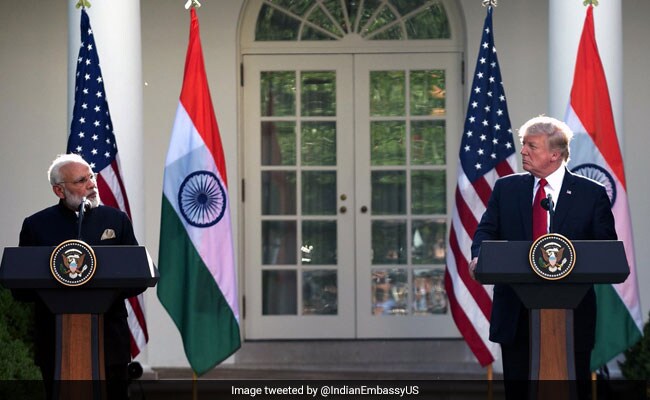
The past year was one of the most momentous in recent times, made so by the arrival of a US president who is bent on transforming the world to his own image. The year not only saw a short India-Pakistan aerial war, but also an unexpected dent in the growing strategic ties between India and the US. The geopolitical result of this was a somewhat unexpected revival of the India-Russia friendship, which made a routine Putin-Modi summit stand out. Meanwhile, the Israel-Hamas war has wound down to a shaky ceasefire, even as peace negotiations continue to end the longer war between Ukraine and Russia.
This was the year China successfully displayed its strength vis-à-vis the United States, and also the one country where renewables have surpassed coal as a source of electricity worldwide. It will begin its ambitious 14th Five Year Plan in 2026 to consolidate its technical-industrial might. As for Pakistan, there will be little change in the country, which is living within illusions of its own creation. The year 2025 saw the terrible terrorist strike at the Baisaran meadow in Pahalgam, which led to Op Sindoor and the suspension of the Indus Waters Treaty by India.
When we look ahead to 2026, we can see the predictable sequence of annual meetings, visits and summits. You can be sure that the celebration of the 250th anniversary of the US will be directed by Trump himself and have his unpredictable trademarks.
The G-20 summit, hosted by Donald Trump in Florida, will be a standout. But there will be equally important meetings of BRICS in New Delhi, the G7 summit in France, the ASEAN summits in the Philippines, the APEC summit in Shenzhen, and the COP 31 summit in Turkey. Note that Trump has already excluded South Africa from the G-20 and has declared that BRICS is an adversary grouping as far as the US is concerned.
In terms of bilateral relations, without doubt, the most important will be the planned exchange of visits by Trump and Xi Jinping to each other's country, something that will have major consequences for global geopolitics. As of now, the only confirmed planned visit of Prime Minister Modi is to Italy, though no doubt he will participate in many of the multilateral summits and hold meetings with top leaders on their sidelines. New Delhi also hopes to finish its long-running negotiation with the US on its bilateral trade agreement by March 2026, along with similar agreements with the EU, Qatar, Oman, Canada and Mexico.
For India, perhaps the most consequential will be the Bangladesh elections in February, where the Bangladesh National Party is expected to win, though the National Citizens' Party and the Jamaat-e-Islami are also likely to play a significant role. The exclusion of the Awami League, however, cannot but have negative consequences for the process itself. There will also be a general election in Nepal; just how things will turn out, given the Gen Z uprising, remains to be seen.
Of consequence, too, will be the off-year elections in the United States, where the entire lower house, the House of Representatives, faces elections, along with one-third of the upper house, the Senate, along with governors in 36 American states. These could either strengthen the MAGA revolution or hand Trump a rebuke.
Among other important events will be the International Fleet Review and Naval Conclave in Vishakapatnam in February 2026. The events will include the MILAN exercise as well. Participating will be the navies of over 50 countries in the Indo-Pacific, Africa, Europe, the US and Russia. 2026 will also be the year in which the fourth Indian nuclear ballistic missile submarine, INS Aridhaman, will be commissioned, giving a significant boost to India's nuclear deterrent capacity.
Among the more quirky developments will be the fact that semaglutide, an anti-obesity drug, will go off-patent in 2026 and enable companies in India to make low-cost versions of Ozempic and Wegovy. India, with 84 million obese, could benefit from this development. Within the eight months that Mounjaro has been on sale in India, it has become the country's highest-selling drug, overtaking even antibiotics.
You may have heard of 'Black Swan' events, but there also happen to be 'Grey Rhinos', which are events that are known and ignored, yet when we bump or crash into them, there are significant consequences. Climate change and environmental disasters fall into this category. But there are other Grey Rhinos, such as AI and quantum computing, where developments could lead to disruptions in a range of areas. We could also think of the outcome of the US mid-term elections in November, or elections in Israel, which may lead to the exit of Netanyahu in this category. The biggest Grey Rhino will be Trump himself, standing on the crossroads of history even as it runs into him for the second year of his presidency. Another Grey Rhino is the US-Venezuela conflict, which could deepen and disrupt the region as well as global oil prices.
Ultimately, the future is unknowable. So far, as the COVID experience has revealed, the world does have the ability to cope with the unknown. But also, as that experience showed, the coping process may not be all that smooth.
(The writer is a Distinguished Fellow, Observer Research Foundation, New Delhi)
Disclaimer: These are the personal opinions of the author

