





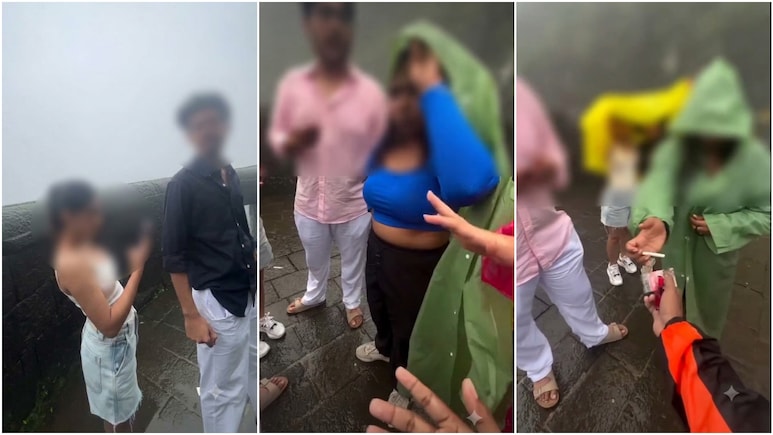
A viral video from Maharashtra's historic Lohagad Fort has reignited debate over tourist behaviour at heritage sites. The clip shows a local man angrily confronting a group of tourists, reportedly from Delhi, for smoking cigarettes on the fort's ramparts.
In the 1-minute-46-second video, the man questions the visitors about who had given them permission to smoke at the historic monument. When the tourists respond that they were unaware of any rules and claim there was no signboard prohibiting smoking, the local becomes even more upset.
"You should have some common sense. Would you smoke inside a temple? This fort is our temple," he is heard saying in the video.
Towards the end of the clip, the man warns the tourists that he could file a police complaint and asks them to hand over all their cigarettes. While the date and authenticity of the video have not been independently verified, it has sparked fresh discussion on respecting historical monuments and following heritage-site regulations.
लोहगड वर दिल्लीचे पब्लिक!
— 🇮🇳Bhakta's Vikas/भक्तांचा विकास (@kisora_pat7606) July 29, 2026
महाराष्ट्रातील गड-किल्ल्यांचे पावित्र्य राखण्यासाठी सिगरेट, तंबाखू व मद्यसेवनावर (दारू) पूर्णपणे कायदेशीर मनाई आहे।
हे यांना माहिती नसावं की सिया पॉईंट बघायला आले असावे?#लोहगड pic.twitter.com/50CWQZYpoW
What Do ASI Rules Say?
Tourists often argue that they were unaware of restrictions at historical sites. However, the Archaeological Survey of India (ASI) has laid down clear rules for protected monuments.
According to ASI guidelines:
- Consumption or possession of tobacco products, gutkha, pan masala, cigarettes, alcohol and other intoxicants is prohibited inside protected monuments.
- Visitors are not allowed to carry matches, lighters, candles or other flammable materials.
- Defacing monument walls by carving names, scratching surfaces or causing damage is a punishable offence.
- Flying drones or using tripods without written permission is not permitted at many protected sites.
Authorities repeatedly stress that historical monuments should not be treated as picnic spots or party venues and that preserving their dignity is the responsibility of every visitor.
What Is the Punishment?
Under provisions governing protected monuments, individuals found damaging heritage structures or violating regulations can face penalties that may include a fine of up to ₹1 lakh, imprisonment of up to two years, or both.
Tourist Alert: Restrictions in Place Until August 31
Visitors planning a trip to Lohagad Fort and nearby tourist attractions should note that the Pune district administration has imposed restrictions at several locations during the monsoon season to prevent accidents. The prohibitory orders, issued under Section 163 of the Bharatiya Nagarik Suraksha Sanhita (BNSS), will remain in force until August 31.
Locations Under Restrictions
The restricted locations include several popular tourist attractions across the Maval and Lonavala region, such as Lohagad Fort, Visapur Fort, Rajmachi, Tikona Fort, Tung Fort, Lion's Point, Karla Caves, Bhaja Caves and Pawna Dam. These sites have been placed under special restrictions by the Pune district administration during the monsoon season to ensure visitor safety and prevent accidents.
Key Restrictions
The administration has prohibited visitors from entering deep water bodies or sitting beneath waterfalls at these tourist spots. Taking selfies near cliff edges and other hazardous locations is also banned. Authorities have further barred visitors from playing loud music, polluting water sources, or performing dangerous stunts that could put lives at risk. Officials have warned that anyone violating these restrictions may face legal action.
Why Is Lohagad Fort Special?
Standing at an elevation of 3,389 feet above sea level, Lohagad Fort is one of Maharashtra's most significant historical landmarks. Chhatrapati Shivaji Maharaj took control of the fort in 1648, and it later served as a secure storage site for treasure obtained after the Surat campaign.
Beyond its military importance, the fort also holds archaeological value. Recently, Pune-based trekkers reportedly discovered an ancient Brahmi inscription in a cave on the southern side of the fort. The inscription, believed to date back to the first or second century BCE, suggests that the area may once have housed a Jain sanctuary.
One of the fort's most famous features is the Vinchukada, or "Scorpion's Tail", a distinctive rock formation that attracts trekkers and history enthusiasts throughout the year.
Track Latest News Live on NDTV.com and get news updates from India and around the world

