





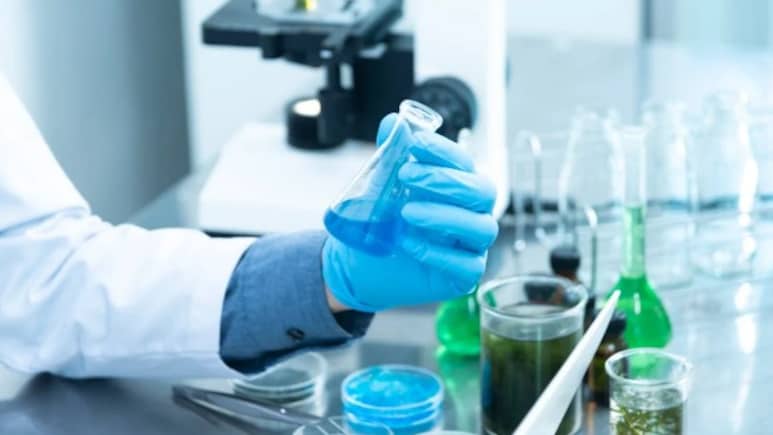
The world of science is constantly evolving, driven by human curiosity and the quest for knowledge. New discoveries are made daily, pushing the boundaries of our understanding and opening up fresh avenues for exploration. In 2025, various scientific discoveries changed how we understand space, health, and the environment. In space, new images amazed people around the world. In medicine, new treatments offered hope for diseases like malaria and fibrosis. There were also positive steps in fighting climate change.
Health and Medicine
Advances in Cancer Treatment: Researchers made significant strides in personalized oncology. A new combination of targeted drugs was approved in the US for a rare ovarian cancer, and an enhanced genetic "spit test" for aggressive prostate cancer entered large-scale trials. Gene-edited CAR-T cells also showed promise in treating aggressive T-cell leukemia.
CRISPR Gene Editing for Rare Diseases Doctors successfully used custom CRISPR gene editing to treat a baby boy with a life-threatening metabolic disorder by enabling his liver cells to produce a crucial enzyme. This personalised approach opens the door for future tailored therapies for millions with rare genetic conditions.
New Vaccines and Treatments: A new, two-yearly injectable pre-exposure prophylaxis (PrEP) for HIV, Yeztugo (lenacapavir), was approved, showing nearly 100% efficacy in preventing transmission. A novel class of anti-malaria antibodies was identified, targeting a stable internal parasite structure, offering a new direction for durable malaria vaccines.
Non-Hormonal Menopause Treatments: The FDA approved a new non-hormonal daily pill, Lynkuet (elinzanetant), to treat moderate to severe hot flashes, offering an alternative for women who cannot use hormone therapy.
Needle-Free Allergy Care: Neffy, a prescription epinephrine nasal spray, was introduced as the first needle-free alternative to auto-injectors like EpiPen for children aged four and older, a major update in allergy management in decades.
Lab-Grown Testes: Researchers created "test-tube testes" from real testicular cells, offering new possibilities for infertility treatments and reproductive research
Space Exploration and Astronomy
JWST Discoveries: The James Webb Space Telescope continued to deliver stunning images and data, capturing unprecedented details of nebulae and detecting complex organic molecules in deep space ice outside the Milky Way. It identified the most distant galaxy ever detected, MoM-z14, which formed within 280 million years of the Big Bang. The telescope also found S/2025 U 1, a small moon orbiting Uranus.
Missions to Mars: NASA's ESCAPADE mission, consisting of twin spacecraft named Blue and Gold, launched to map Mars's magnetic fields and atmosphere, gathering crucial data for future human exploration.
Exoplanet Count and New Moons: The number of confirmed exoplanets surpassed 6,000, and astronomers reported the discovery of 128 new moons orbiting Saturn, bringing its total count to 274.
Building Blocks of Life From Space: Analysis of samples from asteroid Bennu revealed essential sugars such as ribose - key to RNA and life's chemistry - supporting ideas about how life's ingredients may have formed in the early solar system.
Technology and Climate Science
Quantum Computing Breakthroughs: Scientists made significant strides in quantum computing, with advancements in quantum error correction and qubit stability, paving the way for practical applications in fields like drug discovery and materials science.Microsoft unveiled "Majorana 1," a quantum chip designed to solve complex industrial-scale problems, and advancements in wiring architecture enabled the potential for 10,000-qubit processors.
Sustainable Materials and Energy Scientists developed new sodium-ion and solid-state batteries as cheaper and safer alternatives to lithium-ion for electric vehicles. Researchers also created a material (BAETA) from old plastic bottles that can capture CO₂ from the air.
Archaeological Findings: A groundbreaking discovery in Suffolk, England, provided the earliest confirmed evidence that Neanderthals used fire-making technology 400,000 years ago, pushing back the timeline of human mastery of fire significantly.
Extreme Life in Arctic Ice: Researchers documented algae moving in ice at temperatures as low as -15 °C, the lowest‑temperature movement ever observed in complex cells, deepening understanding of life's limits.
Track Latest News Live on NDTV.com and get news updates from India and around the world

