





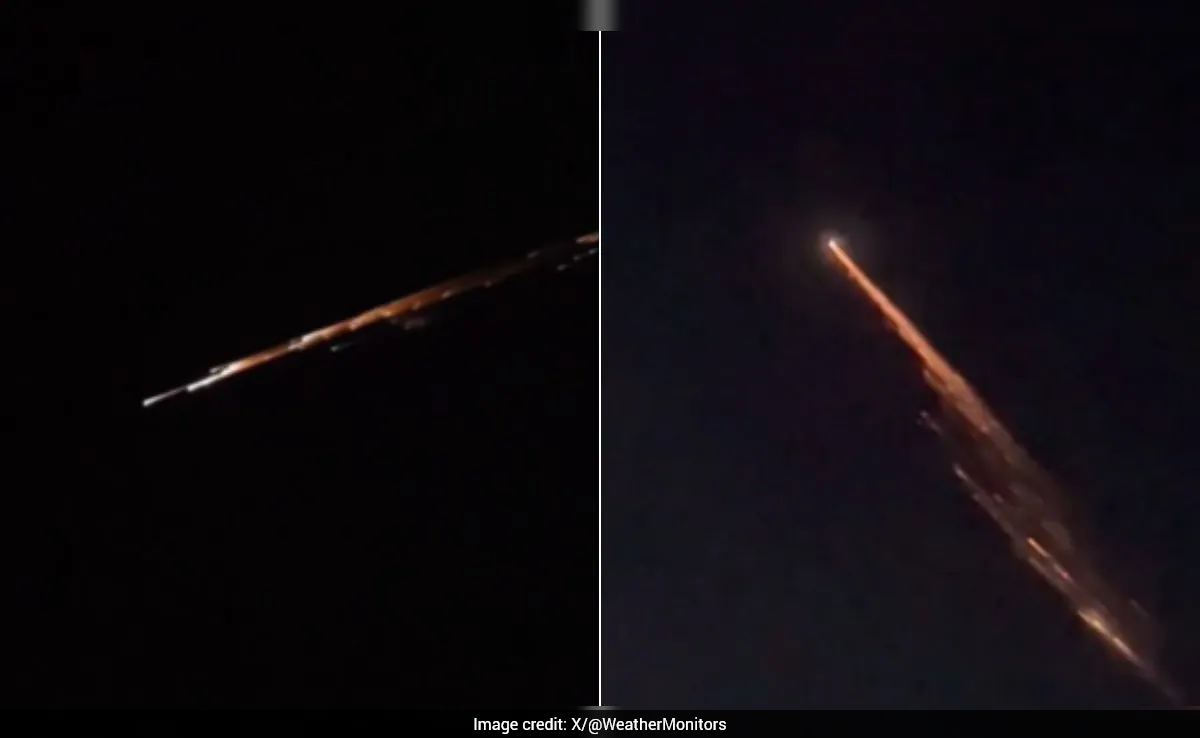
- The Indonesian authorities confirmed the fireball was space debris from a Chinese CZ-3B rocket
- Residents in Lampung and Banten saw the burning object break apart as it re-entered Earth's atmosphere
- The debris entered at about 120 km altitude and was visible along Sumatra's western coast
The government authorities in Indonesia issued a clarification after a massive fireball was spotted streaking across the skies over Lampung and Banten provinces on Saturday (April 4), the new agency Antara reported. According to the National Research and Innovation Agency (BRIN), the cluster of burning objects has been confirmed as space debris.
"Residents in Lampung and Banten were shocked by a bright burning object they saw in the sky, which later broke into pieces. We can confirm that it is space debris," Thomas Djamaluddin, who is a BRIN astronomy professor, said as quoted by the agency on Sunday.
The debris is believed to be from a Chinese CZ-3B rocket, which re-entered Earth's atmosphere and broke apart, creating a spectacular display of fireballs in the sky.
"As the object entered the dense atmosphere, it continued moving while burning and breaking apart. This phenomenon was observed by residents in Lampung and Banten," Djamaluddin added.
Also read | Watch: Woman Praises "Introvert-Friendly" Technology At Finland Airport, Internet Reacts
The news agency mentioned that the space debris was travelling from India towards the Indian Ocean when it entered Earth's atmosphere at an altitude of approximately 120 km at 7.56 pm (local time). It was reportedly visible to residents along the western coast of Sumatra.
The friction caused the object to burn and break apart, creating the fireball display witnessed by residents, who called it "mysterious" and "meteor-like".
The authorities have reassured the public that such re-entries are monitored and pose minimal risk, with most debris burning up or falling into oceans or uninhabited areas.
Also read | Qantas Pilot Dumps Fuel Over Ocean, Returns After Mid-Air Medical Emergency
Space debris re-entry is a common occurrence, with NASA estimating an average of one "catalogued piece" of debris falling back to Earth daily.
"During the past 50 years an average of one cataloged piece of debris fell back to Earth each day. No serious injury or significant property damage caused by reentering debris has been confirmed," NASA said in one of its reports on space debris.
While rare, space debris can pose risks to people and property, highlighting the need for continued monitoring and tracking.
Track Latest News Live on NDTV.com and get news updates from India and around the world

