





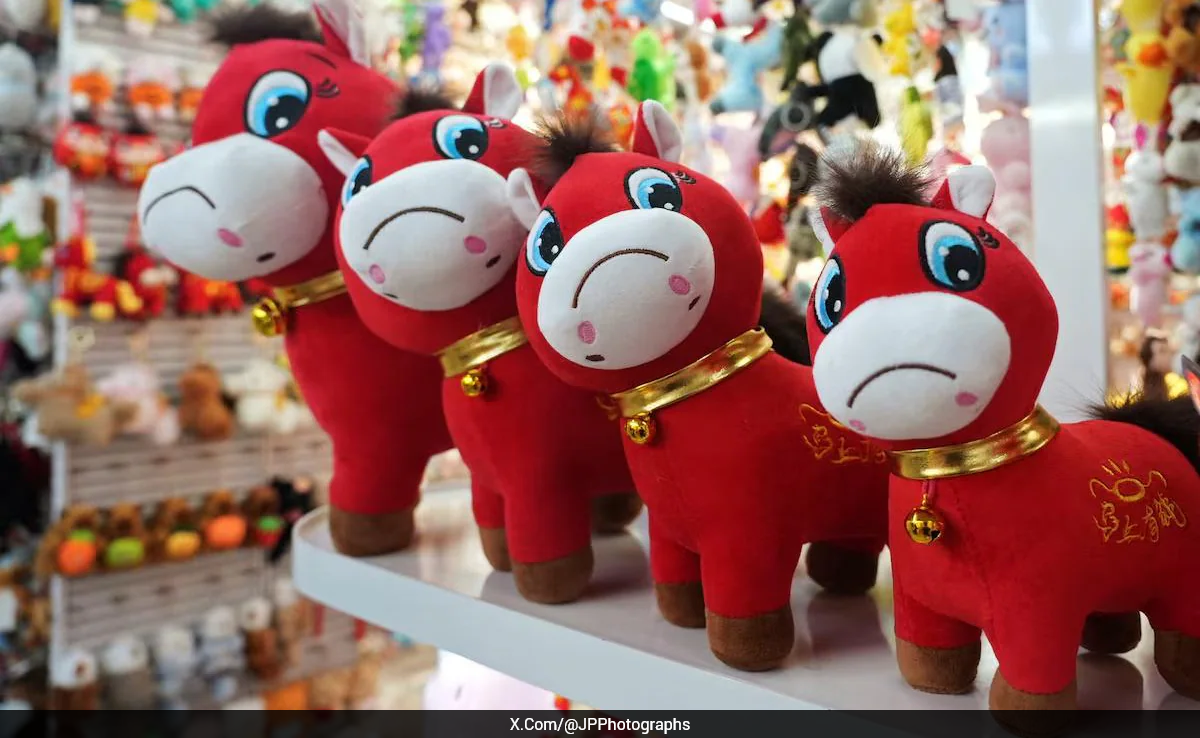
China will mark the start of the Year of the Horse on 17 February, a zodiac sign linked with energy, strength and hard work. But a small red toy horse with a sad face has gone viral, suggesting many workers are feeling far from upbeat.
The stuffed toy was produced by Happy Sister, a factory based in Yiwu, eastern China. It was designed to have a wide, cheerful smile. However, a sewing mistake meant the mouth was stitched upside down. As a result, the horse appeared to be crying, with its nostrils looking like tears.
Instead of hurting sales, the error turned the toy into an online sensation. Photos and videos of the "crying horse" spread quickly on Chinese social media, where many users said it reflected their own feelings of exhaustion and stress at work.
"A worker sewed the mouth on upside down by accident," said Zhang Huoqing, owner of the Yiwu-based shop Happy Sister. Zhang said she initially offered a refund after discovering the flaw, but the customer never returned the toy. Not long after, she discovered photos of it circulating widely online.
"People joked that the crying horse is how you look at work, while the smiling one is how you look after work," Zhang said. As demand surged, she decided to continue producing the sad-faced version.
By mid-January, Zhang said the company was receiving more than 15,000 orders a day. To meet demand, the factory opened 10 extra production lines.
The toy's popularity also fits into China's growing trend for "ugly-cute" characters, made famous by brands such as Pop Mart and its monster figure Labubu.
"This little horse looks so sad and pitiful, just like the way I feel at work. With this crying toy in the Year of the Horse, I hope to leave all my grievances at work behind and keep only happiness," wrote an online buyer of the toy, by the name of Tuan Tuan Mami, according to SCMP.
"Consumer products and internet memes can act as outlets for discussing work pressure, especially on platforms like Xiaohongshu, where consumer culture and emotional expression are tightly intertwined," Jacob Cooke, the CEO of WPIC Marketing + Technologies, an e-commerce consulting firm, told Business Insider.
According to The Guardian, many office workers in China continue to face long working hours. The so-called "996" system, working from 9am to 9pm, six days a week, was officially banned in 2021, but overtime remains common. For many, the sad little horse has become a symbol of modern work fatigue.
(With inputs from Reuters)
Track Latest News Live on NDTV.com and get news updates from India and around the world

