





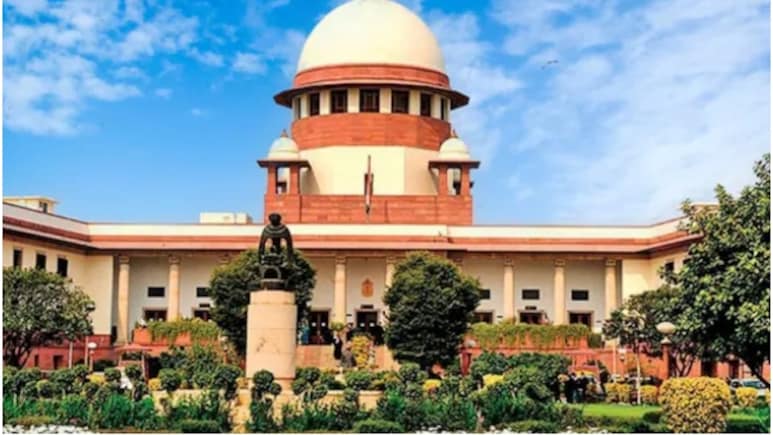
The two recent verdicts of the Supreme Court on the concept of "General Category" affirmed that if a reserved category candidate, without availing any relaxation or concession, outperforms General category candidates, such a candidate must be treated as competing for the General list in the recruitment process for government jobs.
On December 19, the Supreme Court upheld the Rajasthan High Court verdict, which allowed inclusion of meritorious reserved category candidates in the General list if they secured marks higher than the General category cut-off, without availing any special concession.
Today, (January 6), while dealing with a case from Karnataka, the top court refused to consider the appointment of a Schedule Caste category candidate in the unreserved cadre of the Indian Forest Service (IFS) because the candidate had availed relaxation at the stage of preliminary examination.
Both judgments showcase two sides of the same coin when it comes to the threshold for inclusion of a reserved category candidate in the General list.
What These Two Orders Mean For General Category
The top court's December 19 verdict upholding the Rajasthan High Court order changes nothing on the ground but infact solidifies the earlier stance taken by the top court, advocate Kartik Seth, who appeared in this case, explained to NDTV.
"This judgment does not lay down any new principle of law. It merely reiterates the settled position as laid down earlier, particularly in Indira Sawhney, that meritorious candidates belonging to reserved categories are entitled to be considered on their own merit and, if they secure marks higher than the general category cut-off without availing any relaxation, can be accommodated against open category posts," Seth added.
Through the Rajasthan verdict, the Supreme Court has clarified that candidates from reserved categories who secure selection purely on merit, without availing any relaxation or concession, must be accommodated against open vacancies even at the shortlisting stage, Seth added.
Seth explained that the Supreme Court has also consistently clarified that such consideration is impermissible where a candidate has availed of any relaxation, including at the preliminary stage.
"This position has been further reaffirmed in the recent judgment dated January 6, 2026, in Union of India v G. Kiran & Ors," Seth explained while referring to the Karnataka verdict passed by the top court today.
Interestingly, in the Karnataka case, the top court has again reiterated, "once relaxation has been taken by a reserved category candidate, they cannot be considered for unreserved vacancies."
The bench of Justices JK Maheshwari and Vijay Bishnoi today made the above observations while allowing the Centre's plea against a Karnataka High Court's decision which had allowed the inclusion of a person from the Scheduled Caste category to the General list merely because he had secured a higher final rank than the General category candidate, while ignoring the fact that the he had availed the relaxation.
"Supreme Court has now conclusively clarified the scope and meaning of 'open' or 'general' category vacancies in public recruitment," Advocate Kartik Seth explained to NDTV.
Top Court On Definition Of "General Category" In Rajasthan Case
The court clarified that when the cut-off marks for reserved categories (SC, OBC, MBC and EWS) are higher than the cut-off for the General category, then those from the reserved category who clear the General cutoff should be included in the General quota for government jobs.
Reiterating that the General category is "open to all" irrespective of caste, class or gender, the top court has solidified its earlier stance against excluding reserved category candidates from the General list.
The top court noted that a previous landmark ruling (Saurav Yadav case) had opined that "open category is open to all, and the only condition for a candidate to be shown in it is merit, regardless of whether reservation benefit of either type is available to her or him."
The same has a profound meaning and needs to be translated into action without being unnecessarily bothered by a term like "migration," the top court clarified.
"One does find categories like 'open' or 'unreserved' or 'general' being widely used in the course of recruitment drives, but they are meant to signify the open/unreserved vacant posts on which any suitable candidate can be appointed, regardless of the caste/tribe/class/gender of such a candidate," the Supreme Court clarified.
The top court further said that for all intents and purposes, the vacancies on posts which are notified/advertised as open or unreserved or general, as the terms suggest, are not reserved for any caste/tribe/class/gender and are, thus, open to all notwithstanding that a cross-section of society can also compete for appointment on vacant posts which are 'reserved' - vertical or horizontal - as mentioned in the notification/advertisement.
The court further clarified that mere indication of one's reserved category in the application form does not automatically qualify the candidate for appointment on a reserved vacant post, but only enables him/her to stake a claim amongst all reserved candidates based on the inter se merit position.
What Was Rajasthan Case?
The pleas in the Rajasthan case were filed In the top court against a 2023 Rajasthan High Court ruling that held candidates belonging to reserved categories who secure marks higher than the cut-off prescribed for the General category must be considered in the open category even at the stage of shortlisting, and not confined to their respective reserved categories.
It is important to note here that the cutoff for the General category in this case went lower than the reserved category.
The Supreme Court bench of Justices Dipankar Datta and Augustine George Masih, in a December 2025 verdict, dismissed appeals filed by the Rajasthan High Court administration and its registrar.
The case arose out of a recruitment process initiated by the Rajasthan High Court in August 2022 for 2,756 posts of Junior Judicial Assistant and Clerk Grade-II in the High Court, district courts, and allied institutions.
The selection process comprised a written examination of 300 marks followed by a computer-based typewriting test of 100 marks.
Only candidates securing the prescribed minimum marks in the written examination, limited to five times the number of vacancies category-wise, were to be shortlisted for the typewriting test.
After the written examination results were declared in May 2023, it emerged that the cut-off marks for several reserved categories, such as SC, OBC, MBC and EW,S were higher than the cut-off for the General category.
Consequently, some reserved category candidates (from SC/ST/OBC) who had scored more than the General category cut-off but less than the cut-off for their own category were excluded from the shortlist for the typewriting test.
These candidates then challenged this in the Rajasthan High Court, arguing that this method treated the General or open category as an exclusive compartment for unreserved candidates and violated Articles 14 and 16 of the Constitution.
The High Court ruled that while category-wise shortlisting was allowed, meritorious reserved category candidates who secured marks higher than the General category cut-off, without availing any special concession, were entitled to be included in the open category list at the shortlisting stage itself.
The High Court directed that the General or open category list must first be prepared strictly on merit, followed by preparation of reserved category lists, excluding those already accommodated in the open category.
It further directed the revision of the merit lists and the grant of an opportunity to wrongly excluded candidates to appear in the typewriting test.
The Supreme Court has now also rejected the arguments claiming such inclusion would amount to granting a "double benefit" of migration to reserved category candidates.
What Is The Karnataka Case?
The dispute arose from the 2013 IFS examination, conducted in two stages - the Preliminary Examination, and the Main Examination and an interview.
In the prelims, the general cut-off was 267 marks, while the relaxed cut-off for SC candidates was 233. G Kiran (SC) qualified with 247.18 marks by availing the relaxed cut-off, whereas Antony S Mariyappa (General) qualified on the general cut-off with 270.68 marks.
However, in the final merit list, Kiran ranked 19, and Antony ranked 37.
But, during cadre allocation, Karnataka had only one General Insider vacancy and no SC Insider vacancy.
The Centre allotted the General Insider post to Antony and allocated Kiran to the Tamil Nadu cadre. Kiran challenged this before the CAT and the Karnataka High Court, both of which ruled in his favour on the ground that he had secured a higher final rank.
Setting aside the HC decisions, the judgment authored by Justice Maheshwari observed that since the IFS examination is a single, integrated selection process comprising two mandatory stages, which means qualifying the Preliminary Examination is a prerequisite for entry into the Main Examination, and therefore, any relaxation availed at the preliminary stage cannot be ignored at later stages.
Both the verdicts deal with entirely different cases yet echo the long-abided principles of equality established by the Indira Sawhney judgement of the Supreme Court.
Track Latest News Live on NDTV.com and get news updates from India and around the world

