





- India's GDP grew 7.7% in 2025-26, confirming it as the fastest-growing major economy
- Manufacturing PMI stayed above 50 for 37 months, showing steady expansion in June 2026
- Services PMI rose to 59.8 in May 2026, indicating strong demand and new business inflows
Economic indicators such as strong Gross Domestic Product (GDP) growth, expanding manufacturing and services activity, record vehicle sales, healthy Goods and Services Tax (GST) collections and resilient exports indicate the resilience of the Indian economy, which is braving global uncertainties induced by wars in the Middle East and Ukraine, the Centre's data reveals.
Showing India's growth momentum, the nation's GDP, one of the most important economic indicators, grew by 7.7 per cent in financial year 2025-26, reaffirming its position as the world's fastest-growing major economy.
Strong performance in manufacturing, services, consumption and investment accelerated real GDP to 7.8 per cent in the last quarter of the financial year.
Manufacturing
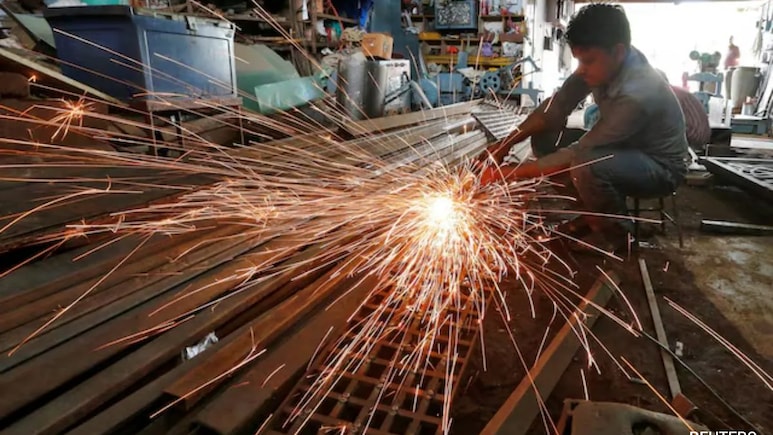
Another parameter against which the Indian economy's resilience can be measured is the manufacturing activity. Despite supply challenges, the nation logged sustained expansion in manufacturing activity. The HSBC India Manufacturing PMI stood at 54.2 in June 2026, remaining above the 50-point mark for the 37th consecutive month, attesting to robust manufacturing in India.
The survey highlights continued growth in output, new orders, employment and purchasing activity, reflecting resilient domestic demand and positive business confidence despite global uncertainties.
The services sector also remains a major driver for growth. The HSBC India Services PMI Business Activity Index rose from 58.8 in April to 59.8 in May 2026, recording the strongest expansion since November 2025 and indicating improvement to healthy demand conditions, new client acquisitions and stronger new business inflows, while new orders expanded at the fastest pace in six months.
The business activity was further supported by rising employment and a recovery in export demand, underscoring the resilience of India's services sector.
Also read: India Major Driver Of Global Growth Despite Iran War, External Headwinds: IMF
Industrial Production
India's Industrial production has also gathered further momentum, with the Index of Industrial Production (IIP) accelerating from 4.9% in April to 5.1% in May 2026, marking a five-month high. The growth was led by a 5.5% expansion in manufacturing and a 9.9% growth in electricity and gas supply.
Within manufacturing, sectors such as motor vehicles (14.5%), electrical equipment (20.8%), and basic metals (4.6%) emerged as key growth drivers. On the demand side, capital goods output grew by 12.9%, reflecting sustained investment momentum and strengthening industrial capacity.
Despite a difficult global financial climate, the central government has continued prioritising capital expenditure. The capex push has continued strongly into the financial year 2026-27.
Capital Expenditure
In April-May 2026, capital expenditure stood at Rs 2.51 lakh crore, compared to Rs 2.21 lakh crore in April-May 2025. That is an increase of around Rs 29,650 crore in just the first two months. This means infrastructure spending is being front-loaded. Early spending helps speed up projects, improve execution, and support demand in sectors linked to construction, steel, cement, transport, logistics and equipment.
Railways is one major driver of the capex push. Indian Railways reportedly spent over Rs 84,000 crore in April-May 2026, nearly 30% of its annual capex target. The focus is on safety upgrades, signalling, train protection systems, new lines, gauge conversion and doubling of lines.
The capex push is going into core infrastructure. Roads, railways, telecom, defence and other infrastructure sectors remain central to the government's public investment strategy.
Also read: Three Mega Shifts That Could Decide India's Next Decade of Jobs
Other Economic Activities
Strong revenue mobilisation also shows healthy economic activity. Tax collections remained strong despite global uncertainty. Gross tax revenue in April-May 2026 was higher than last year, showing that the revenue base remains stable.
GST collections showed strong growth. In June 2026, gross GST collection rose 13.9% to around Rs 1.95 lakh crore, compared to Rs 1.71 lakh crore in June 2025.
India's net direct tax collections grew 14.64% to Rs 5.21 lakh crore in the current fiscal till June 17, aided by healthy growth in both corporate and non-corporate tax receipts.
Despite temporary pressures from global energy prices and the West Asia situation, easing crude oil and fertiliser prices have supported the government's commitment to its FY 2026-27 fiscal consolidation roadmap.
Several high-frequency indicators also reflect the Indian economy's performance, including robust trade and logistics activity, an electricity demand surge, a port traffic rebound, and strong automobile sales.
Track Latest News Live on NDTV.com and get news updates from India and around the world

