





Artificial intelligence is no longer a futuristic promise confined to laboratories and science fiction. It is rapidly becoming the backbone of modern defence systems, reshaping how wars are prepared for, fought, and ultimately deterred.
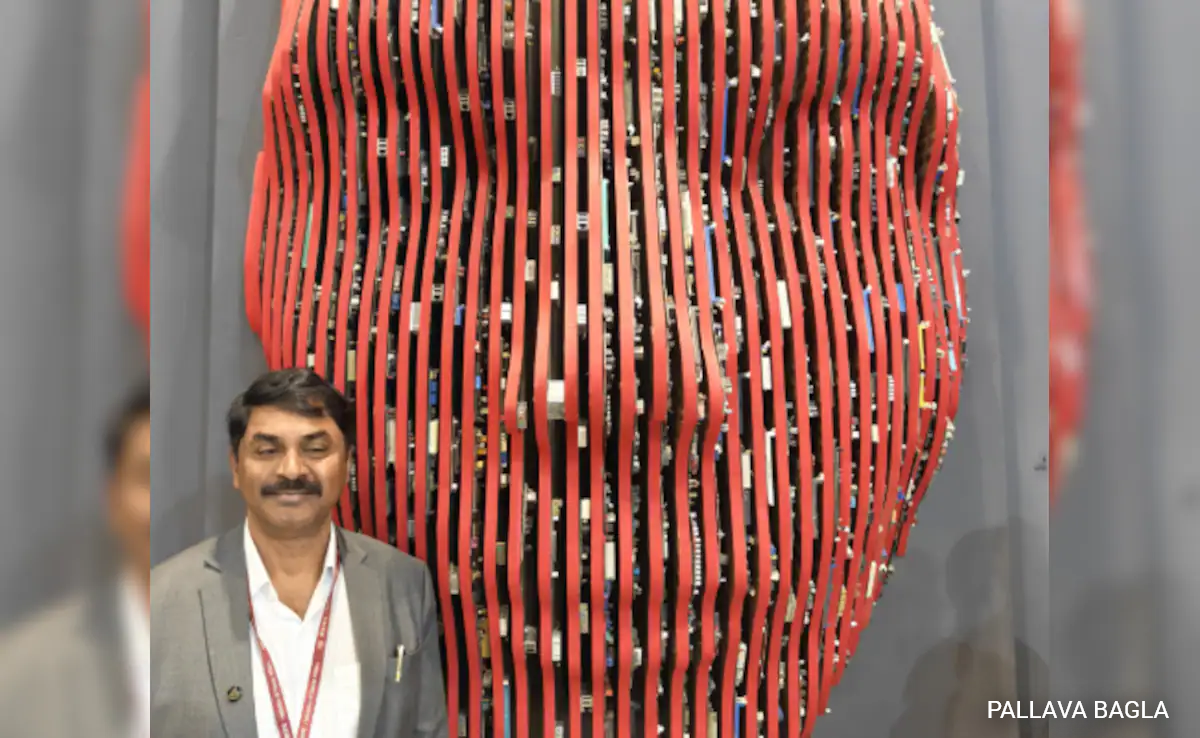
That message came through clearly at the big India AI Impact Summit in New Delhi, where one of India's most influential defence technologists, Dr G Satheesh Reddy, laid out a stark vision of a battlefield transformed by algorithms, autonomy, and intelligent machines.
Missile specialist, Dr Reddy, former Chairman and Director General of the Defence Research and Development Organisation (DRDO) and a key advisor to India's defence establishment, was unequivocal about the direction in which technology is moving.
"AI has a major role. It has got a lot of impact today and it is creeping into every part of life in a big way," he said. According to him, the pace of change is such that "there will not be a system tomorrow onwards without AI." Any product, civilian or military, that does not embed artificial intelligence, he warned, will simply be obsolete. "If anyone comes out with any product in the years to come without AI that is an outdated product."
Nowhere is this transformation more consequential than in the defence sector. Drawing from his years at the helm of DRDO, Dr Reddy said AI has already begun to permeate military platforms and systems.
"AI has a major role in defence, in a lot of systems, whether it is surveillance, the systems, the products or the vehicles," he explained. The trend, he said, mirrors what is happening in the civilian world. "Just as smartphones, cars, and industrial equipment are becoming smarter, so too are weapons and military platforms. Tomorrow there will not be a defence product without AI," he said.
India, he noted, is no longer merely observing this revolution from the side lines. AI has already been applied in surveillance-related systems and autonomous platforms. "In surveillance-related systems, autonomous systems, many of those things have already got AI incorporated into it," Dr Reddy said, adding that several applications are already in use, while many more are in development. As AI itself evolves, from large language models to what he described as "physical AI", these technologies are steadily being absorbed into defence architectures.
What stood out for Dr Reddy at the summit was not just the technology on display, but who was building it. He spoke with visible enthusiasm about the presence of young innovators. "There are a lot of young people here at the AI Impact Summit," he said. "The products which have been shown by Indian youngsters here are enormous." For him, this was living proof of India's depth of talent in artificial intelligence and a validation of the Prime Minister's vision that Indian youth will lead the world in AI.
The implications for warfare are profound. Dr Reddy painted a picture of a future battlefield dominated by autonomous systems across every domain. "Autonomous tanks, autonomous vehicles, autonomous guns, autonomous weapons, autonomous aerial vehicles, autonomous underwater vehicles, autonomous surface vehicles, and robots, these are all the things which are coming up," he said. AI, he stressed, is "part and parcel of all these systems."
Looking further ahead, Dr Reddy did not shy away from discussing the most controversial prospect of all: autonomous lethal weapons and robotic soldiers. AI-based guns, guided munitions, even "AI-based shells" and "AI-based bullets," he said, are part of what lies ahead. "And finally, a robotic soldier," he added. "Robotic soldiers would be coming in the future. This is what the defence technological arena is heading towards."
The idea of machines fighting wars inevitably raises ethical and strategic concerns, particularly around removing humans from decision-making loops. Dr Reddy was careful to draw a distinction. "I don't say humans out of the loop," he said firmly.
AI, in his view, is not about replacing soldiers, but augmenting them. "Humans always will be there. They will be using the equipment... in a much better way, to be more precise, quicker, and faster." AI, he argued, enables better use of human judgement rather than eliminating it.
How close is India to fielding something like a robotic soldier on its borders? Dr Reddy suggested the timeline may be shorter than many expect. Work on humanoid systems is already underway, he said, noting that quadruped robots exist and bipedal platforms are being actively developed. "The moment humanoids actually come into existence... getting converted into a robotic soldier is no time," he observed.
On the broader question of whether autonomous lethal weapons should be restricted or banned, Dr Reddy offered a blunt analogy. "It's a question of whether a driverless car should be there on the road or not," he said. The debate, he acknowledged, is ongoing, but the trajectory seems clear. "If autonomous cars on the road can come... this also will be a reality tomorrow. It is a matter of time." India, he added, "is not far" from developing such capabilities.
Underlying all of this, Dr Reddy emphasised the importance of sovereign control over AI and data. He pointed to Indian-developed large language models and indigenous systems showcased at the summit, arguing that the future will see "all Indian AI products" not just used domestically, but supplied globally.
The message was unmistakable: artificial intelligence is rapidly redefining defence, autonomy is spreading across every dimension of warfare, and the robotic soldier is no longer science fiction. As Dr Reddy made clear, in a future where AI defines capability, any defence system without it risks being left behind, and India intends to lead, not follow.
Track Latest News Live on NDTV.com and get news updates from India and around the world

