






As India's private space sector prepares for another defining moment, a special message from Prime Minister Narendra Modi is set to ride into space aboard Skyroot Aerospace's Vikram-1 rocket. The message, printed on a commemorative card, will travel beyond Earth's atmosphere alongside hundreds of cards carrying wishes and aspirations from people around the world.
In his message to Skyroot on a postcard which will fly into space, PM Modi simply wrote "Vande Mataram".
Replying to the PM's message, Skyroot wrote a note titled "A Billion Dreams... Even More Possibilities." The note, a summation of messages to the company from various people, read: "Every new satellite in space transforms life on Earth. They connect billions to the internet, help precise navigation, enable precision agriculture, monitor our planet, forecast weather, detect disaster, strengthen national security, improve weather forecasting, guide fishermen to richer waters, help combat climate change, and will increasingly power the AI-driven world of tomorrow."
The Skyroot also received postcards from Union Minister Piyush Goyal, former ISRO chairman S Somanath, and Shubhanshu Shukla, the first Indian to visit the International Space Station.
Among the payloads on Vikram-1 Test Flight-1 is something truly special—a handwritten postcard from Hon'ble Prime Minister Shri @narendramodi with the words, “Vande Mataram.” 🇮🇳🚀
— Skyroot Aerospace (@SkyrootA) July 17, 2026
It travels to space alongside handwritten messages from our team, investors, policymakers, and… pic.twitter.com/sJajN6NiVJ
For Skyroot Aerospace, PM Modi's gesture is symbolic. The Hyderabad-based startup represents one of the biggest success stories of India's decision to open up the space sector to private enterprise. What was once the exclusive domain of government agencies that resisted this opening up is now witnessing the emergence of a new generation of entrepreneurs determined to build rockets, satellites and space services for the world.
PM Modi has been one of the strongest advocates of this transformation. Under his leadership, India initiated major reforms that opened the space sector to private participation. The creation of IN-SPACe as a regulatory and facilitation body provided startups with access to ISRO facilities and expertise. The reforms triggered a wave of innovation, attracting investors, engineers and entrepreneurs to an area that had long remained closed to private players.
Among the biggest beneficiaries of these reforms has been Skyroot Aerospace.
The Prime Minister has repeatedly highlighted the achievements of Indian space startups and has often cited Skyroot as an example of the new energy emerging within India's innovation ecosystem. He also inaugurated Skyroot's headquarters and integrated spacecraft facility in Hyderabad.
The upcoming Vikram-1 mission is expected to be a major milestone not only for Skyroot but also for India's commercial space ambitions. Named after Dr. Vikram Sarabhai, Vikram-1 is designed as an orbital launch vehicle capable of carrying satellites into space for customers from India and abroad.
The mission follows Skyroot's successful Vikram-S suborbital launch in 2022. That flight made history as the first privately developed Indian rocket to reach space.
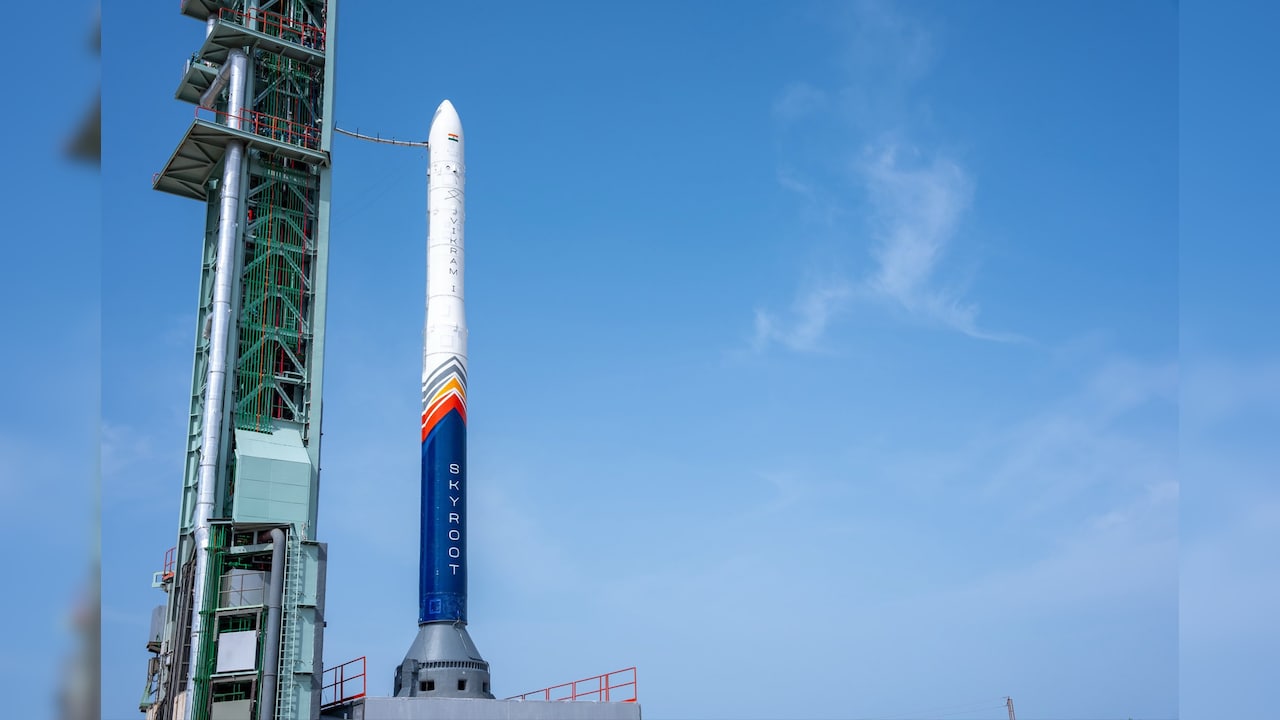
Photo Credit: x.com/SGinIndia
Now the company is preparing for a more ambitious challenge. An orbital mission requires far greater precision and complexity. Every stage of the rocket, every software command and every subsystem must function flawlessly. Success would establish Skyroot among a select group of private launch providers worldwide capable of placing payloads into orbit.
At the heart of this journey are Skyroot's founders and former ISRO scientists Pawan Chandana and Naga Bharath Daka, who wanted to make access to space affordable, reliable and responsive for customers worldwide.
Chandana, who serves as the company's Chief Executive Officer, worked extensively on launch vehicle technologies during his tenure at ISRO. Daka, the Chief Operating Officer, brought complementary expertise in rocket systems and programme execution.
When they founded Skyroot in 2018, India's private space ecosystem was still in its infancy. Building a rocket company from scratch required raising capital, assembling highly skilled engineering teams, developing new technologies and convincing customers that an Indian startup could compete internationally.
Over the years, Skyroot developed advanced propulsion systems, lightweight structures, additive manufacturing capabilities and a family of launch vehicles designed for the rapidly expanding small satellite market. Their efforts attracted investors and strategic partners, helping the company grow into India's first private space unicorn, valued at more than a billion dollars.
Track Latest News Live on NDTV.com and get news updates from India and around the world

