





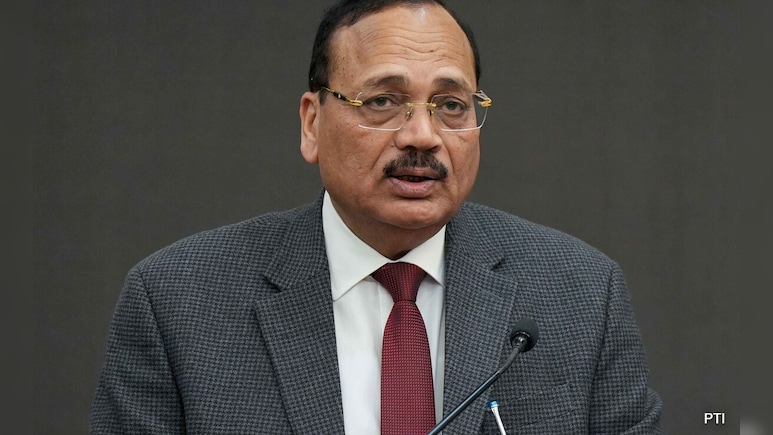
Chief Justice of India Justice Surya Kant offered a poignant reflection on the human cost of judicial delays today, sharing a deeply personal anecdote from his early years as a lawyer to illustrate how pendency and expense silently erode the dignity of ordinary litigants.
Speaking at a symposium organised by the Orissa High Court Bar Association on "Ensuring Justice for the Common Man: Strategies for Reducing Litigation Costs and Delays", the CJI said long before he occupied constitutional office, he had learnt his most enduring lessons about justice in the dusty corridors of district courts.
Recalling one such afternoon, Justice Kant said he had noticed an elderly farmer sitting quietly outside a courtroom, clutching a worn file. The cause list showed the man's case at serial number 104. It was already past 3 pm, and experienced lawyers knew the matter was unlikely to be taken up that day.
"Out of concern, I asked him why he was still waiting," the CJI recounted. "I told him that his case might not be heard. He smiled sadly and said, 'If I go home early, the other side will think I have given up.'"
For the young lawyer he then was, the exchange left a lasting impression. Decades later, Justice Kant said, that brief conversation continues to shape his understanding of justice. "For him, delay was not a statistic in a registry report. It was a quiet erosion of dignity," he observed. The cost of litigation, he added, was not an abstract legal expense but a "financial winter" that such litigants are forced to endure year after year.
Using the story as a springboard, the CJI stressed that the true test of the judicial system lies in the experience of the common citizen.
Pendency, he said, clogs the entire judicial ecosystem - from trial courts to constitutional courts -creating pressure at every level and turning the pursuit of justice into a test of endurance.
CJI Kant emphasised that reforms must focus on reducing both delays and costs if courts are to remain relevant and humane. He noted that efforts are being made at the highest level to dispose of long-pending matters involving settled or repetitive issues, so as to bring certainty to the law and ease the burden on subordinate courts.
The CJI also underlined the transformative potential of alternative dispute resolution, particularly mediation, recounting instances where long-standing family disputes, commercial conflicts and even cross-border disagreements were resolved through dialogue rather than prolonged litigation. Settlement, he said, should not be viewed as surrender but as a strategic and dignified resolution.
Concluding his address, Justice Kant returned to the image of the elderly farmer waiting patiently outside the courtroom. "When justice is delayed or made unaffordable, dignity suffers in small, unseen ways," he said. "Our collective responsibility - as judges, lawyers and institutions - is to ensure that no citizen has to prove perseverance simply to be heard."
The symposium brought together judges, senior advocates and members of the Bar to deliberate on practical strategies for making justice faster, cheaper and more accessible for the common man.
Track Latest News Live on NDTV.com and get news updates from India and around the world

