





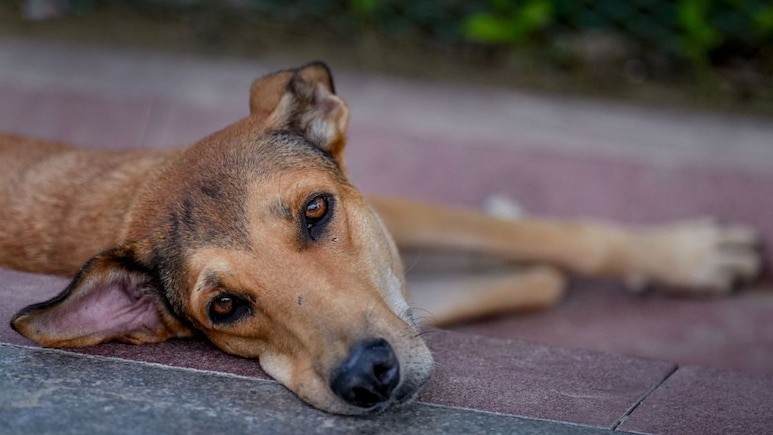
- Delhi High Court has ordered the city's two municipal bodies to run a trial sterilisation camp for stray dogs
- The bench emphasised that the camps must be well-publicised in advance
- "A message should go that dogs are not brought to dog pounds or are not killed," the court said
The Delhi High Court has ordered the city's two municipal bodies to run a trial sterilisation and vaccination camp for stray dogs, making it clear that no animals will be captured or sent to a pound.
A division bench of Justice Dinesh Mehta and Justice Rajnish Kumar Gupta directed the Municipal Corporation of Delhi (MCD) and the North Delhi Municipal Corporation (NDMC) to each select one ward to set up a pilot camp. The project will move forward in consultation with the court-appointed amicus curiae.
The bench emphasised that the camps must be well-publicised in advance with local placards to reassure residents. Because dogs will not be forcibly captured, authorities clarified that the public will need to bring the animals to the camps voluntarily.
The case stems from a suo motu public interest litigation opened by the High Court to track compliance with Supreme Court orders, which require stray dogs to be removed from public areas like schools, hospitals, bus stands, and railway stations.
During the hearing, MCD's standing counsel, Manu Chaturvedi, filed a status report showing that Animal Birth Control centres have been identified across eight zones in the city. While approval is pending for three zones, sterilisation work there is being handled by neighbouring centres.
Chaturvedi also updated the court on recent vaccination figures and suggested identifying suitable sites for a formal pilot project involving the Delhi government. However, the bench opted to start immediately with the "one ward, one camp" approach so these selected areas could serve as a fully sterilised model for the rest of the city.
The court stressed the need for systematic execution and clear signage so pet owners and community feeders are not worried. "Let it begin from one ward so that a message should go that dogs are not brought to dog pounds or are not killed," the court said.
The bench also raised concerns about ensuring the stray dog population does not disappear entirely over the next 15 years. It suggested that a small percentage, between one and five per cent, remain unsterilised, adding that while the judiciary might not mandate this, the initiative should come from the municipal bodies themselves.
The proceedings are part of a broader exercise ordered by the Supreme Court on May 19, 2026, directing all High Courts to monitor local stray dog management while balancing public safety with animal welfare.
Track Latest News Live on NDTV.com and get news updates from India and around the world

