





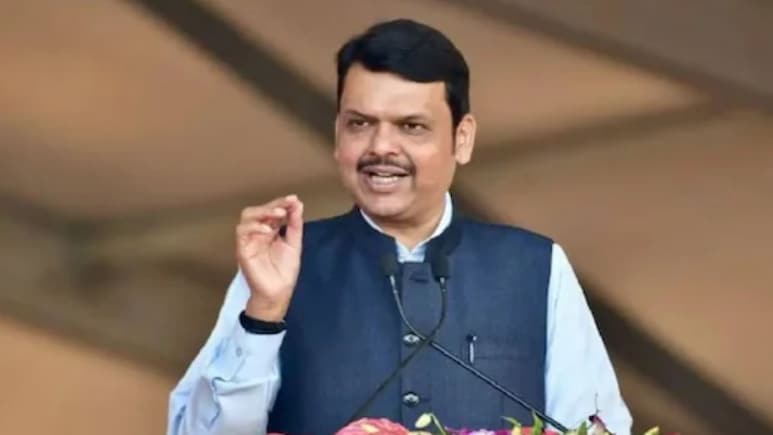
- Chief Minister Fadnavis can override ministerial decisions if deemed in public interest under new rules
- Maharashtra Government Rules of Business 2026 replace 1975 rules, clarifying chief minister's powers
- Rules follow 2023 Bombay High Court ruling limiting chief minister's intervention in minister decisions
Maharashtra government's new rules of business empower Chief Minister Devendra Fadnavis to override decisions made by any minister, provided the action is deemed in the public interest and the reasons are recorded in writing.
The Maharashtra government has notified the 'Maharashtra Government Rules of Business, 2026'. While this may appear to be a change aimed at clarifying administrative procedures, its political implications are far more significant. Under the new rules, Chief Minister Devendra Fadnavis has been granted explicit authority to intervene in and alter decisions made by any minister if deemed to be in the public interest.
While the primary responsibility for a department remains with the concerned minister, the chief minister now possesses a clear, rule-based authority to overturn major or controversial decisions. However, when exercising this power, the chief minister will have to record the reasons for the decision in writing.
New Framework Replacing The 1975 Rules
Rules governing government operations in Maharashtra are not a new concept; 'Rules of Business'-which regulate the functioning of the government under Article 166 of the Constitution-were already in place in the state.
However, the new 2026 rules provide greater clarity regarding the demarcation of powers between the chief minister and the ministers. Specifically, the chief minister has been explicitly empowered to review departmental decisions and modify them in the public interest.
Link To A 2023 Bombay High Court Ruling
The change has its genesis in a significant case from 2023.
The then Chief Minister Eknath Shinde had stayed a decision taken by the Cooperatives Minister in a matter concerning the Chandrapur District Central Cooperative Bank. The Nagpur Bench of the Bombay High Court subsequently set aside the chief minister's order, ruling that under the then-existing 'Rules of Business', the chief minister did not have the authority to intervene in the independent decision of the concerned minister.
In essence, that ruling clarified the legal position that there was a defined boundary between the powers of the chief minister and the departmental minister.
Now, with the 2026 rules, the government has explicitly incorporated this power into the framework. In 2023, the High Court questioned the chief minister's independent power of intervention, whereas the new 'Rules of Business' introduced in 2026 explicitly provide for such intervention.
Government Sources: Extensive Process
Amid concerns the state government sources have clarified that these new rules of procedure were not drafted overnight, but are the result of an extensive process involving a thorough study of the regulations followed by the Central Government and other states:
Sources said the process started when Uddhav Thackeray was the chief minister in 2020. Uddhav Thackeray constituted a study group comprising senior bureaucrats, including Chief Secretary Sitaram Kunte and others, to reform and modernize the 'Rules of Business' governing government operations in October 2020, sources said.
The committee submitted its final report to the then Uddhav Thackeray-led government on February 25, 2022.
Sources added that during the tenure of the then Chief Minister Eknath Shinde, the report was presented for consideration at a meeting of the State Cabinet on February 25, 2024.
On 6-7 January 2025, a final presentation of the report was made before Chief Minister Devendra Fadnavis and Deputy Chief Ministers Eknath Shinde and Ajit Pawar. The state cabinet granted official approval to it on 7 January, sources said.
The Big Political Question: Fadnavis vs Shinde?
The political significance of this decision cannot be overstated. The 2023 case that sparked a legal debate regarding the limits of the chief minister's authority involved Eknath Shinde as the chief minister. Today, Shinde is the Deputy Chief Minister of Maharashtra, while Devendra Fadnavis holds the office of Chief Minister.
Given this scenario, questions are being raised in political circles: have these new rules been introduced merely to address a legal loophole, or is the aim also to further strengthen the chief minister's position within the coalition government?
The government views this as an administrative and legal reform. However, politically, it could significantly impact the balance of power between Fadnavis and Shinde.
How Will The Power Balance Within The 'Mahayuti' Shift?
In a coalition government, ministers from each party wield significant political power within their respective departments.
The new rules introduce a new dimension to this equation. While a minister retains primary responsibility for their department, the chief minister now possesses the explicit authority to declare a decision contrary to "public interest" and mandate its revision.
This does not imply that the ministers' powers have been abolished. However, the balance between ministerial autonomy and the chief minister's ultimate oversight appears to be tilting in favor of the chief minister.
The Power To Requisition Files
The new rules also clearly define the chief minister's authority to requisition files or documents from any department.
It will now be mandatory for the concerned minister and the department secretary to provide files if the chief minister requests them.
Politically, this means the chief minister's role is no longer limited to merely influencing the final decision; he can now requisition files regarding critical departmental decisions for personal review.
Has Fadnavis Overturned Any Minister's Decision So Far?
There has been no public confirmation yet that Chief Minister Devendra Fadnavis has formally overturned a minister's decision under the new rules.
The real political test will be when the chief minister uses this provision for the first time to alter a major and politically sensitive decision.
Track Latest News Live on NDTV.com and get news updates from India and around the world

