





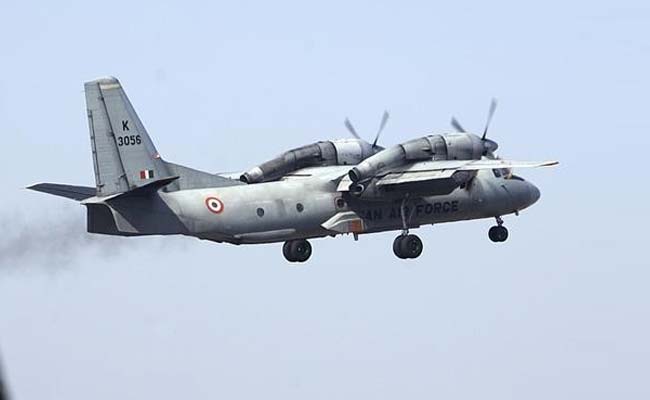
The mystery surrounding the Indian Air Force's An-32 transport aircraft, which had gone missing over the Bay of Bengal in 2016, may have been solved after debris from a crashed aircraft was detected off the Chennai coast. Twenty-nine personnel were onboard the aircraft which went missing during an operation mission.
An Autonomous Utility Vehicle (AUV), developed by the National Institute of Ocean Technology, was launched for deep-sea exploration to locate the missing aircraft at its last known location in the Bay of Bengal.
-

-
 NDTV World Summit 2026: AI, Chips, Warfare And The Future Of The World | Key Conversations
-
 Kriti Sanon On Situationships, Open Relationships And Being Old-School
-
 'AI Scares Me': Kriti Sanon On Personality Rights And Need For Laws
-
 'This Time I Wanted Gold': Savita Punia Reflects On Historic Asiad Success
-
 Favourite Bollywood Actor To 5-Year Plan, Kriti Sanon Interviews AI Actor Tilly Norwood
-
 Neeru Dhanda Carried Homemade Churma To Asiad, Returned With Two Gold Medals
-
 Inside The Mind Of Archer Kumkum Mohod, Who Dared To Challenge South Korea
-
 India's Golden Girls: Asian Games Champions On Sacrifice, Success And LA 2028
-
 RBI Governor Was Asked About Tata Sons' Listing. He Read The Rulebook
-
 "High Inflation Is Like Tax On Everyone": RBI Governor At NDTV World Summit
The search was carried out at a depth of 3,400 metres using a multi-beam SONAR (Sound and Navigation Ranging), synthetic aperture SONAR and high-resolution photography. The payloads identified debris from a crashed aircraft on the sea bed 310 km off the Chennai coast.
Findings From Deep-Sea Search
The photographs were analysed and found to conform with the An-32 aircraft. No other aircraft crashed at that site or in that area and the photographs of the debris underpinned the results from the deep-sea search operation. The National Institute of Ocean Technology, which functions under the Ministry of Earth Sciences, believes that the debris possibly belongs to the crashed An-32 aircraft. The findings give closure to families of the personnel who were onboard but the reason behind the crash was never revealed.
What Happened On July 22, 2016
The An-32 transport aircraft, with flight number K-2743, took off from the Tambaran air base in Chennai at 8:30 am on Jully 22, 2016 and was supposed to land at Port Blair in the Andaman and Nicobar Islands around 11:45 am. The aircraft took off with 29 personnel including, eight civilians
Sixteen minutes after take-off, the pilot made the last call and said, "Everything is normal". The aircraft rapidly lost altitude from 23,000 feet and was off the radar around 9:12 am, 280 km off the Chennai coast. Almost eight years after the crash, debris from a crashed aircraft has been located 310 km from the coast in the same area.
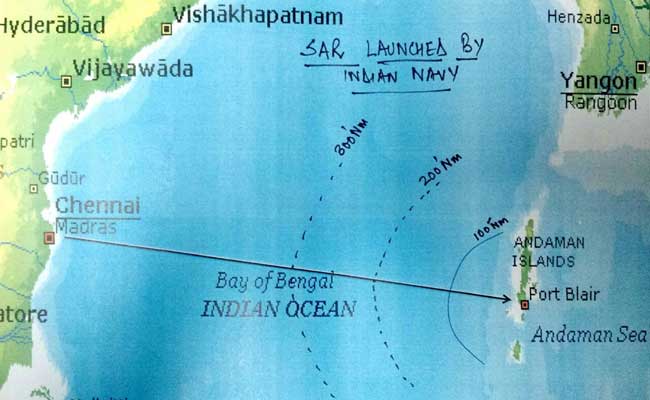
A massive search operation was launched by the Indian Air Force and the Navy to locate the aircraft. Navy's Dornier aircraft and 11 ships - Sahyadri, Rajput, Ranvijay, Kamorta, Kirch, Karmuk, Kora, Kuthar, Shakti, Jyoti, Ghariyal and Sukanya, were deployed for the search operation.
This was India's biggest search operation to locate the missing aircraft, which took off in rough weather from Chennai. A preliminary investigation said the aircraft was not carrying essential equipment that would have helped locate it in the event of a crash at sea.
NDTV had learnt that the black box of the Indian Air Force's An-32, which had 29 people onboard, was not fitted with an underwater locator beacon, making a search operation for the wreckage of the aircraft extremely difficult.
The underwater locator beacon is designed to emit an electronic signal at a particular frequency for at least a month after it is automatically activated during a crash and is used on all civilian aircraft.
Track Latest News Live on NDTV.com and get news updates from India and around the world

