





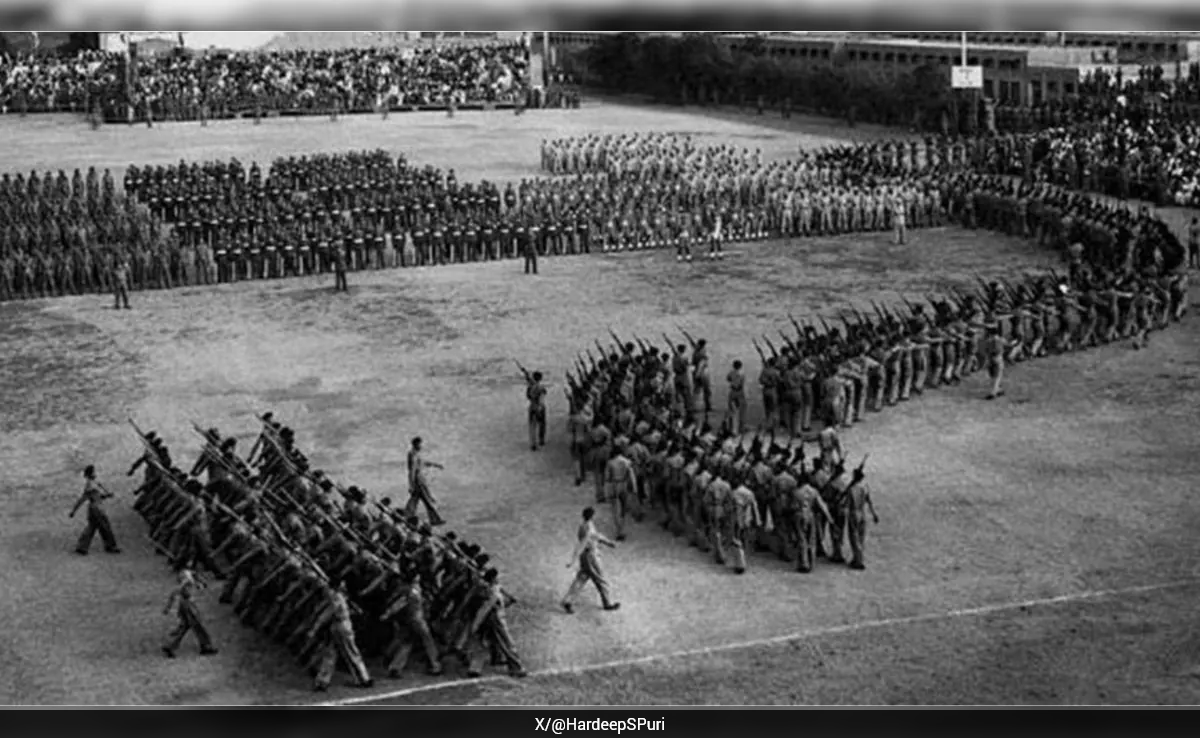
India celebrates Republic Day every year on January 26, commemorating the day the Constitution came into force in 1950 and the country formally became a sovereign, democratic republic. While Rajpath is now inseparable from the celebrations, the first Republic Day was celebrated differently, centred around Delhi's Government House and the Irwin Amphitheatre.
End Of Colonial Rule
On January 26, 1950, India severed its final constitutional ties with the British Empire by enforcing the Constitution of India, drafted under the leadership of Dr BR Ambedkar. The date was chosen to honour the 1930 Purna Swaraj Declaration, when the Indian National Congress proclaimed complete independence from colonial rule.
With the Constitution coming into effect, India ceased to be a dominion under the British Crown and emerged as a sovereign republic with its own elected head of state, marking a decisive transformation in the nation's political journey.
Ceremony At Government House
The formal declaration of the Republic took place inside the grand Durbar Hall at Government House, now Rashtrapati Bhavan. According to a February 4, 1950 report, India was declared a Sovereign Democratic Republic at exactly 18 minutes past 10 in the morning.
Six minutes later, Dr Rajendra Prasad was sworn in as the country's first President. The birth of the Republic and the installation of the President were announced with a salute of 31 guns shortly after 10.30 am.
The swearing-in ceremony saw the retiring Governor General C Rajagopalachari read out the proclamation of the Republic. Dr Rajendra Prasad then took the oath of office and addressed the nation, delivering a brief speech first in Hindi and then in English.
President's Message To The Nation
In his address, Dr Rajendra Prasad highlighted the significance of the moment, describing the unification of the country under a single Constitution.
“Today for the first time in our long and chequered history, we find the whole of this vast land from Kashmir in the north to Cape Comorin in the south, from Kathiawad and Kutch in the west to Coconada and Kamrup in the east, brought together under the jurisdiction of one Constitution and one Union,” he said.
The First Republic Day Parade
Following the ceremony, the President's procession moved through the streets of Delhi, drawing large crowds. People climbed rooftops and trees to catch a glimpse of the procession, while the first President acknowledged the crowd with folded hands.
The drive concluded at 3.45 pm at the Irwin Amphitheatre, which was later renamed the National Stadium. At the Irwin Amphitheatre, around 3,000 officers and personnel from the armed forces and police had assembled for the ceremonial parade. Nearly 15,000 people gathered at the venue to witness the historic occasion.
Scenes such as troops marching against the backdrop of the Old Fort, or President Dr Rajendra Prasad taking a ceremonial ride at the Great Place, now Vijay Chowk, without any security cover, became lasting images of that day.
From the following year onwards, the Republic Day celebrations shifted to Rajpath, which later came to symbolise the annual national parade.
Track Latest News Live on NDTV.com and get news updates from India and around the world

