





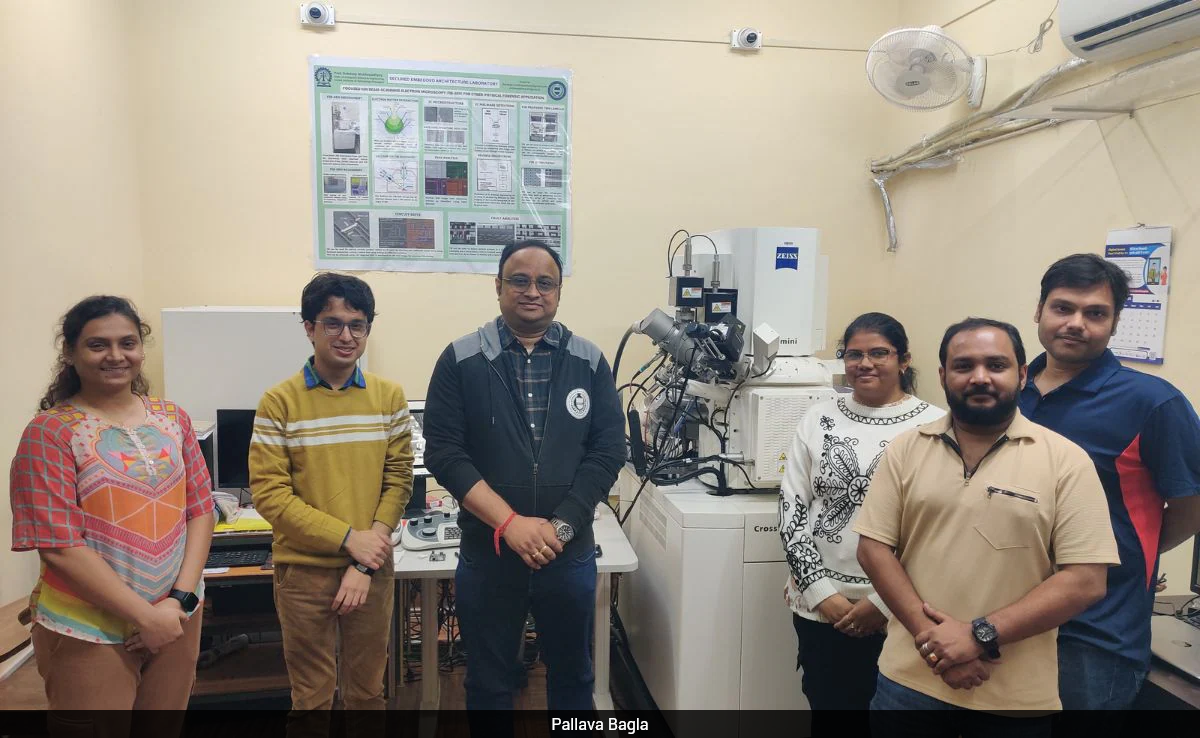
Chips are the new oil. Today small chips are seeing big investments, but the risks are equally big, and unfortunately there are very few specialists in India who can do computer hardware forensics; computer scientists and 'white hat hackers' (specialists who ethically hack hardware) are a rarity. IIT Kharagpur leads in this unique specialisation.
In a world driven by data, semiconductors have become the lifeblood of digital economies. Every smartphone, every banking transaction, every power grid control system, and all satellites depend on these tiny marvels of engineering. But here's the catch: India imports almost all its chips. And that makes us vulnerable - very vulnerable. Yet India is becoming a magnet for global giants to put massive data centres and investments. Hardware security is equally important as software or cyber security.
India, A Magnet For Investments
Microsoft CEO Satya Nadella met Prime Minister Narendra Modi yesterday and announced a $17.5 billion investment in India. Earlier, Google CEO Sundar Pichai had announced a $15 billion investment in a computer facility on the eastern seaboard at Vishakhapatnam. Amazon Web Services is also investing $7 billion in Telangana. OpenAI is reportedly investing $7 billion in India. At last count in this year, pledges of close to $46.5 billion. All of this will ride on imported chips, and therein lie the vulnerabilities!
This is happening even as India's own ambitious semiconductor mission is ramping up to give the country made-in-India chips.
Universe On A Dot
A modern chip is a technological universe compressed into a dot. Built on nanometre-scale technology, a single chip can have billions of transistors layered across seven or more intricate levels. These chips power everything from smartphones in your pocket to the servers running India's financial systems and defence networks. Yet, most of these chips are manufactured abroad, crossing 70 to 80 international boundaries before reaching us. Each step in this global supply chain is a potential point of compromise.
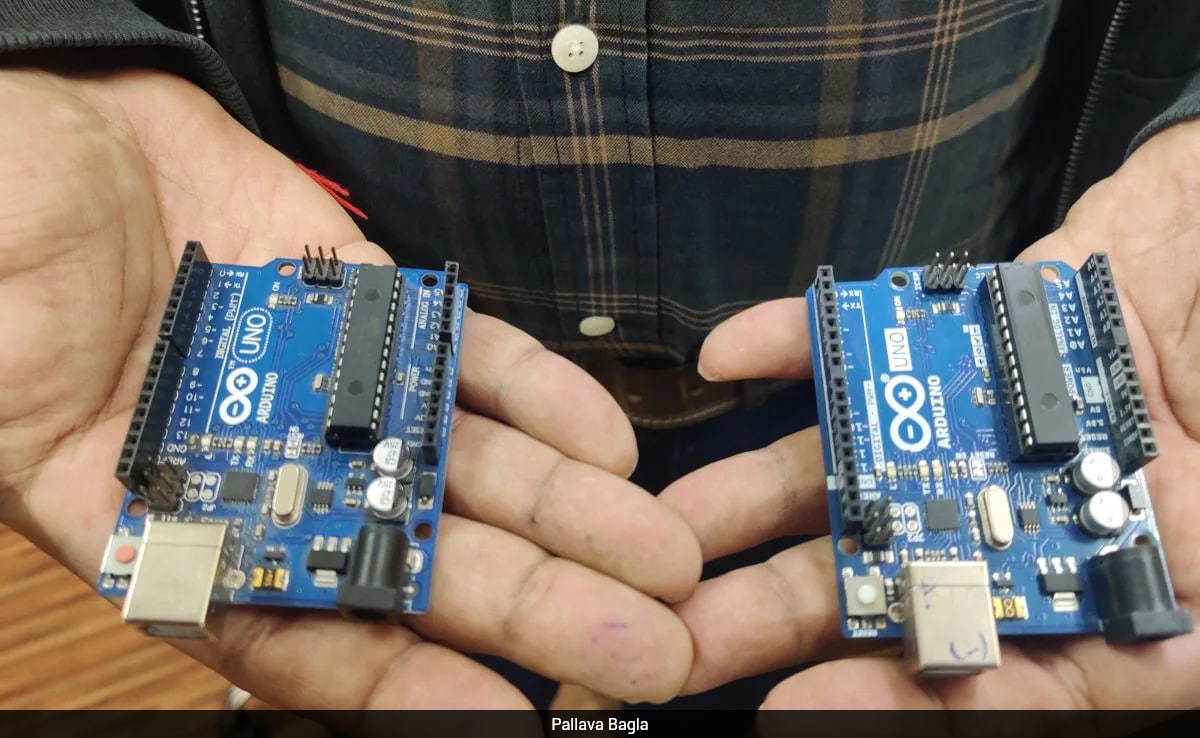
Professor Debdeep Mukhopadhyay holds an original chip (right side) and verbatim forged chip.
As Professor Debdeep Mukhopadhyay, a leading computer scientist and cyber forensics expert at IIT Kharagpur, explains: "The more foreign components you buy, the lesser assurance you have. Trust in hardware is not absolute - it must be engineered by design."
India's Digital Push And Its Achilles' Heel
India is racing toward becoming a trillion-dollar digital economy. From Aadhaar to UPI, from smart cities to 5G & 6G networks, the country's dependence on digital infrastructure is unprecedented. But this transformation rests on imported chips. A single compromised chip in a critical system - say, a power grid or a defence communication network - can have catastrophic consequences.
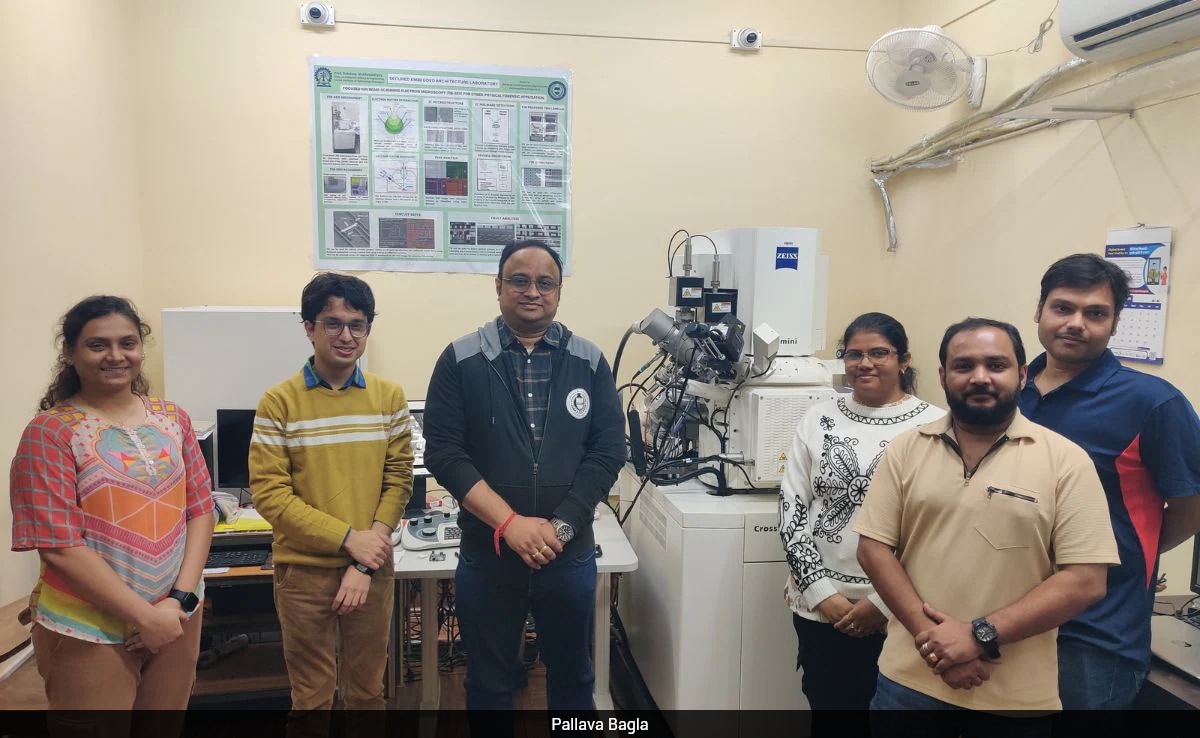
Prof Mukhopadhyay, and his young team of researchers and cyber forensics experts at IIT Kharagpur.
The government has recognised this vulnerability. Initiatives like the Cyber Physical Security Systems Mission and the India Semiconductor Mission are steps in the right direction. But experts warn that these are only starting points. Scaling up hardware security infrastructure requires massive investment, advanced testing facilities, and a skilled workforce trained in hardware forensics.
Hardware Root of Trust
In the semiconductor world, trust is engineered, not assumed. The concept of a hardware root of trust - a minimal, verifiable base on which secure systems are built - is critical. At IIT Kharagpur, Prof. Mukhopadhyay's lab is pioneering techniques to inspect chips using scanning electron microscopes and X-ray imaging. "Seeing is believing," he says. "You cannot trust what you cannot inspect." Today forged or fake chips look exactly the same as original chips. Only a deep hardware forensics examination can reveal the forgeries.
This lab, one of India's first dedicated hardware security facilities, started in 2008 and now plays a key role in fortifying India's digital backbone. It's here that chips are dissected, analysed for side-channel vulnerabilities, and certified for trustworthiness.
Adani's Big Bet on Secure Hardware
The importance of hardware security isn't lost on India's industrial giants. Shri Gautam Adani, one of India's richest entrepreneurs, recently visited Prof. Mukhopadhyay's lab at IIT Kharagpur. Adani Group is setting up India's largest AI data centre along with Google in Visakhapatnam, a cornerstone for the country's digital future. For Adani, ensuring that the hardware powering this massive infrastructure is free from forged or compromised chips is non-negotiable.
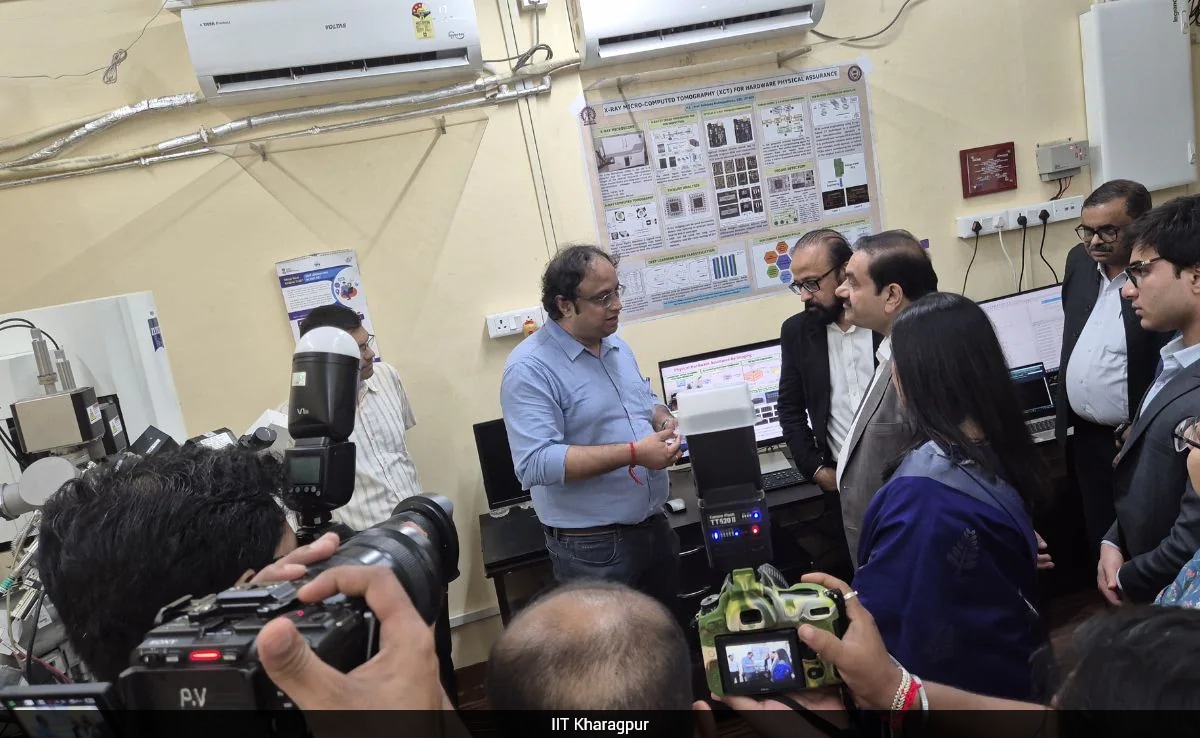
Gautam Adani visits the computer forensics lab of Prof Debdeep Mukhopadhyay at IIT, Kharagpur
"They are planning a distributed ecosystem for cyber-physical systems," says Prof. Mukhopadhyay. "And everything starts with trustworthy hardware." The visit underscored a growing realisation among industry leaders: cybersecurity begins at the hardware level.
Google CEO Sundar Pichai recently confirmed that the 'Vizag AI data centre will be Google's largest-ever investment in India, about $15 billion over five years (2026-2030)-and the company's biggest AI hub outside the US-and confirmed that Adani Group will collaborate for the gigawatt-scale campus.'
While Microsoft has not revealed full details of its plans, it may set up a massive facility in Hyderabad.
The Individual's Role
While national security and industrial resilience dominate headlines, individuals too must play their part. Smartphones have proliferated across India, making every citizen a node in the digital network. Are we secure?
"We are as secure - and as insecure - as anyone in the world," says Professor Mukhopadhyay.
Basic hygiene matters: strong passwords, avoiding sensitive transactions on public Wi-Fi, and staying updated on security practices can go a long way. But if you're targeted, vulnerabilities remain. That's why systemic security - built into hardware and software - is crucial.
The Road Ahead
India's semiconductor mission aims to reduce dependence on imports, but building fabs and testing facilities is only half the battle. The other half is trust. Every chip entering India's critical infrastructure must be inspected, verified, and certified. Today, labs like IIT Kharagpur's can test one chip at a time. For a country of India's scale, this process needs robotisation and automation, backed by significant funding.
Cybersecurity is not just about firewalls and encryption. It's about ensuring that the very building blocks of our digital systems - the chips - are uncompromised. In an era where chips are the new oil, India cannot afford to be complacent. The stakes are national security, economic stability, and the trust of a billion citizens.
As Professor Mukhopadhyay puts it: "Don't be paranoid, but don't be careless either. We need to make our systems more and more trustworthy."
India's digital future hinges on secure hardware. Chips may be small, but they carry the weight of a nation's security. Vigilance, investment, and innovation are the only way forward.
Track Latest News Live on NDTV.com and get news updates from India and around the world

