



- India's stance on Russian oil is driven by real-world sanctions-related constraints
- Russia understands India's caution to protect its financial system from sanctions
- Sanctions compel many countries to safeguard domestic industries and supply chains
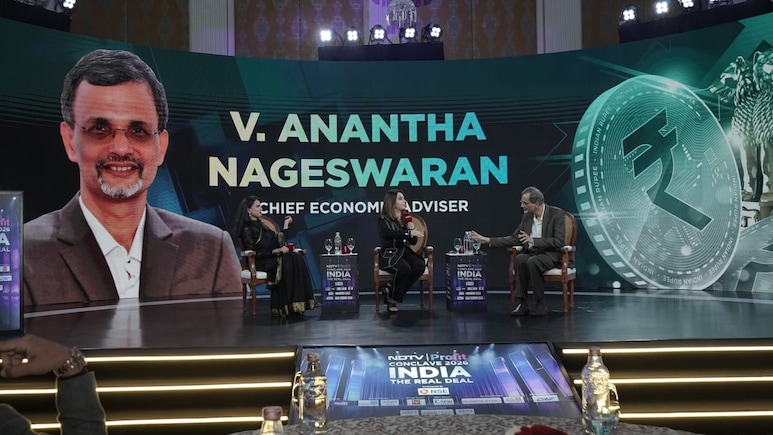
India's stance on Russian oil flows from real-world compulsions that every country faces under sanctions, Chief Economic Advisor V. Anantha Nageswaran said at the NDTV Profit Conclave.
He argued that countries recognise these constraints and that India does not expect serious disruption if prices stay stable.
“Other things being equal, if the Iran situation doesn't get out of control in the Middle East, and oil prices remain the same, from an oil procurement perspective, it may not necessarily mean a big deal of difference to India,” he said.
He added that Russia understands New Delhi's caution since “after the Rosneft and Lukoil sanctions were announced, there was a natural tendency for India to remain cautious because we didn't want to expose our financial system to sanctions as well. So they also understand the compulsions.”
Nageswaran said such constraints are common across economies. “Just as many other countries also take measures to safeguard their domestic industry in the face of sanctions,” he said, pointing to practical examples.
“When Naira Energy got shut out, when Microsoft Office removed their email client server facilities, even Zoho couldn't offer them an alternative because they were serving European customers as well, so they didn't want to get caught in that sanctions web. So there are compulsions and countries understand that.” He concluded, “I don't think this will be a major problem area for us.”
Pressed on whether India could “shut the tap” and replace Russian barrels with Venezuelan crude or cut Iranian inflows, he declined to speculate. “If you speak of math then math has to be worked out rather than being able to answer off the cuff,” he said. “We haven't said anything of that sort, so I don't think we should be looking at too much of hypotheticals at this point.”
On the new India-US tariff framework and whether India's surplus can hold with an 18 percent US tariff, Nageswaran said the right lens is relative, not absolute. “You should not look at India's duties alone in isolation. It has to be seen in the light of what are the duties that other countries face,” he said.
He noted the joint statement's signal that “India will continue to negotiate for lower duties from the 18 percent level,” adding that competitors in the region “face a similar or even slightly higher duty. So in that sense I think it will continue to serve us well.”
Track Latest News Live on NDTV.com and get news updates from India and around the world

