





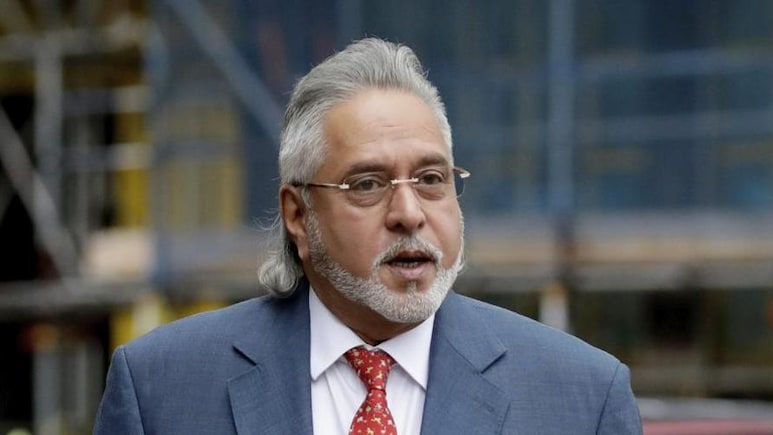
- The Bombay High Court urged closure of Vijay Mallya’s long-standing commercial dispute with banks
- Mallya is wanted in India over a default of Rs 9,000 crore that was loaned to Kingfisher Airlines by banks
- The court sought Enforcement Directorate details on investigation and attached assets status
The Bombay High Court has said that the commercial dispute between fugitive businessman Vijay Mallya and the banks must now come to an end.
Mallya is wanted in India over a default of Rs 9,000 crore that was loaned to erstwhile Kingfisher Airlines (KFA) by several banks. Mallya, who fled to the UK in March 2016, was declared a "fugitive economic offender" in 2019, enabling authorities to confiscate his properties under the law.
In 2020, he challenged an order passed by a special Prevention of Money Laundering Act (PMLA) court which permitted the State Bank of India-led consortium of banks to utilise his assets that had been attached by the Enforcement Directorate (ED).
A single-judge bench of Justice Milind Jadhav heard his petition this week and said if the parties involved "do not move" past this dispute, it will have a direct and negative impact on the country's economy.
The court also sought details from the ED regarding the current status of the investigation and the attached assets.
The bench said the matter, which has been ongoing for nearly a decade, must now reach a logical conclusion.
Mallya, 70, had argued that the order to hand over his assets to the banks was unjustified.
The court noted that the solutions to commercial disputes often lie within the disputes themselves, and the parties should move towards practical resolutions rather than remaining locked in conflict.
In February, a bench comprising Chief Justice Shree Chandrashekhar and Justice Gautam Ankhad heard his two petitions challenging his designation as a "Fugitive Economic Offender" under the Fugitive Economic Offenders Act (FEOA) and contesting a court order formally declaring him a fugitive.
During the hearing on February 12, the court said that it would not entertain his plea unless he first returned and submitted to its jurisdiction. The court had directed him to clarify whether he intended to return if he wished to pursue relief.
In the next hearing on February 18, Mallya had said that he was not in a position to specify when he would return to India, citing restrictions imposed by courts in England that he said prevented him from leaving the country.
Appearing for him, senior advocate Amit Desai urged the court to hear the two petitions separately even if his client could not be physically present in India. He relied on judgements of the Supreme Court, submitting that constitutional courts have, in certain cases, proceeded to decide writ petitions despite the absence of petitioners.
Vijay Mallya was declared a "fugitive economic offender" in January 2019. The Fugitive Economic Offenders Act allows courts to attach and dispose of assets of individuals who leave India to evade prosecution, even before trial concludes. Authorities attached assets worth thousands of crores as part of recovery efforts tied to the bank loans.
India has been seeking Mallya's extradition from the UK.
(With inputs from Rizwan Shaikh)
Track Latest News Live on NDTV.com and get news updates from India and around the world

