










Redemption, finally.
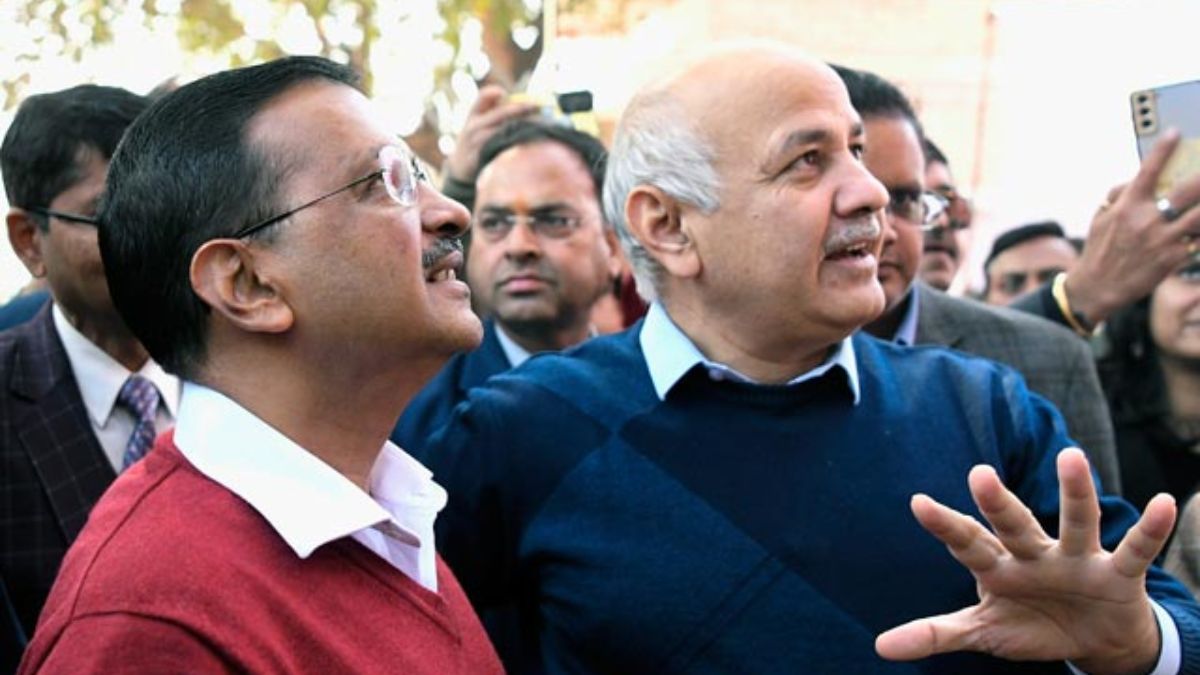
On Friday morning Aam Aadmi Party chief Arvind Kejriwal and his right-hand man, Manish Sisodia, were cleared of corruption and conspiracy charges linked to the Delhi liquor excise policy case.
"There was no overarching conspiracy or criminal intent in the policy," the court said, also criticising the Central Bureau of Investigation for trying to build a 'case' on the back of claims by other suspects.
Outside the court Kejriwal broke down and cried on camera, remembering his arrest in March 2024. "I always used to say that the truth is with us. A sitting Chief Minister was dragged out of his home and thrown into jail. Mud was flung at us," he told reporters.
Months of high drama had followed Arvind Kejriwal's arrest, including allegations of medical negligence and the ruling Bhartiya Janata Party trying to 'kill' him in prison by denying him insulin.
It wasn't till September 2024 - when the Supreme Court stepped in for a second time, and ruled "prolonged incarceration amounts to unjust deprivation of liberty" - that bail was granted.
RECAP | "'Kattar Beimaan', Bail 'Wala'...": BJP Fires Jabs Over Kejriwal's Bail
Days later Arvind Kejriwal resigned as Chief Minister of Delhi, a position he clung to since his arrest.
RECAP | Arvind Kejriwal Resigns After Choosing Atishi As His Replacement
It was a matter of principle, sources close to him had told NDTV, reasoning to resign then, amid the flood of cheating and corruption allegations, was to acknowledge the claims.
Those were temporary victories. This is a permanent one.
Kejriwal and Sisodia are now free, but things are not the same
In between the wins there was a changing of the political guard; hit by a wave of personal and political attacks from the BJP, Kejriwal and his AAP were booted out after 11 years in charge.
2025 and the Delhi election
The 2025 Delhi election was a resounding win for the BJP; with 48 of the city's 70 seats in its pocket, the party claimed power in the national capital for the first time in nearly three decades.
It also resulted in a personal defeat for Kejriwal and Sisodia, statement losses that underlined the individual, organisational, and electoral dismantling of the Aam Aadmi Party.
The scale and significance of the AAP's defeat was undeniable.
And the excise policy allegations - nestled within a larger narrative of a 'kattar beiman' Kejriwal that included the 'sheeshmahal' jibes - were widely seen as factors that led to that defeat.
The AAP, Kejriwal, and Sisodia repeatedly denied the allegations, pointing out that no money, or even a paper trail, was found despite multiple raids and seizures by the investigating agencies.
But, as months passed, their public image took a battering.
The arrest of senior leaders - Rajya Sabha MP Sanjay Singh joined Kejriwal and Sisodia in prison - meant the party was in firefight mode all through the campaign.
RECAP | 'Sheesh Mahal' To Liquor Case: Factors Behind AAP's Delhi Setback
There were other reasons, yes, including a heightened wave of anti-incumbency and squabbles with the Congress, an on-paper ally, which cost the AAP a seven per cent vote share loss.
The liquor policy case, however, was a big problem because it targeted Kejriwal directly.
The AAP's political persona is built on Arvind Kejriwal's image - that of a middle-class, hard-working, and honest man trying to serve his country in the face of overwhelming corruption.
The prolonged time in jail also allowed the BJP to target public welfare schemes launched by Kejriwal, including overhauls of government schools by Sisodia, then the Education minister.
What was the liquor policy case?
In November 2021, the Kejriwal government introduced a new liquor policy.
The government withdrew from the retail sale of liquor and allowed private licensees to run stores. The move, it was argued, would crack down on the liquor black market while increasing revenue for the government and also improve the overall customer experience.
Under the new policy, liquor shops could stay open past midnight and offer discounts.
AAP workers protesting Kejriwal's arrest in March 2024 (File).
Sales rocketed and the government reported a 27 per cent spike in revenue.
But the BJP, then in the opposition, criticised the new policy and accused the AAP of allowing liquor shops to open in residential areas and promote a 'liquor culture' in the national capital.
In July 2022, Delhi's then-Chief Secretary, Naresh Kumar, flagged 'gross violations' in the new policy, including an illegal rebate of hundreds of crores in licence fees during the pandemic.
That triggered investigations by the Enforcement Directorate and the CBI, federal agencies that the opposition has repeatedly said are used by the BJP to target and harass political rivals.


