





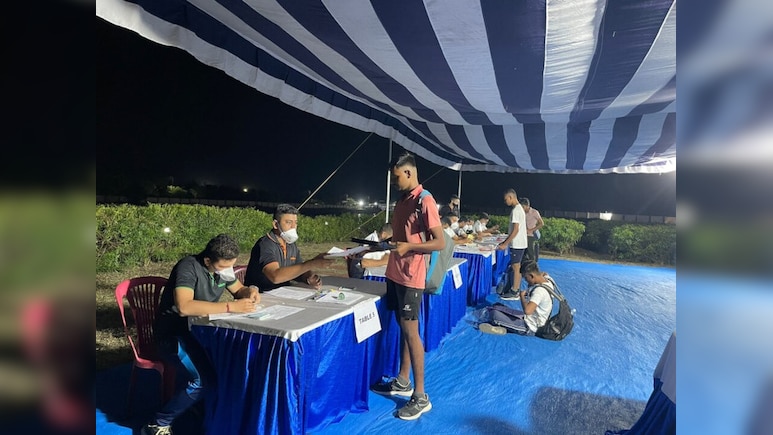
Around 75 per cent of the first batch of Agniveers will exit the Indian Armed Forces by the end of this year, the Centre has recently informed the Rajya Sabha. In numbers, it would be 34,500 -- over 1,000 of them are from Punjab. And with the re-employment schemes announced by Chief Minister Bhagwant Mann on May 12 still on paper, their uncertain future is providing rich grounds for politics ahead of next year's assembly election.
The draft reservation and rehabilitation policy for Agniveers involve reservation of 10 per cent of police constable posts and 20 per cent of office guard posts for them. But this is yet to be implemented and it has given ammunition to the opposition parties, which plan to corner the ruling AAP.
-

-
 "US Protecting Its Interest": S Jaishankar On Trump's Oil Deal With Russia
 -
 S Jaishankar's 'Indira' Reminder After Rahul Gandhi's Marco Rubio Jibe
 -
 Best Of NDTV World Summit 2026 | Defining Conversations, Big Ideas
 -
 PM Modi Says 'Parasite' Congress Hurts 'Honest' Dissent Movements
 -
 "Some Dreaming Of Disorder": PM Modi's Dig At Rahul Gandhi
 -
 "World That Relied On India's Brainpower Now Trusts Its Mindpower": PM Modi
 -
 Non-Oil Trade With India Went Up 50% In 3 Years: UAE Minister At NDTV Summit
 -
 "Some Dreaming Of Disorder": PM's "Failed Product Of Congress" Jibe At Rahul Gandhi
 -
 'Viksit Bharat Not Just For Us': PM Modi's Top Quotes At NDTV World Summit
 -
 Has Indian Cuisine Arrived At The Global Stage? What Vir Sanghvi Believes
Fewer Recruits For Army In Punjab
From martial pride to warrior legacy -- public perception in Punjab regarding enlistment in the Indian Army has shifted. The short service scheme has not only dampened the spirit of the young people but has also given political parties ammunition to corner the ruling BJP at the Centre.
Opposition parties in Punjab, particularly Congress, have been raising the issue of the shortened army service period for some time.
"The Agnipath scheme is against the interests of Punjab and has negatively impacted the youth of the state," Leader of the Opposition Punjab Pratap Singh Bajwa had said.
Under the new recruitment scheme, Punjab's representation in the Army will plunge dramatically from the current 7.8 per cent to 2.3 per cent, he said, calling it an "an insult" to the sacrifices Punjabis made for India.
The lack of jobs for the exiting recruits and the situation that will follow can be "exploited by anti-national forces and enemies lurking across the border," Bajwa had added.
Bajwa is not the only politician to speak up against this.
Army veteran and former Punjab chief minister Captain Amarinder Singh also termed the recruitment scheme as being against the traditional bonding with the Indian Army. He urged the Central government to review the policy, saying a short-term tenure will disrupt the regimental cohesion vital for the armed forces.
"It will dilute the long-existing distinct ethos of regiments. Four-year service is too short for a soldier," the Captain had said in a recent interview, calling the scheme a "blunder".
Meanwhile, Chief Minister Bhagwant Mann's statement that the future of the Sikh Regiment "is in danger" has gone viral.
"Recently, the Chief of the Western Command Army met me and shared a matter of great concern. He said, 'Please help us; we are not getting children to enlist for the Sikh Regiment, and the Sikh Regiment is at risk'," he said.
Contrasting it with the glorious history of the Sikh Regiment, he said the situation is such that they cannot find recruits today. His government, he said, will not let the Sikh Regiment's legacy perish. "We must save it," Bhagwant Mann said.
Why Army Recruitment Is Declining In Punjab
According to the Centre for Training and Development of Punjab Youth (C-PYTE), run by the Punjab government, army recruitment from Punjab has declined by 60 to 70 per cent. Earlier this year, the Indian Army had appealed to Punjab's youth to join the Sikh Regiment, after which some districts reported improvement.
Army veterans generally blame the limited four-year service period, lack of a pension, and an uncertain future for the fading interest. They however, also point to other reasons for the decline.
"The younger generation of Punjabis wants to earn quick money. So they venture to foreign countries or take private jobs. Life in the army is harsh, and the money is not on par with the high-paying private jobs," said Col (Rtd) Daljeet Singh Cheema.
Secondly, physical fitness of many is down due to addiction. The spirit of sportsmanship has also died, he said.
"While in school, the focus is on getting higher marks; at home, they are either busy on mobile phones or are sent to tuition classes. Some of them even join the drug cartels, as selling drugs brings more easy money," Cheema said.
Russian Military trap
Dozens of army enthusiasts who lost two years because of a gap in recruitment are now over-age. Recruitment rallies were stopped between 2020-21 and 2021-22 due to the COVID-19 pandemic. Many of these enthusiasts have ended up in the Russian army through the donkey route.
Road Ahead
Army veterans say a clear, time-bound re-employment policy for returning Agniveers is essential. Meaningful posts should be reserved in police, forest, fire services, and Home Guards. They should also be given skill certification and entrepreneurship support.
"On the ground, aggressive action against drug networks and fraudulent recruitment agents, combined with modern sports and fitness programmes in schools, can rebuild physical readiness and channel ambition productively. Transparent, well-regulated overseas employment avenues must replace the shady "donkey routes" that prey on desperation," Cheema added.
Track Latest News Live on NDTV.com and get news updates from India and around the world

