





- Punjab's groundwater is overexploited, with 72.55% of blocks classified as over-exploited
- Groundwater extraction exceeds recharge by 156%, causing water tables to fall by 14 meteres since 1998
- Experts warn Punjab's aquifers could be exhausted by 2039 without urgent crop and water management reforms
Punjab's groundwater is experiencing massive depletion across multiple regions. This decline is not just triggering an agricultural crisis but is also steering a major public health hazard.
Decades of continuous water extraction, cheap electricity, and policy inaction have pushed the state's groundwater levels past their tipping point. What initially began as a miraculous agricultural transformation is evolving into a complex emergency. From escalating cultivation costs that deepen rural debt to severe soil degradation and a growing health emergency driven by toxic contaminants in the water supply.
The Math Of Exhaustion
The numbers regarding Punjab's groundwater have been in the red zone for years. Dr. Kamal Vatta of Punjab Agricultural University highlights the state's declining water levels, citing government data presented in Parliament from the Central Ground Water Board (CGWB) to prove how the volume of water drawn annually outstrips nature's capacity to replenish it.
Vatta explains, "The situation is extremely serious. According to the latest Central Ground Water Board assessment for 2025, Punjab extracted 26.27 billion cubic metres of groundwater against only 16.80 billion cubic metres considered annually extractable. This means an extraction rate of 156.36 per cent. For every 100 litres sustainably available, Punjab is withdrawing about 156 litres."
The deficit spans the entire state. This creates a stark geography of depletion where safe zones have become the exception rather than the norm.
"111 of the state's 153 blocks, or 72.55 per cent, are over-exploited, while another 25 are critical or semi-critical," Vatta said.
He pointed to staggering data showing that only 17 of the state's blocks remain in the safe category.
Dr. Samanpreet Kaur Baweja, Principal Scientist in the Department of Soil and Water Engineering at Punjab Agricultural University, Ludhiana, who has researched the issue extensively, pointed out how rapidly the water table is dropping. Punjab's aquifers are vanishing faster than almost anywhere else in the nation, he said.
"Across the state, the water table has fallen by roughly 14 metres since 1998, dropping from under 8 metres below ground to more than 21 metres, as farmers pump deeper to irrigate the water-intensive paddy-wheat crop cycle."
While the statewide decline averages about half a meter per year, Baweja warned that critical hotspots in the central belt are sinking at double that speed:
"The decline averages about half a metre a year, but [in] the worst-hit central districts of Sangrur and Barnala, the table is sinking by over a metre annually. The cause is the ever increasing number of pumps. Punjab draws out about 13 billion cubic metres more water each year than nature can replace, a deficit met only by mining the aquifer."
Anatomy Of A Crisis
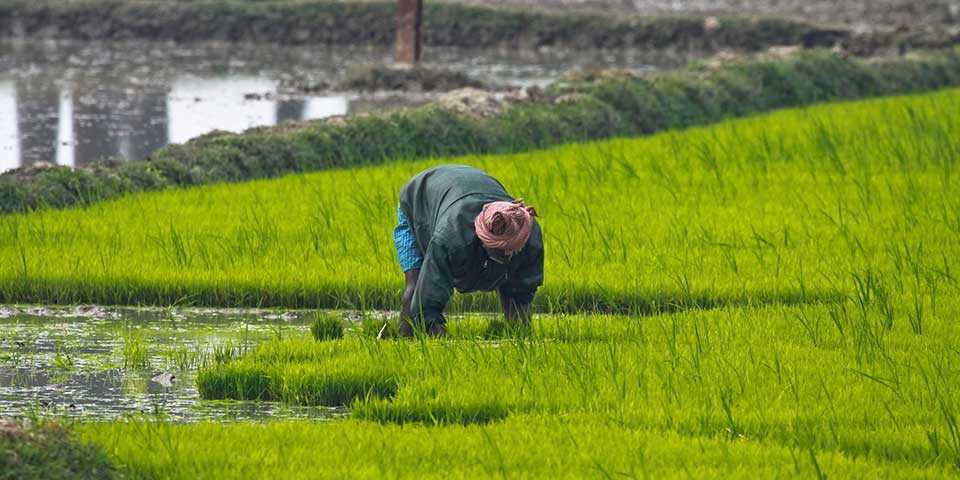
The situation raises an obvious question: how did a state naturally fed by rivers end up with severely depleted groundwater? Professor Sunil Mittal of the Department of Environment Science and Technology at the Central University of Punjab targets the policy incentives and crop choices that lie at the core of the crisis: "The rapid decline in groundwater levels in Punjab is primarily driven by unsustainable groundwater abstraction for irrigating the rice-wheat cropping system, which consumes more than 80 per cent of the state's groundwater resources."
Amplifying the impact of these human-driven factors are shifting weather patterns and urban development, which further choke off natural recharge pathways. As Mittal explains, "climate variability, rising temperatures, delayed monsoon onset, and higher evapotranspiration have further reduced effective recharge."
The Financial, Structural, And Agricultural Strain
As shallow water sources disappear, the physical act of farming becomes significantly more expensive. To reach water that lies ever deeper, farmers must sink deeper boreholes and install high-capacity pumps, trapping Punjab's debt-burdened farmers in costly territory.
Vatta outlined the escalating financial strain, saying, "The immediate consequence is a continuously falling water table. Farmers must deepen tubewells, install more powerful pumps and use more electricity, which raises both cultivation costs and the government's power-subsidy burden. Small farmers are affected most because they may not be able to afford deeper wells."
Highlighting the physical and operational risks of this trend, Baweja warned that heavy pumping is pushing both public finances and the land itself toward a breaking point.
"As water sinks deeper, farmers need more powerful tube wells and burn more electricity to lift it, inflating the state's power-subsidy bill. Larger pumpsets and high tubewell density coupled with falling tables can cause the ground to sink."
The problem does not stop at the sheer volume of water lost. Experts report that the quality of irrigation water is degrading, which damages the health of arable soils. Mittal explained how deep-well extraction alters the land in southwestern Punjab: "In southwestern Punjab, overexploitation has accelerated salinity development and elevated total dissolved solids (TDS), reducing irrigation suitability and contributing to soil salinisation. Long-term irrigation with poor-quality groundwater decreases soil permeability, affects nutrient availability, and reduces crop yields."
From Depletion To Disease: The Public Health Emergency
As shallow aquifers disappear, the most alarming dimension of Punjab's water crisis is pulled to the surface. As tubewells bore deeper into ancient alluvial sediments, extended contact between water and rock impacts the underlying chemistry, releasing toxic minerals into water supplies.
Mittal details the chemical reactions triggered by deep extraction. "As groundwater moves through deeper alluvial sediments, concentrations of dissolved salts, bicarbonate, nitrate, fluoride, and uranium often increase, leading to progressive deterioration of water quality."
In regions like Malwa, this alteration has created a severe drinking-water emergency: "Poor groundwater quality poses a major public health challenge in Punjab, particularly in the Malwa region, where groundwater commonly contains elevated concentrations of uranium, fluoride, salinity, nitrate, hardness and TDS/EC above recommended drinking water limits," he explained.
The impact of this degraded water quality on rural populations is widespread and severe. Mittal explained, "Long-term consumption of uranium-contaminated water may impair kidney function and increase radiological and chemical health risks. Excess fluoride causes dental and skeletal fluorosis, while high nitrate levels can lead to methemoglobinemia ('blue baby syndrome') in infants and may contribute to chronic health problems. High salinity and sodium concentrations increase the risk of hypertension and cardiovascular stress."
Turning The Tide: A Countdown To 2039
Experts caution that Punjab's water crisis may not cause taps to run dry overnight across the entire state, but official projections paint a horrifying picture indicating that upper aquifer layers could be completely exhausted. Baweja pointed to a stark deadline issued by water authorities: "CGWB has warned that Punjab will exhaust its aquifer up to a depth of 300 m by 2039. This is a worrisome situation as the rural distress will increase."
Vatta stressed that while depletion is a gradual process, staying on the current track will severely damage Punjab's economy. "Punjab is not going to run out of groundwater everywhere on one particular date, but business as usual is clearly unsustainable. In the longer term, depletion threatens drinking-water security, increases the risk of water-quality and salinity problems, and undermines the sustainability of Punjab's paddy-wheat economy and its contribution to national food security."
To protect both farming livelihoods and public health, experts agree that policy actions over the coming decade must be swift, coordinated, and structural.
Vatta laid out the relevant roadmap for recovery. "Without rapid change, agriculture will become progressively more expensive, unequal and vulnerable. Punjab needs remunerative crop diversification, reduced area under long-duration paddy, wider adoption of short-duration varieties, direct-seeded rice and alternate wetting and drying, together with improved canal irrigation and groundwater recharge. The next decade will be decisive."
As these projections paint an alarming picture, experts argue that successfully navigating Punjab's water crisis remains crucial to averting an impending agricultural, health, and financial catastrophe across the state.
Track Latest News Live on NDTV.com and get news updates from India and around the world

