






- Prime Minister Modi accused Mamata Banerjee of neglecting women ahead of Bengal polls
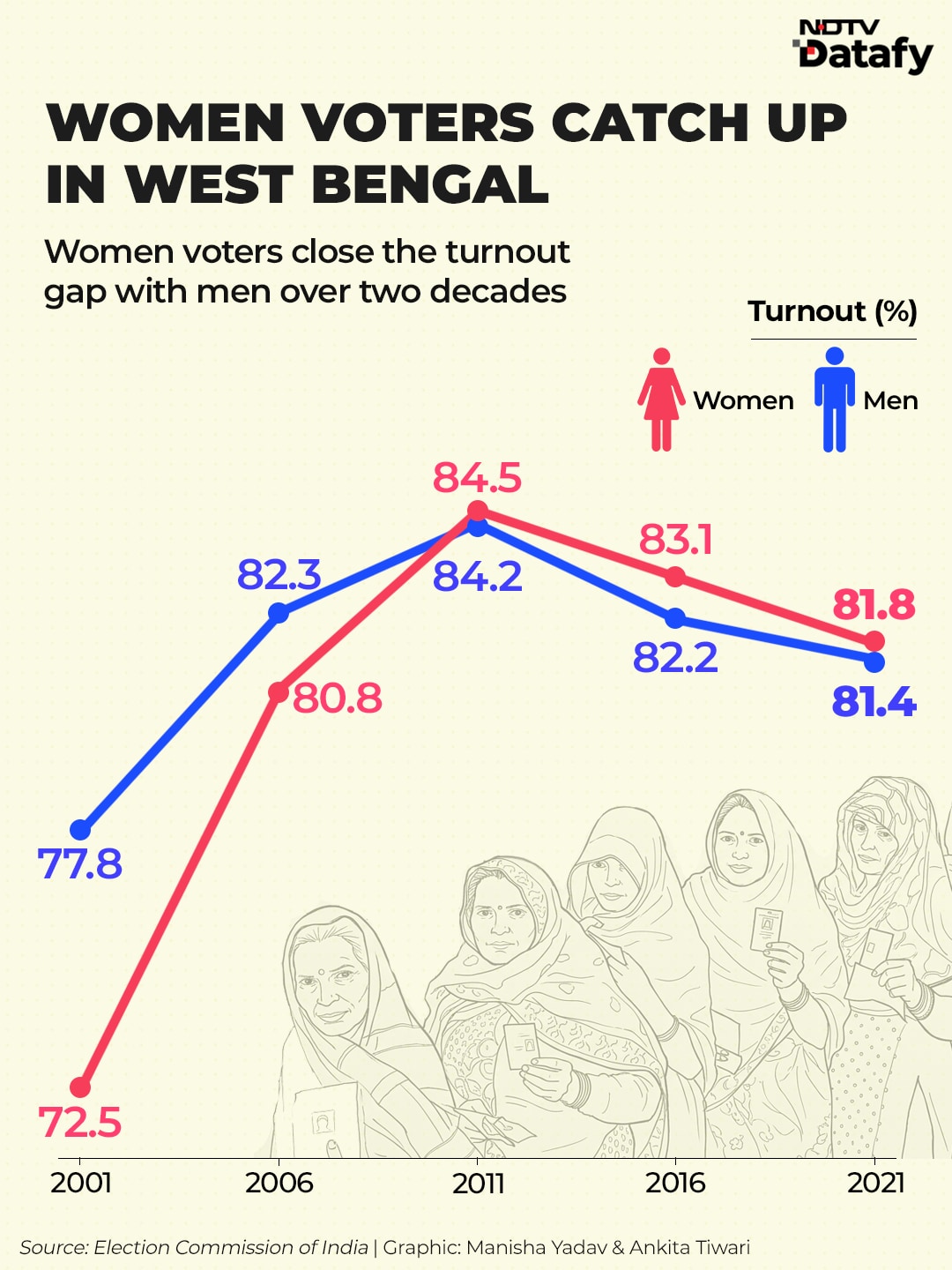
- Women’s voter turnout in West Bengal has been higher than men’s since 2016 elections
- Rural constituencies showed the largest female voter turnout advantage over men
With the first phase of polling in West Bengal scheduled for tomorrow, political temperatures have risen, and leaders are trading sharp remarks to pull voters towards them. Prime Minister Narendra Modi has accused Chief Minister Mamata Banerjee of failing to prioritise women, claiming that the women of Bengal will "punish" her in the upcoming elections. Responding to this charge, Mamata Banerjee highlighted her party's record, stating that women form 37.9 per cent of Trinamool Congress MPs in the Lok Sabha and 46 per cent in the Rajya Sabha.
This comment raises a question: Do women in West Bengal participate more than men in elections?
Voter turnout
Voter turnout in West Bengal has been high in all elections since 2001. In 2001 and 2006, men voted more than women, with a clear gap between the two.
By 2011, the gap narrowed and turnout was nearly the same for men and women. In the 2016 and 2021 elections, women's turnout was slightly higher than men's. Overall turnout rose from 2001 to a peak in 2011, then fell slightly in later elections, but participation remained above 80 per cent for both men and women in polls.
In the 2021 West Bengal Assembly election, women turned out in higher numbers than men in several constituencies, showing clear regional differences in participation. Daspur recorded the highest gender turnout gap, with women voting 18.2 percentage points more than men, followed by Raghunathganj (17.3 points) and Ghatal (12 points). Other constituencies with a strong women voter lead were mostly in rural and semi-rural belts.
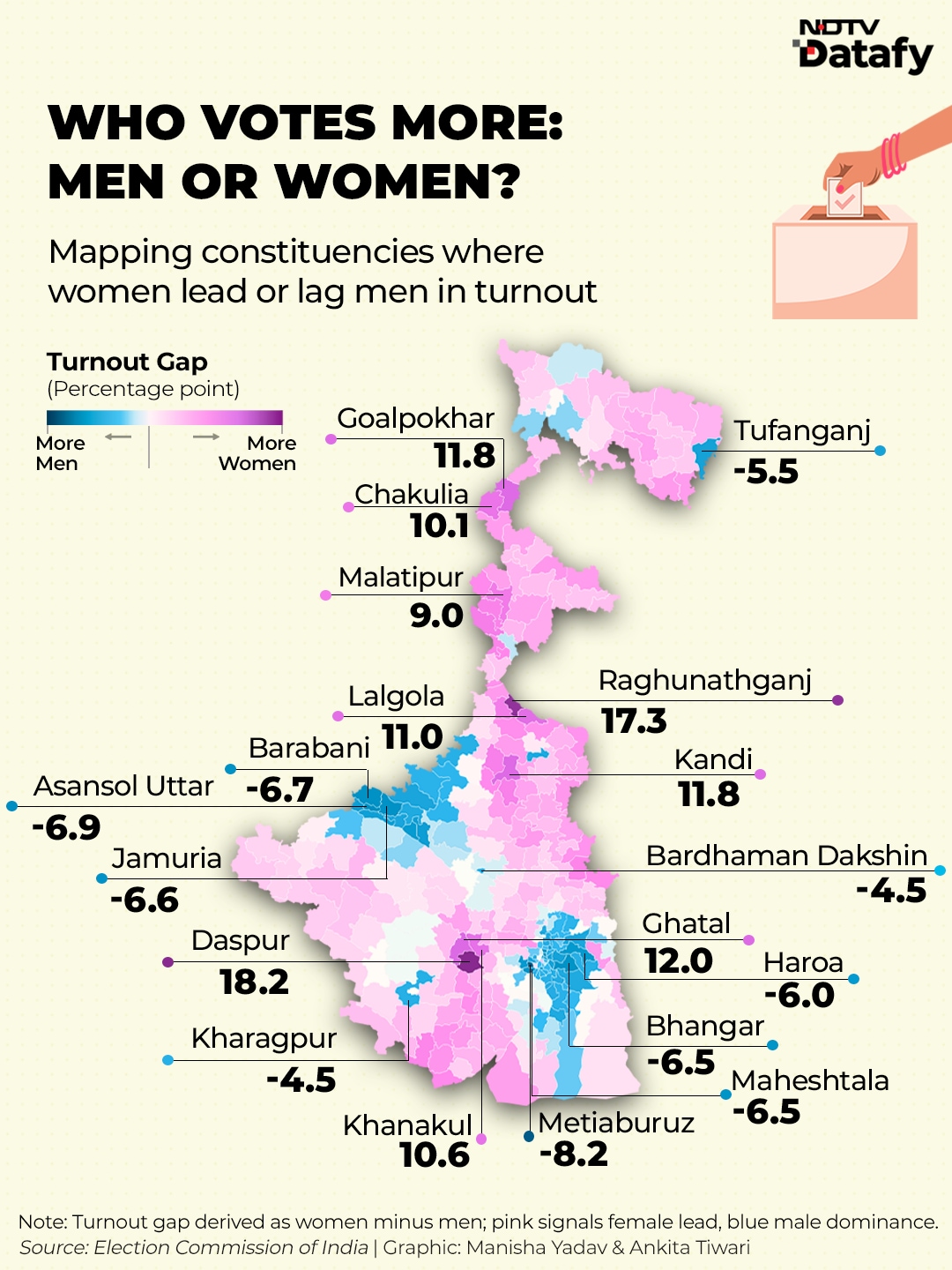
At the other end of the scale, Metiaburuz saw the lowest female participation relative to men, with men turning out 8.2 percentage points more. Overall, the data shows that women's turnout advantage was strongest in rural constituencies, while many urban and industrial areas recorded smaller gaps or higher male turnout.
Do more women voters mean more women MLAs?
In the 2021 West Bengal Assembly election, constituencies with a higher female voter turnout did not necessarily translate into more electoral victories for women candidates. Of the 40 seats won by women, only one seat came from constituencies where the gender turnout gap strongly favoured women by 10-20 percentage points, while five seats fell in areas with a 5-10 point female advantage and nine seats where women's turnout was marginally higher or near parity (0-5 points).
In contrast, a clear majority of female winners emerged from constituencies where male turnout exceeded female turnout: 17 seats were won by women in areas with a 0 to -5 point gap, and another eight seats were won where men turned out 5-10 points more than women.
Women MLAs
Women's representation in the West Bengal Assembly has remained low but it has shown a gradual increase over time. In 2001, women made up 9.5 per cent of MLAs with 28 women elected. This rose to 12.6 per cent in 2006 and 11.6 per cent in 2011.
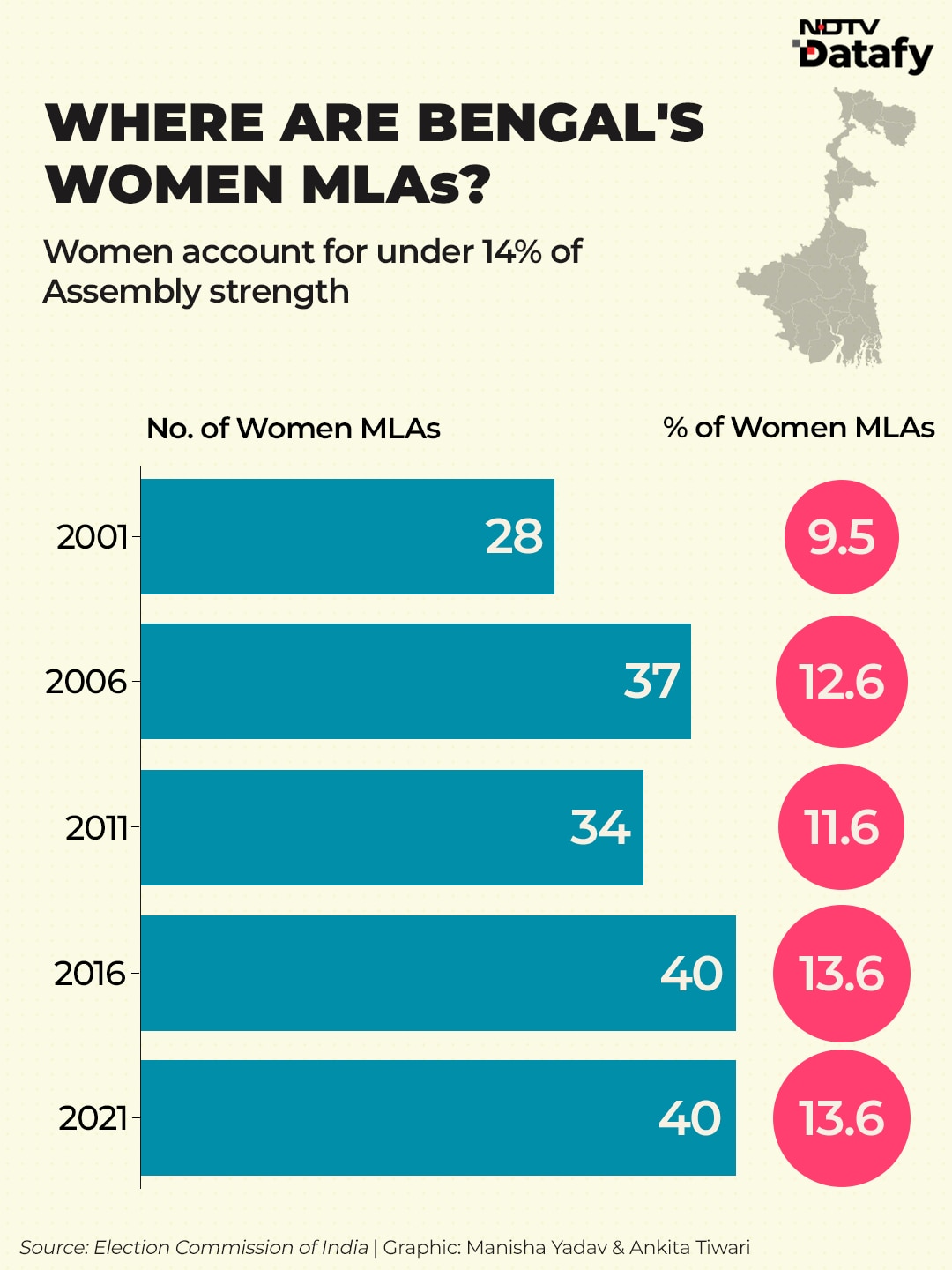
The number of women MLAs increased to 40 in both 2016 and 2021, and their share of the House remained unchanged at 13.6 per cent.
Track Latest News Live on NDTV.com and get news updates from India and around the world

