

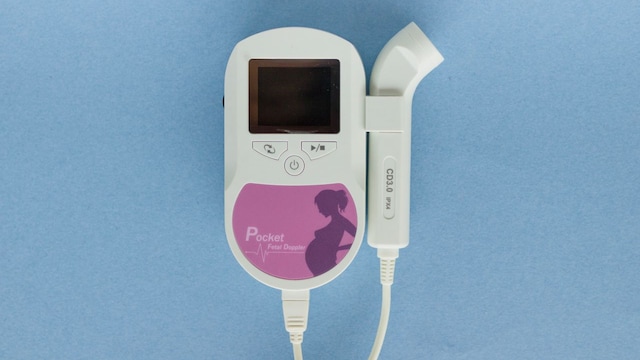
Pregnancy can feel like a long wait between appointments. Many expectant parents want to hear their baby's heartbeat at home, whether for reassurance or simply to feel closer to the baby. Handheld fetal dopplers are sold widely, and it is easy to see why they appeal.
But hearing a heartbeat does not tell you everything about your baby's health. Here is what these devices can and cannot do, and what to do instead if you feel worried.
What Is a Fetal Doppler?
A fetal Doppler is a small handheld device that uses high-frequency sound waves (ultrasound) to pick up movement, such as blood flowing through the heart and vessels. The device turns this into sound you can hear through a speaker. Unlike a scan, it produces no picture.
Midwives and doctors use Dopplers during antenatal checkups and labour. The versions sold for home use are often cheaper and are usually not held to the same medical standards.
Why People Use Them
The reasons are very human:
- Reassurance. The weeks before you can feel movement can feel uncertain.
- Bonding. Partners and siblings can share in listening.
- Comfort after loss. Those who have had a miscarriage or stillbirth may feel especially anxious.
- Convenience. Checking at home feels calmer than visiting a clinic.
Wanting reassurance is natural and nothing to feel embarrassed about. The problem is that these devices can offer a false sense of security.
The Main Problem: A Heartbeat Is Only a Snapshot
A heartbeat tells you the baby's heart is beating at that moment. It does not tell you whether the baby is getting enough oxygen, growing well, or coping with a problem developing in the womb.
A baby can have a heartbeat and still be unwell. Think of it this way: if you found someone collapsed on the street, you would not check their pulse and walk away. A pulse does not mean they are fine. The same applies to a baby.
A baby's condition can also change quickly. A heartbeat heard now says little about how things will be in an hour.
READ | Can Your Pregnancy Lifestyle Affect Your Baby's Development?
You May Not Be Hearing Your Baby
Even finding a heartbeat is harder than it sounds. At home, it is easy to mistake other sounds for the baby's heart:
- Your own heartbeat. The pulse in your abdomen's large blood vessels can sound similar.
- Blood flow through the placenta. This is a whooshing sound that can be mistaken for a heartbeat. It is more likely if the placenta sits at the front of the womb.
- Other body sounds. Movement in the gut can add to the confusion.
A baby's heart usually beats much faster than an adult's, at roughly 110 to 160 beats per minute, but telling the sounds apart takes training and practice. Midwives learn this over years. They also listen alongside other information, such as the baby's movements, your health history, and the stage of pregnancy. A home device alone cannot provide that.
The Biggest Risk: Delayed Care
The most serious concern is that parents notice their baby moving less, listen for a heartbeat, hear something, and wait. That wait can cost precious time.
Changes in movement are one of the most important warning signs that a baby may be unwell. Acting on them quickly gives doctors and midwives the best chance to help. Heart sounds from a home device should never override that.
Why Silence Does Not Mean Something Is Wrong Either
The reverse can also happen. Many people cannot find the heartbeat, even when the baby is perfectly healthy. Common reasons include:
- It is too early in pregnancy
- The baby is in a position that makes it hard to detect
- The womb is tilted
- The device is poor quality or used incorrectly
- Extra tissue between the device and the baby is muffling the sound
Not hearing anything can cause real panic, and sometimes unnecessary emergency visits. In this way, a device bought for peace of mind can create more anxiety. Some people also fall into a cycle of checking again and again, which can make worry grow rather than settle.
READ | Nutritionist Urges Pregnant Indian Women To Get Diabetes Screening Beyond HbA1c Test
Is the Ultrasound Itself Safe?
When used briefly by trained professionals, ultrasound is considered safe in pregnancy. At-home use is different. Ultrasound can slightly warm body tissue, and there has been little research on repeated, frequent use by untrained people. There is no evidence of harm, but that is not the same as proof of safety, so caution makes sense. Health authorities in several countries advise against using these devices without medical guidance.
Quality is another concern. Home devices are not all regulated in the same way, so it can be hard to know how accurate they are.
What to Do Instead: Watch Your Baby's Movements
Feeling your baby move is one of the best everyday signs of wellbeing.
- Most people start to feel movement between about 16 and 24 weeks. First-time parents may notice it a little later.
- You do not need to count kicks. Simply get to know your baby's usual pattern.
- Once you feel regular movement, it should continue until and during labour.
Contact your midwife or maternity unit straight away if your baby:
- is moving less than usual,
- has movements that feel weaker, or
- has stopped moving.
Do this day or night, even if you have already been checked recently. Don't try to make the baby move first or wait until morning. Most of the time, everything turns out to be fine, and maternity teams would always rather see you than have you wait.
If You Are Feeling Anxious
Worry in pregnancy is very common, and it deserves care rather than dismissal. Some helpful steps:
- Tell your midwife or doctor how you feel. They can offer extra checks, earlier scans where appropriate, or emotional support.
- Ask about options. Sometimes more frequent appointments are possible, especially after a previous loss.
- Talk to someone. Friends, family, or a counsellor can all help.
Be honest about home devices. If you have used or are thinking of using a Doppler, say no. A good clinician will listen without judgement and help you understand the risks.
READ | Analysis Of Blood Samples Reveal Molecular Differences Between Early, Pre-Term Deliveries
If You Still Decide to Use One
Some people will choose to use a Doppler anyway. If you do, these points can reduce harm:
- Talk to your midwife or doctor first.
- Never use it to decide whether a change in movement is serious. Always call your maternity unit instead.
- Keep sessions short and infrequent.
- Don't use it before the device's stated starting point, as it is unlikely to work.
- Remember that hearing a heartbeat does not mean all is well, and not hearing one does not mean something is wrong.
- Stop using it if it increases your worry.
A home Doppler can feel comforting, but it cannot tell you whether your baby is truly well. What matters most is knowing your baby's movements, acting quickly on any change, and speaking up about your worries. Your baby's heartbeat is precious. Trained medical professionals, regular checkups, and your own awareness of movements are the most reliable ways to keep your baby safe.
(By Dr. Lepakshi Dasari, Consultant Gynaecologist & Laparoscopic Surgeon, Yashoda Hospitals, Hyderabad)
Disclaimer: The opinions expressed within this article are the personal opinions of the author. NDTV is not responsible for the accuracy, completeness, suitability, or validity of any information on this article. All information is provided on an as-is basis. The information, facts or opinions appearing in the article do not reflect the views of NDTV and NDTV does not assume any responsibility or liability for the same.